Bunnings will cut about 350 technology roles and hand a larger share of its IT work to Indian outsourcing giant Tata Consultancy Services (TCS). In a statement on Tuesday, the Wesfarmers-owned hardware chain said around 230 permanent technology positions will be made redundant and about 120 contractor engagements will end, with more of its technology services and project work to be delivered by TCS teams in Australia, India and the Philippines.
Bunnings says the change is about cutting the cost of technology delivery so it can spend more on customer experience. For shoppers, nothing changes at the checkout today. For the people losing their jobs, and for an Australian tech workforce that has absorbed a string of big cuts this year, it is a bigger deal. Here is what was announced, what is still unclear, and what it means.
What Bunnings announced
According to Bunnings’ own announcement, published on 17 November 2026:
- Roles affected: around 230 permanent technology positions will be made redundant and approximately 120 contractor engagements will come to an end, about 350 roles in total.
- Who takes over: TCS becomes Bunnings’ technology services partner. A “greater proportion” of technology services and project delivery will come from TCS teams based in Australia, India and the Philippines.
- What stays in-house: Bunnings will keep a core technology team of around 500 people in Australia.
- Timing: the transition starts in December 2026 and runs to June 2027, with the new operating model planned to be in place from July 2027. Affected staff will be supported in their roles through Christmas, with changes taking effect in the new year.
- Support offered: Bunnings says it will provide redundancy packages, career transition support, redeployment opportunities where possible and wellbeing support.
Bunnings has not said how many TCS staff will do the work, how that work will be split between Australia, India and the Philippines, or what the contract is worth. We did not find a separate announcement from TCS at the time of writing.
Why Bunnings says it is doing this
The company’s explanation is cost and speed. Its statement says the TCS partnership will provide “global technology expertise and scale, while reducing the cost of technology delivery and enabling increased investment in customer experiences, innovation and growth,” and that the changes “reflect the way customers are choosing to shop and the increasingly competitive retail environment.”
Managing director Mike Schneider said: “This is a necessary but important change. We need a technology model and partner that keeps pace with our customers so that we can continue to deliver the service, value and helpful advice people expect from us.”
Staff were told by chief information officer Genevie Elliott in a virtual meeting, the ABC reported. According to the ABC, she told them the changes were “not a reflection of anyone’s performance or their contribution or value,” and said: “We need a model that allows us to remain competitive without continually increasing our costs. This partnership will help us do that.”
The Register, citing staff, reported that the town hall where IT teams heard the news was not interactive, with a Bunnings representative reading from a script and not taking questions, and that affected staff were then emailed invitations to individual meetings. Bunnings has not commented publicly on those details.
Where AI fits in
Bunnings frames the move alongside its push into AI. Its statement points to Buddy, the AI shopping assistant it launched earlier this year using Google’s Gemini Enterprise for Customer Experience platform, which it says made it the first Australian retailer to launch an AI-powered shopping agent on that platform and which it says has already generated more than 450,000 chats. (We looked at what Google’s Gemini agents mean for local businesses in October.)
It is worth being precise here. Bunnings has not said the roles are being cut because AI can now do them. What it has announced is outsourcing: the work moves to a services company, partly offshore, and the savings are meant to fund more investment in digital customer experiences. Brisbane Times described it as part of an “artificial intelligence-led overhaul”, which reflects Bunnings’ own emphasis on Buddy, but the job cuts themselves are tied in the company’s announcement to the new TCS operating model, not to automation.
Part of a bigger pattern
Bunnings is the latest large Australian employer to move technology or back-office work to an outsourcing partner. On 10 November, Qantas announced a partnership with Accenture under which some corporate-function services will move to Accenture, “delivered mostly by its teams in India and some in Australia”, with around 850 roles expected to be affected over the coming years. Brisbane Times lists other big cuts this year, including Canva’s 1,271 redundancies announced earlier this month and Atlassian’s 1,600 job cuts, and the ABC says Qantas, NAB, Officeworks, Woolworths and Coles have all announced plans to outsource jobs overseas.
Those are different companies with different reasons, and not all of the cuts involve offshoring. But taken together they show a clear trend: large Australian firms are treating in-house technology teams as a cost to be reshaped, often through global services firms that can offer cheaper labour and say they bring AI and automation tools with them.
What it means for Bunnings shoppers
- Nothing changes immediately. The transition doesn’t start until December and runs to mid-2027. Bunnings’ website, app, online orders and Buddy should keep working as normal. Nine.com.au reported that in-store team members are not affected by the cuts, and Bunnings says it employs more than 50,000 people in Australia, including 12,000 new team members in the past year.
- Your data may be handled by more people overseas. Bunnings’ privacy policy already says some of the third parties it shares personal information with are outside Australia, giving the US, Singapore, EU countries, New Zealand, Japan, Vietnam, India and the UK as examples. The Philippines is not on that example list today. Bunnings hasn’t said whether TCS teams will access customer data. Under the Australian Privacy Principles, companies must take steps to protect personal information before it is disclosed overseas (APP 8) and keep it secure (APP 11).
- If you want to know more, you can ask Bunnings’ privacy team how your information is handled and where. That is a reasonable question to put to any retailer that changes who runs its technology.
What it means for tech workers
If you are one of the affected Bunnings staff, or work somewhere that is heading down the same path, the Fair Work Ombudsman’s redundancy guide is the place to start. It explains when a redundancy is genuine, which includes the employer following any consultation requirements in the relevant award or enterprise agreement and not being able to reasonably redeploy the employee elsewhere in the business, and how redundancy pay is based on length of continuous service. Contractors’ entitlements depend on how they are engaged and the terms of their contract, so check yours.
For the wider local IT jobs market, about 350 roles from one retailer is not huge on its own. Combined with the Qantas, Canva and Atlassian cuts, it adds up to thousands of experienced Australian tech workers looking for work at the same time, many in enterprise systems, support and project delivery, the jobs most exposed to outsourcing.
Our read
Bunnings has been unusually open about the numbers: how many roles, the timeline and the size of the team it keeps. What it hasn’t explained is the trade-off. Retail technology is not just back-office plumbing; it runs stock, pricing, online orders and now an AI assistant that talks to customers. Moving more of that work to an outside provider, partly offshore, can cut costs, but it also puts distance between the people building the systems and the stores and customers using them. We would like to see Bunnings say how many TCS staff will be based in Australia, whether customer data will be accessed from India or the Philippines and, if so, update its privacy policy to say so plainly. We also think the company should explain what the savings will actually be spent on, beyond a promise of more investment in customer experiences.
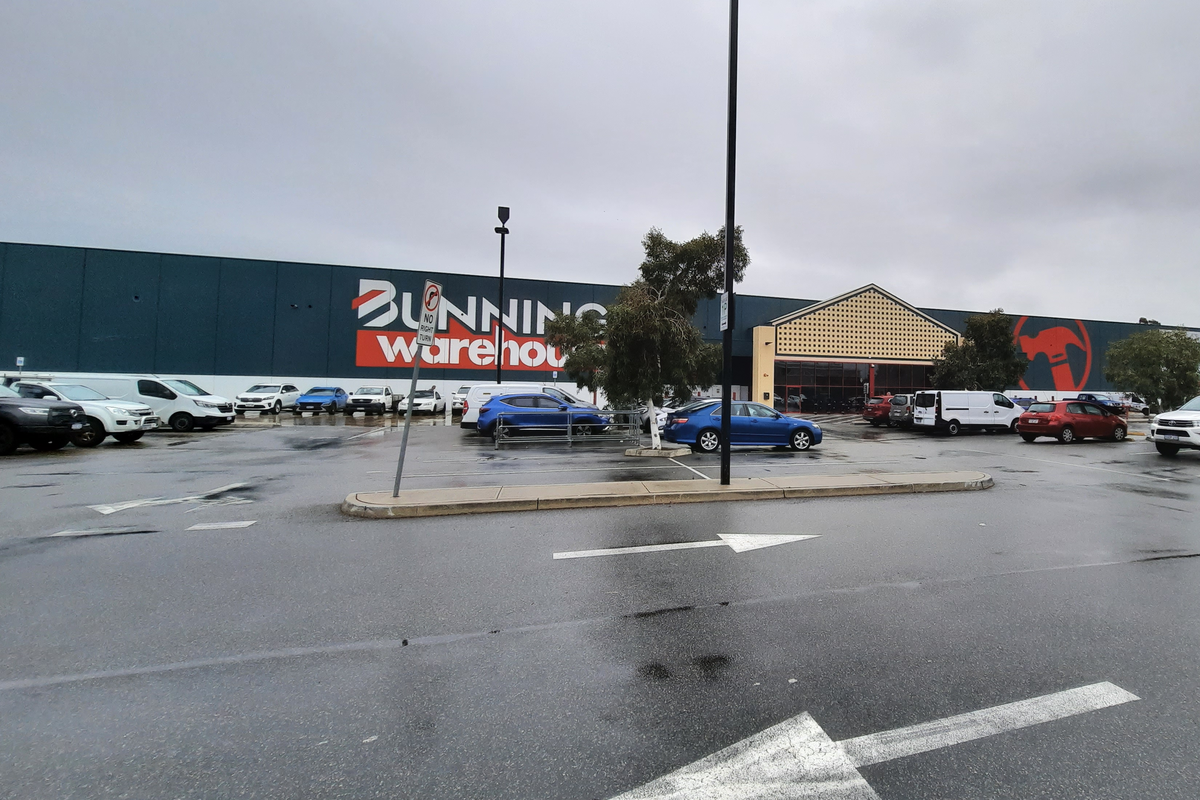
Featured image: Bunnings Warehouse store in Cannington, Western Australia. Photo: Gnangcomapp, via Wikimedia Commons, licensed CC BY-SA 4.0; cropped to 3:2, resized and converted to PNG. The adapted image is licensed CC BY-SA 4.0. Bunnings’ name and logo are trademarks of their owner; their appearance does not imply endorsement.