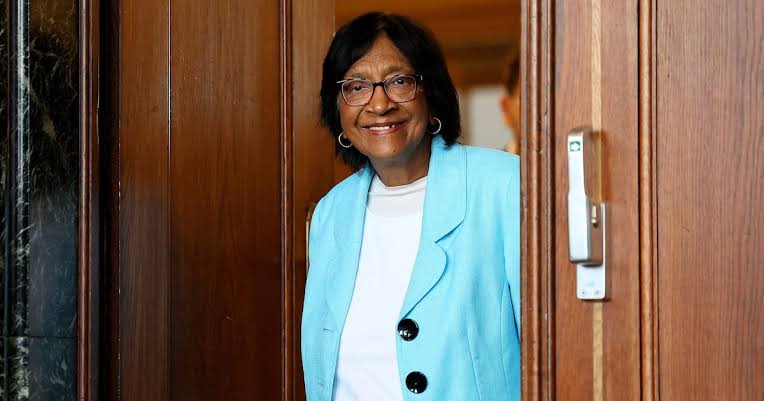
The 2026 Nobel Peace Prize has gone to South African jurist Navanethem “Navi” Pillay, whose career has centred on human rights, international law and accountability for atrocities. Her recognition also arrives at a moment when the evidence used to investigate abuses is increasingly digital.
That second story deserves attention. Satellite images, mobile phone videos and online archives can help investigators reconstruct events. Artificial intelligence may speed up the search through vast collections of material. Yet the same technology can also manufacture convincing falsehoods or strip evidence of its context.
Why Navi Pillay received the Nobel Peace Prize
The Norwegian Nobel Committee announced Pillay as the 2026 laureate on 9 October, recognising her efforts to promote peace and international law. Her career spans resistance to apartheid, international criminal justice and leadership in United Nations human rights work. The award recognises her legal and human rights contributions—not a specific AI project.
For decades, accountability has depended on witnesses, documents, forensic examination and institutions willing to test claims against legal standards. Digital tools add new possibilities, but they do not remove the need for careful investigation.
A phone camera can become a witness—but not a verdict
A video filmed during a conflict may document an incident that would otherwise go unseen. Investigators can compare landmarks, shadows, timestamps and other material to establish where and when footage was recorded. Satellite imagery may reveal damage or changes to a site over time.
None of these techniques makes a clip self-explanatory. A genuine video can be miscaptioned; an authentic image can circulate with the wrong date. Investigators need to preserve original files, establish provenance and document how evidence was handled.
Where AI could help international investigators
AI-assisted systems may help sort large image collections, transcribe testimony, translate records and identify potentially relevant material for human review. Used responsibly, these tools could reduce the time spent on repetitive searches and allow specialists to concentrate on corroboration.
The danger is treating an automated output as a finding of fact. Models can misidentify objects, miss cultural or linguistic context and produce confident but unsupported interpretations. Any consequential conclusion should be checked against original evidence and by qualified investigators.
Deepfakes create a new burden of proof
Generative AI makes it easier to create synthetic speech, images and video. This complicates the work of journalists, courts and human rights organisations: they must assess both whether apparent evidence is genuine and whether authentic evidence is being dismissed as fake.
A sensible response is not to distrust every recording. It is to strengthen verification: retain originals where possible, compare independent sources, document edits and make uncertainty explicit. Automated deepfake detectors can contribute clues, but should not be treated as infallible arbiters.
Privacy and safety matter too
Digital documentation can put witnesses at risk. Faces, voices, geolocation and metadata may reveal the identities of people who never consented to public exposure. Systems built to investigate wrongdoing can themselves become tools for surveillance if safeguards are weak.
The challenge is to protect the integrity of evidence while minimising unnecessary collection and disclosure of personal information. That means human oversight, access controls and clear rules for how sensitive material is retained.
What Australians should take from the 2026 prize
For an Australian technology audience, Pillay’s award is a reminder that innovation is not automatically progress. Tools that can help document abuses can also be used to spread misinformation, monitor communities or overwhelm the public with conflicting claims.
Technology companies, researchers and publishers all have responsibilities here. Product demonstrations should not be confused with proven investigative capabilities, and reporting should distinguish verified findings from allegations and analysis.
The Tech Boom’s view: justice needs better evidence, not faster certainty
Navi Pillay’s Nobel Peace Prize 2026 recognition places the rule of law in the spotlight. AI and digital evidence may become valuable instruments in that work, but credibility comes from transparent methods, independent scrutiny and the willingness to acknowledge what cannot yet be proved.
The most important question is not whether a machine can find a pattern. It is whether people can examine the evidence behind that pattern and trust the process used to reach a conclusion.
Sources
Norwegian Nobel Committee: 2026 Peace Prize announcement