The FBI has issued a formal warning about ARTEX, an open-source AI “penetration testing” framework that criminals and state-backed hackers have turned into an attack engine. In a FLASH advisory dated 13 November (FLASH-20261113-001), the bureau says the tool can “automate multiple phases of cyber intrusions at machine speed, from reconnaissance through data exfiltration,” and that it has been used against organisations worldwide since at least August.
The advisory doesn’t name any Australian victims. But the attacks it describes lean on things plenty of Australian organisations rely on: Microsoft 365 tenants, third-party apps with broad permissions, partner portals and managed IT providers. Here’s what ARTEX is, what it has been used for, and the practical checks the FBI is recommending.
What ARTEX is, and why the FBI is worried
ARTEX isn’t an AI model. It’s a harness, written in Go, that sits on top of someone else’s large language model and breaks a goal typed in plain language into tasks for a team of AI agents: scanning, finding weaknesses, exploiting them, escalating privileges and pulling data out. The FBI says it works with frontier models such as Anthropic’s Claude and OpenAI’s GPT, as well as DeepSeek, GLM, Grok and Kimi.
According to the advisory, “Analysis of attacker-controlled ARTEX instances shows Chinese models are most prevalent, with DeepSeek Flash family models dominating usage.” The FBI puts that down to their capability, relatively low cost and a “lack of observable guardrails when framed for penetration testing.”
The bureau’s two biggest concerns are speed and accessibility. It says ARTEX has cut the time needed to chain attack techniques, “with some intrusions progressing from initial targeting to privileged access in under three hours,” and that it “enables threat actors with minimal technical expertise to conduct complex, multi-target operations simultaneously.”
The tool was first published on GitHub by a developer known as Autumn-27 in July 2026, and pulled on 8 October after reports of abuse. That hasn’t contained it. The FBI says it keeps spreading through forks, archived copies, localised versions and a commercial edition called ARTEX PRO. Citing researchers at Censys, the advisory says more than 1,600 ARTEX consoles were publicly exposed on the internet as of early November; Check Point Research separately counted more than 1,800.
The attacks it has already been linked to
The FBI’s advisory pulls together research from Microsoft, Google, CrowdStrike, Check Point, Censys, Zscaler, Akamai and CERT-EU. The cases it highlights include:
- The ConnectWise Cloud Backup compromise. Microsoft attributed the October supply-chain attack to Storm-0940, a group it describes as China-state aligned, which used ARTEX to speed up password spraying and the abuse of app permissions. The FBI says the compromise “enabled access to more than 2,250 downstream tenants.” Incident responders at Huntress saw unauthorised sign-ins in 162 Microsoft 365 tenants, The Record reported.
- South Korean banks. Attacks on financial institutions that, per the FBI, exposed personal information of approximately 67,000 people.
- A financially motivated group in our region. Microsoft says Storm-3358, a Cambodia-based cluster that mainly targets financial organisations in Southeast Asia, began using ARTEX in October alongside conventional scanning tools and open-source remote access trojans.
- Espionage at scale. As iTnews reported, CrowdStrike says a China-linked group it calls VAPOR PANDA used ARTEX to target more than 200 organisations in under a fortnight, with post-exploitation activity confirmed at nine.
What ARTEX goes after is telling. The FBI says it “excels at identifying and exploiting peripheral systems,” naming partner and supplier portals, mobile backends, employee apps, sales-support systems, legacy services and third-party integrations: the systems that tend to get less security attention than a company’s main website.
What Australian organisations should check
The FBI’s recommendations are aimed at IT and security teams, but most of them translate into questions a business owner can put to an in-house team or managed service provider. If ConnectWise rings a bell, it’s the same vendor whose ScreenConnect remote access tool was hijacked through a forgotten add-on last week, a separate incident that makes the third-party question even more pressing.
- List everything you have facing the internet, not just the main website: old portals, staging sites, supplier logins, app backends and anything a business unit spun up on its own.
- Lock down admin interfaces. The FBI wants cloud administration, backup platforms, hypervisors and app publishing endpoints restricted to trusted networks or dedicated admin paths.
- Audit app permissions in Microsoft 365. Apply least privilege to multi-tenant apps and consent grants, and watch for new credentials or privileges being added to apps. If a ConnectWise app was ever authorised in your tenant, the FBI says to review it even if you no longer use it, searching by application ID rather than display name.
- Look for the tell-tale pattern. ARTEX is noisy: bursts of automated requests, many failed attempts that adjust each time, sudden credential or privilege changes and large data transfers.
- Rate-limit sensitive APIs and portals, alert when someone pulls an unusual number of records in one session, and hunt for passwords and keys left in code, scripts and pipelines.
- Preserve logs before cleaning up. Keep sign-in and audit records, and don’t delete compromised enterprise apps as a first step; the FBI says to preserve configuration and evidence before irreversible changes.
The advisory includes indicators of compromise such as IP addresses, but the FBI warns those may have changed and should be vetted before blocking. In Australia, incidents can be reported to the Australian Signals Directorate’s Australian Cyber Security Centre through cyber.gov.au.
How much is hype?
Not everyone thinks we’ve reached fully autonomous hacking. Google Threat Intelligence Group researcher Rohit Nambiar told iTnews the VAPOR PANDA campaign was “a warning shot”, adding: “We have no evidence that fully autonomous (aka human out of the loop) is here yet.” In that case, CrowdStrike said a human operator stayed in control, issuing instructions in Mandarin. Google and Mandiant also note that the underlying techniques haven’t changed: attackers still rely on stolen credentials and unpatched systems.
Microsoft makes a similar point about the ConnectWise case: “the presence of an affected application or successful threat actor authentication does not necessarily indicate that customer data was accessed or exfiltrated.” We first wrote about Google’s warnings that attackers were moving toward agentic AI back in September; the FBI advisory shows that shift is now well underway.
Our read
ARTEX doesn’t invent new ways to break in. It does the boring parts of hacking faster and at scale, which means the forgotten portal, the over-permissioned backup app and the reused password get found sooner. That shifts the advantage to whoever has done the basic housekeeping.
For Australian organisations, the most useful takeaway isn’t the AI angle at all. It’s the FBI’s list of peripheral systems and third-party connections. If you don’t know every app that can sign in to your Microsoft 365 tenant, or every login page your business has exposed over the years, an automated attacker may map them for you first.
Sources: FBI FLASH-20261113-001 (13 November 2026); Microsoft Threat Intelligence (21 October and 6 November 2026); Check Point Research; Google Threat Intelligence Group and Mandiant; reporting by BleepingComputer, The Record and iTnews. The Tech Boom has not independently tested ARTEX.
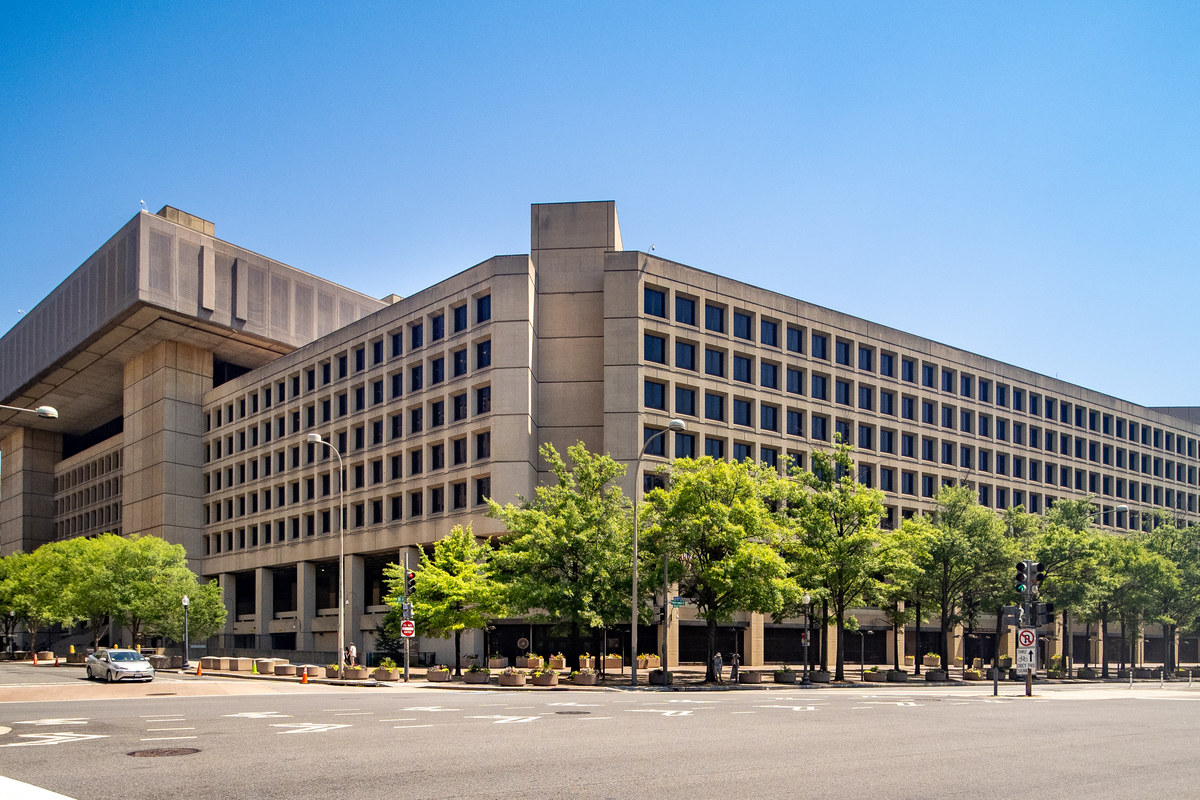
Featured image: the J. Edgar Hoover Building in Washington, DC, long the FBI’s headquarters, photographed in June 2024. Photo: ajay_suresh, via Wikimedia Commons (originally Flickr), licensed under CC BY 2.0; cropped to 3:2, resized and converted to PNG.