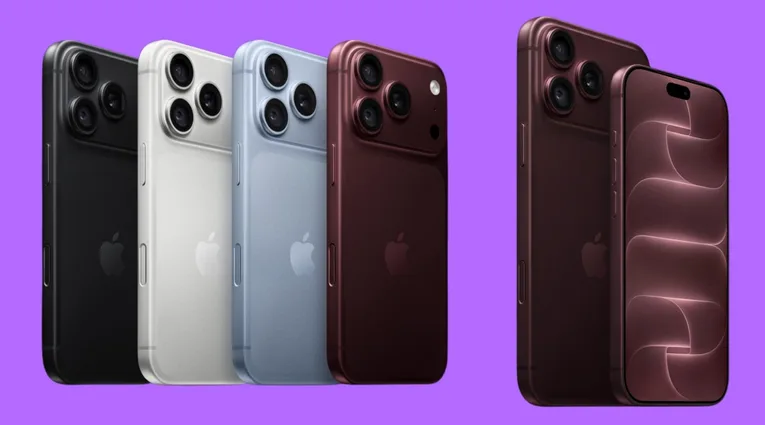
Apple has added an unusual new weapon to the fight against AI-generated and manipulated images: instead of trying to spot a fake after it spreads online, the iPhone 18 Pro can create an authenticated reference showing what its camera sensor actually captured.
The feature is called Apple Reference Image, and it arrives with the new iPhone 18 Pro and iPhone 18 Pro Max. Apple says the Main camera’s new sensor can sign the pixels it captures when a user shoots in the opt-in Reference mode. That signed sensor data is then processed using Private Cloud Compute to produce what Apple describes as an unalterable reference image.
Think of it less as an AI detector and more like a digital negative for the AI era.
How Apple Reference Image works
When Reference mode is enabled, the iPhone records signed sensor information at the moment the photograph is taken. Apple says Private Cloud Compute develops that information into a reference image that can be viewed alongside the normal photo in the Photos app.
The two versions can then be visually compared to determine whether edits have been made after capture. Apple is also providing APIs in iOS 27, iPadOS 27 and macOS 27 so third-party developers can support viewing Reference Images in their own apps.
That distinction matters. Reference Image is not simply software looking at a finished JPEG and guessing whether AI was involved. The authentication starts at capture, using signed information from the camera sensor.
Why this matters now
Generative AI has made creating convincing synthetic images dramatically easier. At the same time, ordinary photo editing tools increasingly include generative removal, replacement and enhancement features. That makes the old advice to simply “look closely” at suspicious pictures less useful by the month.
Apple’s approach flips the problem around. Rather than attempting to identify every possible fake, it creates a way to establish a trusted reference for a real camera capture.
This could be particularly useful for photojournalists, investigators and organisations that need to establish the provenance of an image. But it could matter to ordinary users too, especially when photos circulate through social networks stripped of their original context.
It does not prove that everything in a photo is true
There is an important limitation. An authenticated camera image does not prove that the scene itself was genuine, unstaged or presented with accurate context. Someone can still photograph a misleading setup, photograph a screen, or attach a false description to an authentic image.
What Reference Image can help establish is narrower but valuable: what the iPhone’s sensor saw at the moment of capture, and whether a later version differs from that reference.
Apple is also supporting SynthID
Reference Image is only one part of Apple’s image-authenticity strategy. Apple says image metadata and upcoming support for Google’s SynthID standard can also help identify content generated or edited using AI. Apple says SynthID support will arrive in a software update later this year and will apply to most edited images depending on the edits performed.
Together, the two approaches attack the problem from different directions: Reference Image helps authenticate a camera capture, while provenance and AI-marking technologies can help identify generated or altered content.
Which iPhones support Reference Image?
Apple lists Reference Image for the Fusion Main camera on the iPhone 18 Pro and iPhone 18 Pro Max. It is opt-in rather than something automatically applied to every photo.
Availability also differs by region. Apple says Reference Image capture will not be available at launch in China. In the European Union, users will be able to develop and view Reference Images with iOS 27, iPadOS 27 and macOS 27, but capture on iPhone 18 Pro models will not be available at launch.
The bigger story: proving what is real
The most interesting part of Reference Image may not be the feature itself, but the direction it points.
For years, smartphone cameras competed primarily on resolution, zoom, low-light photography and computational processing. The arrival of generative AI adds another potential requirement: trust.
If authenticated capture becomes widely supported across phones, apps and publishing platforms, future cameras may not only be judged by how good their pictures look. They may also be judged by how convincingly they can prove where those pictures came from.
For Apple, that makes Reference Image one of the more consequential additions to the iPhone 18 Pro — even if it is far less flashy than a new camera lens or faster processor.
iPhone 18 Pro availability in Australia
Apple says Australian pre-orders for the iPhone 18 Pro and iPhone 18 Pro Max open at 10:00 pm AEST on Saturday, September 12, with availability beginning Friday, September 18.
Sources: Apple Newsroom Australia; Apple iPhone 18 Pro technical specifications; The Verge.