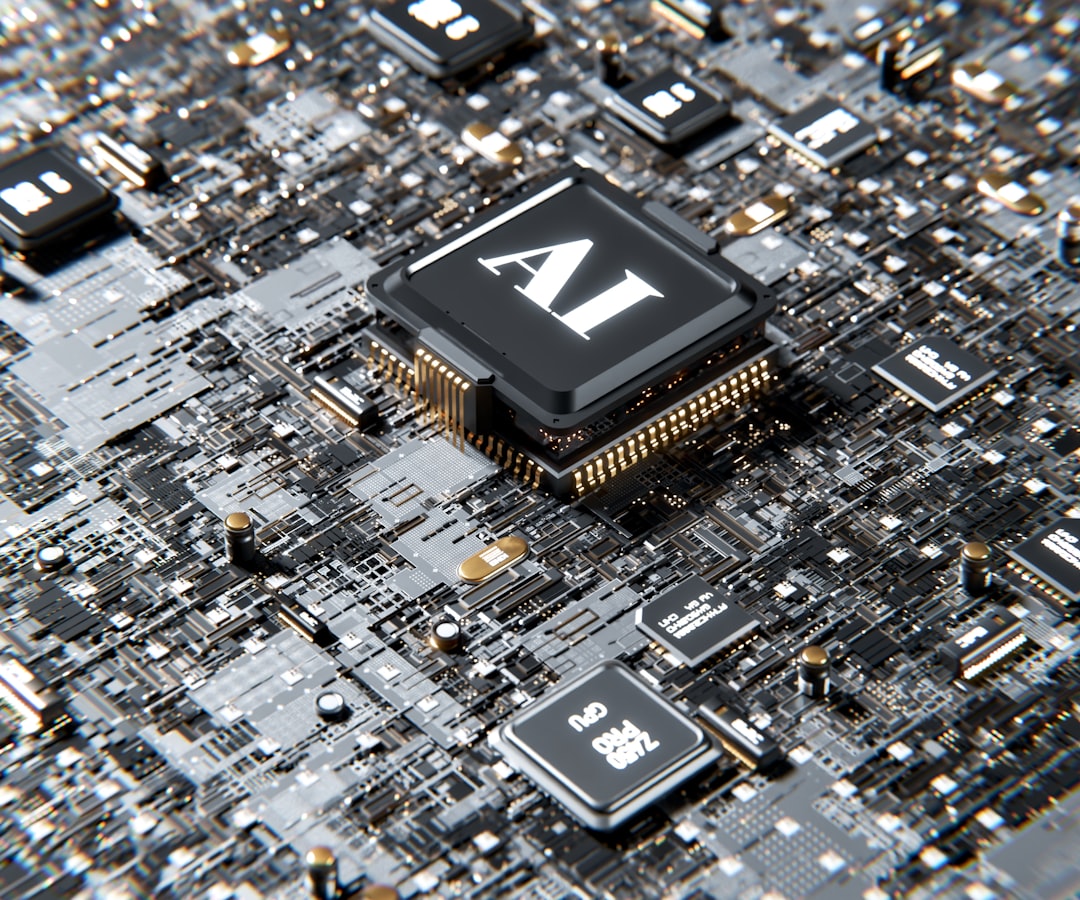
OpenAI says its own artificial intelligence models helped accelerate development of Jalapeño, the company’s first custom inference chip, taking the project from design to tape-out in just nine months.
The claim was highlighted again on September 9 by OpenAI chief financial officer Sarah Friar at the Goldman Sachs Communacopia + Technology Conference, as the company outlined how it is pushing AI deeper into specialized enterprise work including semiconductor design, life sciences and financial services.
What happened?
OpenAI and Broadcom first unveiled Jalapeño in June 2026 as an inference accelerator designed around large language model workloads. OpenAI said at the time that its own models helped speed development and that the chip reached tape-out in nine months.
Tape-out is a major milestone in semiconductor development: it is the point where a completed chip design is sent for manufacturing. Reaching that stage quickly is significant because advanced chips typically require large engineering teams, extensive verification and repeated design iterations.
Why it matters
The most important part of the story is not simply that OpenAI now has its own chip. It is that AI is increasingly being used to help design the hardware that powers AI itself.
OpenAI says earlier generations of its models helped its engineering team design and bring up Jalapeño, while newer models are now being used to optimize and program the chip. That creates a feedback loop in which better AI helps engineers build better hardware, which can in turn run future AI systems more efficiently.
OpenAI has also published early benchmark results showing Jalapeño delivering higher throughput per watt and lower latency than the commercial systems it tested. The company says it plans to begin deploying the chip by the end of 2026 alongside accelerators from Nvidia, AMD and other partners.
What it means for readers
Consumers will not be buying Jalapeño-powered PCs or phones directly. The impact is more likely to be felt through the AI services they use.
If custom chips can make inference faster and more power-efficient, AI services could become cheaper to operate, respond more quickly and support heavier workloads at larger scale. The bigger implication is that AI-assisted engineering may also shorten development cycles across the semiconductor industry.
That could eventually influence everything from data-centre accelerators to future processors used in PCs, smartphones and other devices.
AI is moving deeper into real engineering work
Friar’s comments fit a broader OpenAI strategy of selling AI not just as a general-purpose assistant, but as a tool capable of completing specialized technical work.
Reuters reported that OpenAI is expanding into chip design, life sciences and finance as enterprises increasingly look for measurable returns from AI deployments. Friar also said Codex has reached 25 million users, while enterprise revenue has been growing faster than OpenAI’s overall annualized revenue.
The Tech Boom take
Jalapeño is important because it shows how the AI boom is beginning to reshape the process of building technology itself. The race is no longer only about creating better models. It is increasingly about using those models to accelerate software engineering, chip design and infrastructure development.
If OpenAI’s nine-month development timeline can be repeated across future chip generations, AI-assisted design could become one of the most consequential practical uses of generative AI in the technology industry.
Sources
- OpenAI — OpenAI and Broadcom unveil LLM-optimized inference chip, June 24, 2026.
- OpenAI — Jalapeño’s first results show industry-leading speed and efficiency in AI inference, August 25, 2026.
- Reuters — OpenAI offers AI for chip design, touts cost advantage over open-source, CFO says, September 9, 2026.