You stop scrolling because somebody is crying.
A betrayal has just happened. A secret is about to be exposed. A mansion appears out of nowhere, or a lover returns from the dead, or a character who looked human a second ago moves in a way that makes you wonder whether any of this was filmed at all.
Then the video ends. Part two is waiting.
That little loop – hook, emotion, cliffhanger, repeat – is becoming one of the more revealing experiments happening in entertainment right now. AI-generated short stories and microdramas are spreading through vertical video, and the interesting part is no longer whether artificial intelligence can make something that resembles a film. It can. The more important question is what happens when making a story becomes cheap enough, fast enough and scalable enough to behave like social-media content.
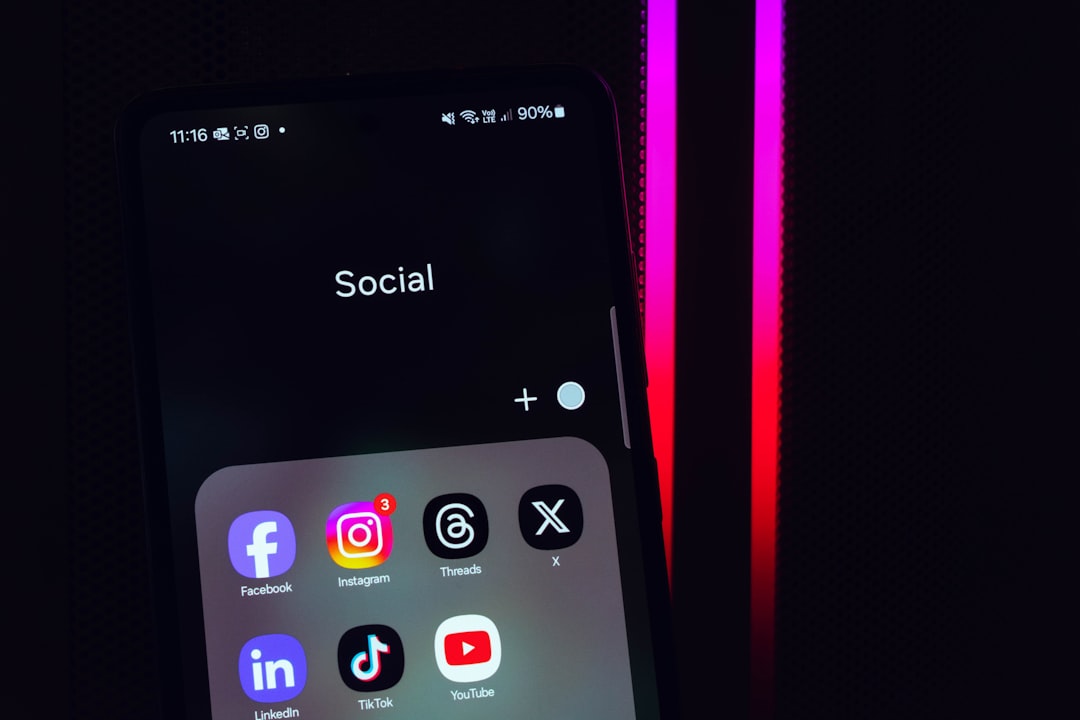
The numbers suggest this is moving beyond novelty. Reuters reported in August that microdramas are expected to generate about $1.5 billion in U.S. revenue this year, rising toward $2 billion next year, citing Omdia. The same report found that 66 million monthly active users watched microdramas in the U.S. last year, more than double the audience in 2024. TikTok, Instagram Reels, Facebook and YouTube Shorts have effectively become trailers for an industry built around episodes that can last less than two minutes.
AI is now pushing that model into a different gear.
A television studio is starting to look surprisingly small
Traditional television has expensive friction everywhere: locations, cameras, actors, lighting, wardrobe, editing, reshoots and schedules. That friction is part of what makes filmmaking difficult, but it also imposes a natural limit on how much can be produced. Generative AI attacks almost every one of those limits.
Reuters found that AI-assisted microdramas can be completed in three to four weeks for $60,000 or less. On Inkitt’s action-focused Ironblood service, humans still write the shows and actors can be used to train systems to portray expressions, but directors can alter generated performances through prompts. A requested smile that might once have meant another take can become an edit made in minutes.
China offers an even more dramatic preview. Reporting from CNA earlier this year found that more than 95 percent of new Chinese microdramas in the first quarter of 2026 were AI-generated, compared with almost none a year earlier.
This is why dismissing the trend as AI slop misses something important. Plenty of it undoubtedly is disposable. But cheap, strange early content does not tell us where a medium eventually ends up. Early YouTube did not look like today’s creator economy. Early mobile games did not resemble a modern billion-dollar gaming business. TikTok itself was once easy to dismiss as an app for short dances.
The production economics are changing first. Culture tends to follow.
The cliffhanger may be AI’s killer feature
AI did not invent the storytelling formula. Serialized fiction has used cliffhangers for centuries. Soap operas perfected emotional escalation. Reality television learned how to stretch a confrontation across an ad break. Vertical microdramas simply compress those tricks into the dimensions of a phone.
There is barely time for exposition. Someone must want something immediately. Someone else must stop them. The viewer needs a reason not to swipe away, and then another reason to return. That structure happens to fit algorithmic distribution almost perfectly.
A conventional film gets one opening weekend. An AI short-story account can effectively conduct thousands of tiny experiments: romance versus horror, betrayal versus revenge, realistic characters versus surreal ones, thirty seconds versus ninety. The audience’s behaviour supplies the answer.
That is where the trend becomes both fascinating and uncomfortable. If an algorithm learns that a particular combination of humiliation, outrage, romance and revenge reliably keeps people watching, generative AI makes it possible to manufacture variations almost endlessly. Storytelling risks becoming less like writing a novel and more like optimising a feed.
But there is another version of this future
There is a much more optimistic interpretation. For most of film history, having an idea was nowhere near enough. A teenager in Sydney could imagine an extraordinary science-fiction world and still have no realistic way to put it on screen. A novelist could describe a city on another planet but would need a studio-sized budget to film it convincingly.
Generative video is steadily reducing that gap between imagination and production. The person who benefits most may not be a studio trying to eliminate a visual-effects bill. It could be an individual storyteller who has taste, pacing and an original idea but never had access to actors, sets or expensive equipment.
There are signs of AI moving beyond social feeds, too. At the Venice Film Festival this week, the AI-assisted documentary Be Brave used generated video alongside genuine interviews and archival material to recreate moments from Diesel founder Renzo Rosso’s life for which footage did not exist. Its appearance at Venice does not settle the argument over AI filmmaking, but it shows how quickly the technology is moving from experimental feeds toward established cinema.
The uncomfortable question is what happens to people
None of this arrives without consequences. Actors, writers, editors and visual-effects artists have spent years warning that generative systems could turn creative work into training material and then compete with the people who made it. The microdrama boom makes that concern unusually tangible because its commercial advantage comes partly from producing more content for less money.
At the same time, the broader vertical-drama industry is creating jobs. Reuters found actors and production workers moving into the sector as conventional Hollywood production contracts. The future therefore may not divide neatly into AI replaces Hollywood or AI changes nothing. Human-made microdramas, AI-assisted productions and completely synthetic stories may all compete in the same feed.
That creates another problem: disclosure. If a photorealistic character is synthetic, should viewers always be told? What happens when an AI performer becomes popular enough to build a fandom? Who owns that character? And when someone’s face, voice or performance helped train it, who gets paid?
China has already started confronting some of these questions. New microdrama rules that took effect this month require prominent disclosure for AI-generated productions, according to TechNode. Other markets are likely to face similar debates as synthetic entertainment becomes harder to distinguish from filmed content.
We may be watching a new medium being born badly
Some AI shorts today are repetitive, uncanny and disposable. That does not necessarily make them irrelevant.
The history of digital media is filled with formats that looked unserious immediately before they became enormous. What matters about AI microdramas is not whether today’s viral clip deserves an Oscar. It is that the barriers separating an idea from a watchable piece of entertainment are collapsing at remarkable speed.
That could produce an ocean of forgettable content. It could also uncover storytellers who would never have been able to make a film any other way. Most likely, it will do both.
Hollywood spent decades trying to understand what audiences wanted to watch. The emerging AI entertainment economy may ask a slightly different question: what story can we generate that makes you unable to scroll away?
Featured image: Panos Sakalakis/Unsplash.