For years, in-flight Wi-Fi came with an unspoken warning: lower your expectations.
Emirates is now trying to make that idea feel obsolete.
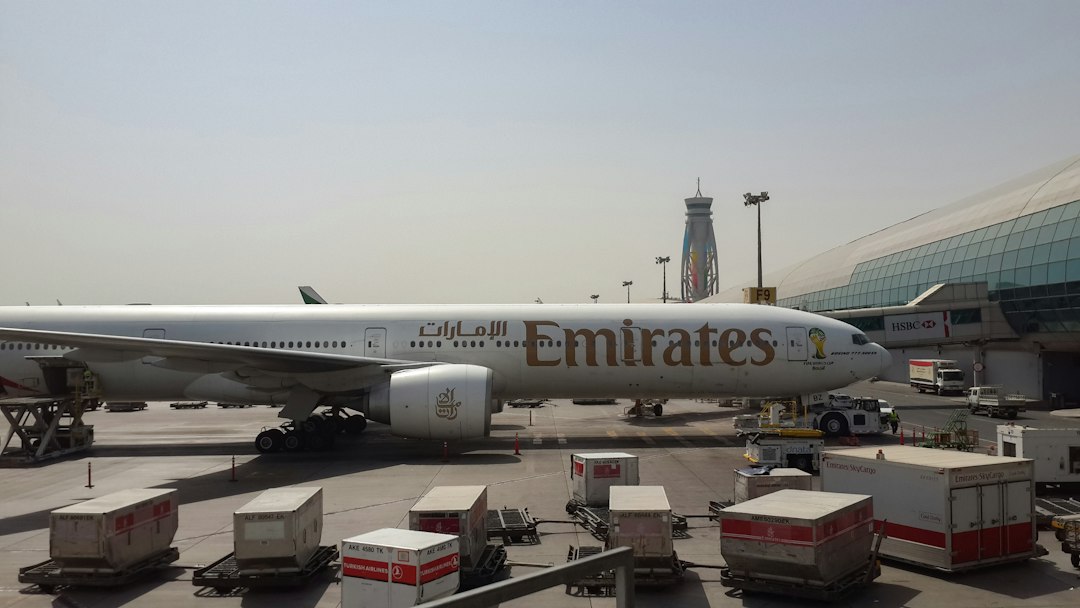
The Dubai carrier has accelerated its Starlink rollout, with 53 aircraft now connected as it works toward fitting 232 aircraft across its fleet. Emirates says installations are progressing at roughly 14 aircraft a month, turning what began as a premium-sounding technology upgrade into something much bigger: an attempt to make genuinely fast internet a normal part of long-haul flying.
That matters because Emirates is not talking about a slightly better version of the Wi-Fi passengers already know. On its Starlink-equipped Airbus A380s, the airline says three antennas can deliver more than 2 Gbps of combined bandwidth across the aircraft. The service is complimentary across all cabins, with passengers able to stream, make video calls, game, browse and work at cruising altitude.
The real upgrade is not speed. It is expectation.
Traditional airline Wi-Fi trained passengers to ration connectivity. Send the message. Check the email. Avoid the video call. Definitely do not expect a packed wide-body aircraft to behave like a home broadband connection.
Starlink changes that equation because its low-Earth-orbit satellite network is designed to offer far lower latency and much more usable bandwidth than older satellite systems. Emirates has already seen what happens when passengers are given that freedom. By July, it had recorded more than one million Starlink connections and more than a petabyte of passenger data use.
Those numbers tell a more interesting story than a speed test. People are not merely connecting because Wi-Fi exists. They are using it heavily enough to change what an airline journey can be.
Why the A380 makes this especially interesting
An A380 is about as difficult a test as airline connectivity can get: two passenger decks, hundreds of people and potentially hundreds of devices trying to get online at once.
Emirates’ answer is an industry-first three-antenna Starlink installation, compared with two antennas on its Boeing 777s. The airline says the extra hardware and additional wireless access points are designed to distribute capacity across the giant aircraft rather than simply deliver a strong satellite link to the roof.
That distinction matters. Impressive satellite bandwidth means little if hundreds of passengers cannot share it effectively inside the cabin.
Free Wi-Fi is becoming part of the airline battle
Emirates is not adopting Starlink in isolation. Airlines including Qatar Airways, United, Air France and Lufthansa Group have also embraced or announced the technology. The competitive pressure is becoming obvious.
Once passengers experience streaming-quality internet on one long-haul flight, charging them for a slow connection on the next becomes much harder to justify.
Emirates is particularly aggressive here. Starlink access does not require payment or a special Skywards tier on equipped aircraft. That makes connectivity less like an optional onboard extra and more like power at the seat or an entertainment screen: something passengers may soon simply expect to work.
There is still one catch: your aircraft matters
The rollout is moving quickly, but Starlink is not yet on every Emirates flight. Emirates’ own Wi-Fi information still describes Starlink as available on selected services, while aircraft swaps can change the onboard product at short notice.
That means travellers should not assume that booking an Emirates ticket automatically guarantees Starlink today.
The direction, however, is clear. Emirates originally set out to equip 232 Boeing 777 and A380 aircraft, and the current installation pace shows this is no longer a demonstration project. It is becoming part of the airline’s standard fleet experience.
Flying is becoming connected time
There is a broader consequence that airlines may eventually have to confront.
Reliable internet removes one of the last places where being unreachable was socially acceptable.
For business travellers, that can turn a 14-hour flight into a genuinely productive workday. Families can make video calls from 40,000 feet. Sports fans can follow live events. Streaming no longer has to stop when the boarding door closes.
But there is another side to that convenience. The quiet isolation of a long flight may disappear with it. Video calls, constant notifications and expectations from employers could follow passengers into the cabin.
That is why Emirates’ Starlink rollout feels more consequential than another airline amenity. Better Wi-Fi does not simply improve what happens on a plane. It changes what passengers can reasonably expect to do while they are there.
For decades, getting on an aircraft meant temporarily leaving the internet behind. Emirates is betting that era is ending — and with 53 aircraft already connected, the transition is well underway.
Sources: Emirates; Emirates News Agency (WAM). Figures reflect the latest publicly reported rollout information available at publication.