Alibaba’s latest AI announcement is easy to read as another giant-model arms race. Look closer, though, and the more consequential part may be the chip underneath it.
At its Apsara conference in Hangzhou on Tuesday, Alibaba laid out an unusually broad AI roadmap: a new Zhenwu V900 accelerator, plans for a future Qwen model with between 5 trillion and 10 trillion parameters, and a target to push Alibaba Cloud’s global data-centre capacity beyond 20 gigawatts by 2032.
Taken separately, each is a sizeable announcement. Taken together, they show what Alibaba is really trying to build: not simply a Chinese answer to ChatGPT, but an AI stack that stretches from the model people use all the way down to the silicon and data centres that run it.
The Zhenwu V900 may be the bigger story
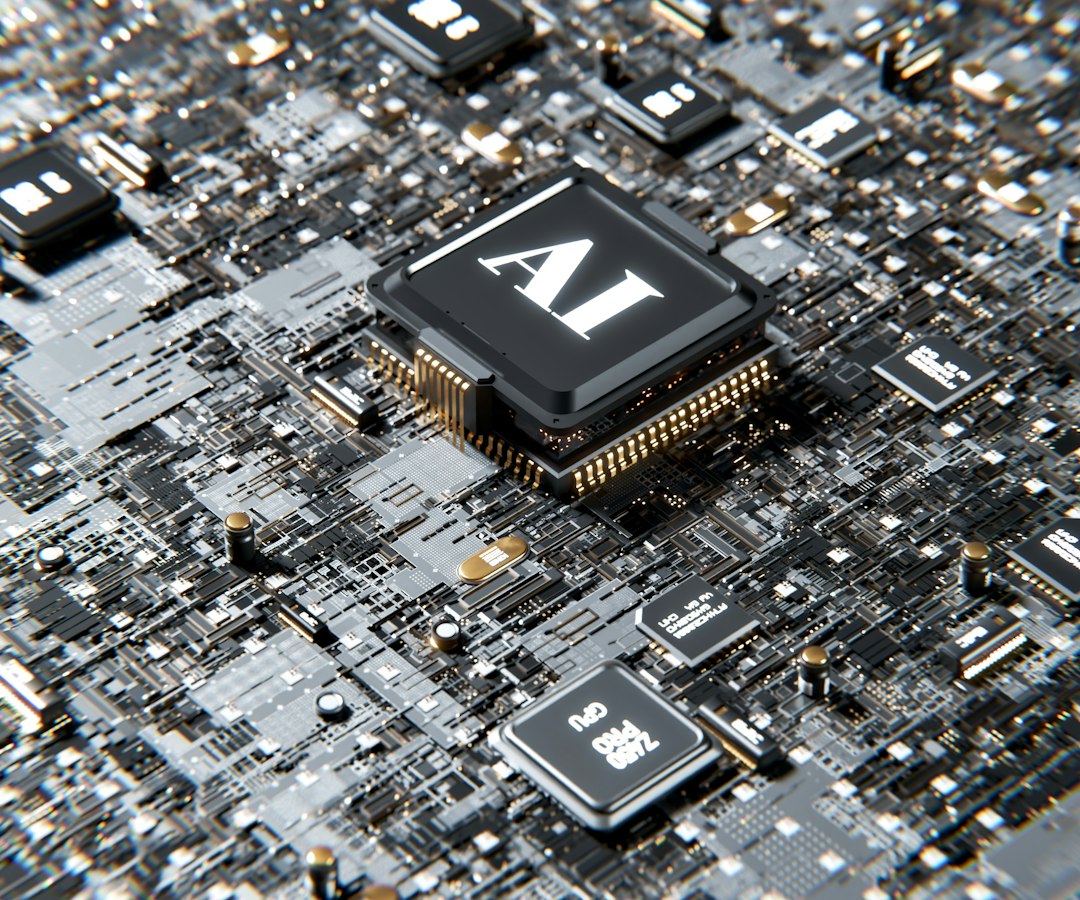
Alibaba describes the Zhenwu V900, developed by its T-Head semiconductor unit, as its most powerful AI accelerator yet. The company says it delivers roughly three times the computing performance of its predecessor and can be deployed in very large clusters for both AI training and inference. Mass production is expected in early 2027.
Those are company claims and independent real-world benchmarks will matter. But the strategic direction is already clear.
The global AI boom has made access to high-end accelerators one of the technology industry’s most valuable resources. Nvidia remains the defining name in that market. For Alibaba, developing more of its own silicon potentially gives it greater control over cost, supply and the way its hardware is tuned for its own Qwen models and cloud services.
That makes the V900 more interesting than a simple “Nvidia rival” label suggests. Alibaba does not necessarily need to displace Nvidia globally for its chip strategy to matter. A capable accelerator deployed across Alibaba’s own enormous cloud infrastructure could be strategically important on its own.
Then there is the 10-trillion-parameter Qwen ambition
Alibaba chief executive Eddie Wu also said the Qwen team plans to train a next-generation model containing between 5 trillion and 10 trillion parameters. Reuters reported that Alibaba’s current flagship Qwen 3.8 Max is around 2.4 trillion parameters.
The number is eye-catching, but it needs context.
Parameters are learned variables inside an AI model. Increasing their number can expand model capacity, but a bigger parameter count does not automatically produce a better AI system. Training data, architecture, inference design, post-training and efficiency all influence how useful a model ultimately becomes.
So the important question is not whether 10 trillion sounds bigger than a rival’s number. It is whether Alibaba can turn that scale into meaningful improvements on complex, long-running tasks without making the economics of operating the model unmanageable.
Alibaba wants to own more of the AI stack
This is where Tuesday’s announcements begin to fit together.
A huge model requires huge computing resources. Alibaba is simultaneously developing the model, designing accelerators and expanding the cloud infrastructure that could host both. The company says it wants Alibaba Cloud’s global data-centre capacity to exceed 20GW by 2032.
That vertical approach has become one of the defining battles in AI. The companies with the strongest position may not simply be those with the cleverest chatbot. Control over chips, networking, cloud capacity and energy can determine how quickly models can be trained, how cheaply they can be served and how widely they can be deployed.
Alibaba already has something many AI start-ups do not: a major cloud business and an enormous commercial ecosystem. Bringing proprietary silicon and Qwen deeper into that infrastructure could make each part reinforce the others.
What this means outside China
For everyday users, the immediate result probably will not be a dramatic change tomorrow morning. The V900 is not expected to reach mass production until 2027, while Alibaba’s proposed 5-to-10-trillion-parameter model remains a future project.
The longer-term implication is more important.
The AI industry is starting to look less like a race between individual chatbots and more like a contest between complete computing ecosystems. Models sit at the visible end. Behind them are chips, data centres, electricity, networking and billions of dollars of infrastructure.
Alibaba’s announcement suggests it wants to compete across that entire chain.
And that is why the V900 deserves attention even from people who never expect to buy an Alibaba chip. If China’s largest technology companies can build increasingly capable domestic accelerators alongside competitive models, the global AI hardware market becomes less dependent on a small number of suppliers — and the next phase of AI competition becomes much larger than ChatGPT versus Qwen.
The Tech Boom view
The headline number from Apsara may be 10 trillion parameters, but parameter counts are an imperfect scoreboard. The more revealing announcement is that Alibaba is assembling the infrastructure required to train and run models at that scale itself.
A model, a chip and more than 20GW of planned cloud capacity tell the same story from three different directions.
Alibaba does not just want a place in the AI race. It wants more control over the track it runs on.
Sources: Alibaba announcements at the 2026 Apsara Conference; Reuters reporting, September 22, 2026; Associated Press reporting, September 22, 2026. Performance and roadmap figures attributed to Alibaba remain company claims unless independently benchmarked.