Opinion
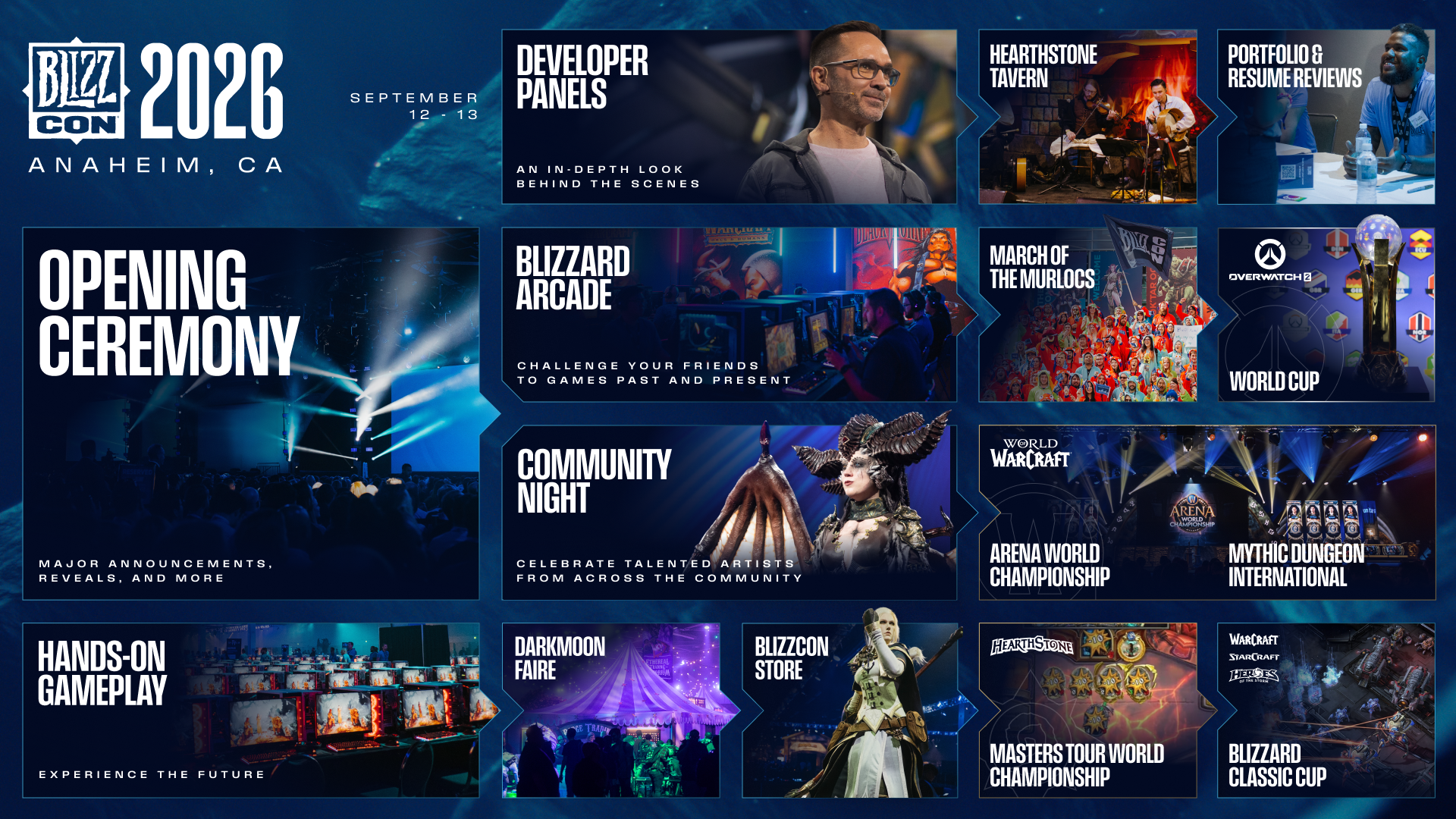
BlizzCon 2026 looked, at first glance, like a celebration of Blizzard Entertainment’s history. Diablo turned 30. Warcraft III received attention more than two decades after its original release. StarCraft returned after years on the sidelines. Even Heroes of the Storm, a game many players had stopped expecting major surprises from, received a new hero.
But three weeks later, the more interesting pattern is becoming clearer. Blizzard is not simply mining its back catalogue for remasters and anniversary content. It appears to be trying something harder: taking the worlds people already love and finding reasons for them to exist again.
That distinction may define Blizzard’s next era.
StarCraft came back — but Blizzard refused to make the obvious game
If nostalgia alone were driving the company, the easiest announcement at BlizzCon would have been StarCraft III.
Instead, Blizzard revealed STARCRAFT, an open-world shooter targeting Spring 2030. It returns to the Koprulu Sector but abandons the real-time strategy format that made the franchise famous.
That is a surprisingly risky way to revive one of PC gaming’s most important names. There is enormous demand for another traditional StarCraft strategy game, and Blizzard knows it. Yet the company chose to treat StarCraft as a universe rather than a genre.
Whether that decision works is another question. A 2030 release window leaves Blizzard years to prove that this is more than a famous name attached to an open-world shooter. But creatively, the message is significant: bringing StarCraft back does not necessarily mean recreating 1998 or 2010.
Blizzard itself called the announcement a “new era” for StarCraft. For once, that marketing phrase feels reasonably accurate.
WoW: Forever is nostalgia with somewhere to go
World of Warcraft: Forever may be the clearest example of this new philosophy.
Classic WoW proved years ago that players wanted old Azeroth back. The obvious business model would have been to keep recycling the game’s original expansion timeline indefinitely.
Forever does something different. It returns to the Vanilla era, but Blizzard is creating new places and stories inside it: three new zones, more than 1,000 quests, nine dungeons, two raids and the new Skyborne race. It exists alongside Modern and Classic rather than replacing either one.
In other words, Blizzard is asking a fascinating question: what if the version of World of Warcraft people remember most fondly had never stopped evolving?
That is much more ambitious than nostalgia. It gives Blizzard a second timeline where old Azeroth can become something new without rewriting the modern game.
Forever launches November 4, while its beta began September 17. We won’t know whether the idea truly works until players have lived in it for a while, but conceptually it may be Blizzard’s smartest use of its history in years.
Warcraft III isn’t being treated like a museum piece anymore
The same idea extends backwards.
At BlizzCon, Blizzard released Warcraft III: Reforged — Forsaken Kingdom, the game’s first new campaign story in more than two decades. It explores the Forsaken after the fall of Lordaeron and deliberately connects Warcraft III to the beginning of World of Warcraft: Forever.
That connection matters more than the expansion itself.
Warcraft III is no longer just an old RTS Blizzard occasionally patches. It has become part of a living narrative again. A game from 2002 is being used to establish a story that continues into a new World of Warcraft experience launching in 2026.
There is some irony here. Warcraft III: Reforged’s disastrous 2020 launch damaged enormous goodwill. Blizzard cannot erase that simply by releasing a new campaign and graphics update. But supporting the game with genuinely new material is a better attempt at rehabilitation than pretending the original problems never happened.
Even Diablo V is built around changing the familiar formula
Then there is Diablo V.
Blizzard could easily have announced another journey in which heroes discover a growing evil and eventually confront Diablo. Instead, the premise begins after the catastrophe: Sanctuary has fallen and Diablo has already won.
That doesn’t reinvent the action-RPG genre, but it changes the fundamental starting point of a story Blizzard has been telling for 30 years.
At the same time, Diablo IV continues to reach backwards. Its anniversary content revisits characters and ideas from earlier games, while the Amazon is returning in 2027. Blizzard is simultaneously preserving familiar Diablo iconography and using Diablo V to push the main story somewhere darker.
It is the same pattern again: keep the history, but don’t become trapped by it.
Heroes of the Storm might be the smallest announcement — and the most revealing
Heroes of the Storm is perhaps the most curious part of the whole picture.
Blizzard introduced Xal’atath as a new hero, who arrived on September 28, and explicitly teased that there may be more to come. That doesn’t mean Heroes is suddenly returning to its old development cadence, and players should be careful not to read more into the tease than Blizzard actually promised.
But the fact that Blizzard is creating anything substantial for Heroes again fits the broader pattern.
Older Blizzard games no longer seem to be viewed purely as completed chapters. If there is still a community and a worthwhile creative idea, the door appears to be open.
This is a smarter use of nostalgia — but it could still go wrong
There is an obvious cynical interpretation of all this. Blizzard owns some of gaming’s most recognisable intellectual property, and familiar names are safer commercial bets than entirely new franchises. Under Microsoft, those worlds are enormously valuable assets.
That’s true. Nostalgia is a business strategy as much as an artistic one.
But there is a meaningful difference between exploiting nostalgia and building on it.
A StarCraft remaster would exploit nostalgia. An open-world StarCraft shooter risks upsetting the very audience the name guarantees. Re-releasing Vanilla WoW forever would be safe. Building a new Vanilla-era timeline with hundreds of new quests is considerably harder. Leaving Warcraft III alone would cost almost nothing. Producing a new campaign more than 20 years later requires a reason to believe that world still matters.
None of these projects is automatically good because it is ambitious. StarCraft could arrive in 2030 and prove that the franchise never belonged in an open world. Forever could discover that players loved Classic precisely because they didn’t want Blizzard changing it. Diablo V could struggle under the weight of a reveal made years before release.
Execution still decides everything.
Blizzard’s biggest asset isn’t nostalgia. It’s continuity.
For years, Blizzard has carried a strange problem: some of the most beloved worlds in gaming were also reminders of the company’s best years.
BlizzCon 2026 suggested a way out of that trap.
Instead of constantly asking players to remember when Warcraft, Diablo and StarCraft were great, Blizzard can make those histories useful again. Warcraft III can lead into a new version of WoW. StarCraft can become something its original designers could not have built in 1998. Diablo can keep its mythology while beginning a sequel in a world where the villain has already won.
That doesn’t mean Blizzard has rediscovered its old magic. It means the company may finally understand that it doesn’t need to.
The better goal is to make its old worlds feel capable of surprising us again.
After everything Blizzard announced at BlizzCon 2026, that may be the most important announcement Blizzard never actually made on stage.
Sources: Blizzard Entertainment’s official BlizzCon 2026 Opening Ceremony recap and official Warcraft/Diablo announcements. Featured image: Blizzard Entertainment.