OpenAI has released GPT-6 Cyber, a security model built to find software flaws, prove they can be exploited, and draft fixes. OpenAI’s announcement is dated 5 November 2026. The company says it classifies the model as “Critical” for cybersecurity under its Preparedness Framework, up from “High” for the previous GPT-5.6 Cyber. Ordinary users can’t access it. But because it is already turning up bugs in software Australians use every day, like Firefox and Linux, it changes how quickly updates are likely to land on your devices.
What OpenAI actually announced
According to OpenAI’s announcement, GPT-6 Cyber scores 48.5% on the ExploitGym benchmark, compared with 32.1% for its predecessor, GPT-5.6 Cyber. OpenAI also says its researchers used the model to build 948 privilege-escalation exploits for Linux and to find 81 previously unknown high-severity vulnerabilities in Firefox. Mozilla has since released fixes for many of the Firefox bugs. These figures come from OpenAI’s own announcement and internal testing.
Access is gated. The model is rolling out to selected organisations in OpenAI’s Daybreak Red programme, which is meant for authorised defensive security work, as The Verge reports. Reuters also reported the Critical rating and the restricted rollout. Under OpenAI’s onboarding guide, GPT-6 Cyber needs separate model approval, organisations must enforce single sign-on, and API access requires IP allowlisting by default.
Why a “Critical” rating matters
OpenAI is openly saying this model is good enough at offensive security work that it has to control who uses it. The company also says GPT-6 Cyber stayed within its authorised scope in 99.93% of alignment tests without its deployment prompt, and in 100% of tests with it. Those numbers are encouraging, but they are results OpenAI reported from its own evaluations. The real test will be how the access controls hold up once the model is used more widely.
The bottleneck is patching, not finding bugs
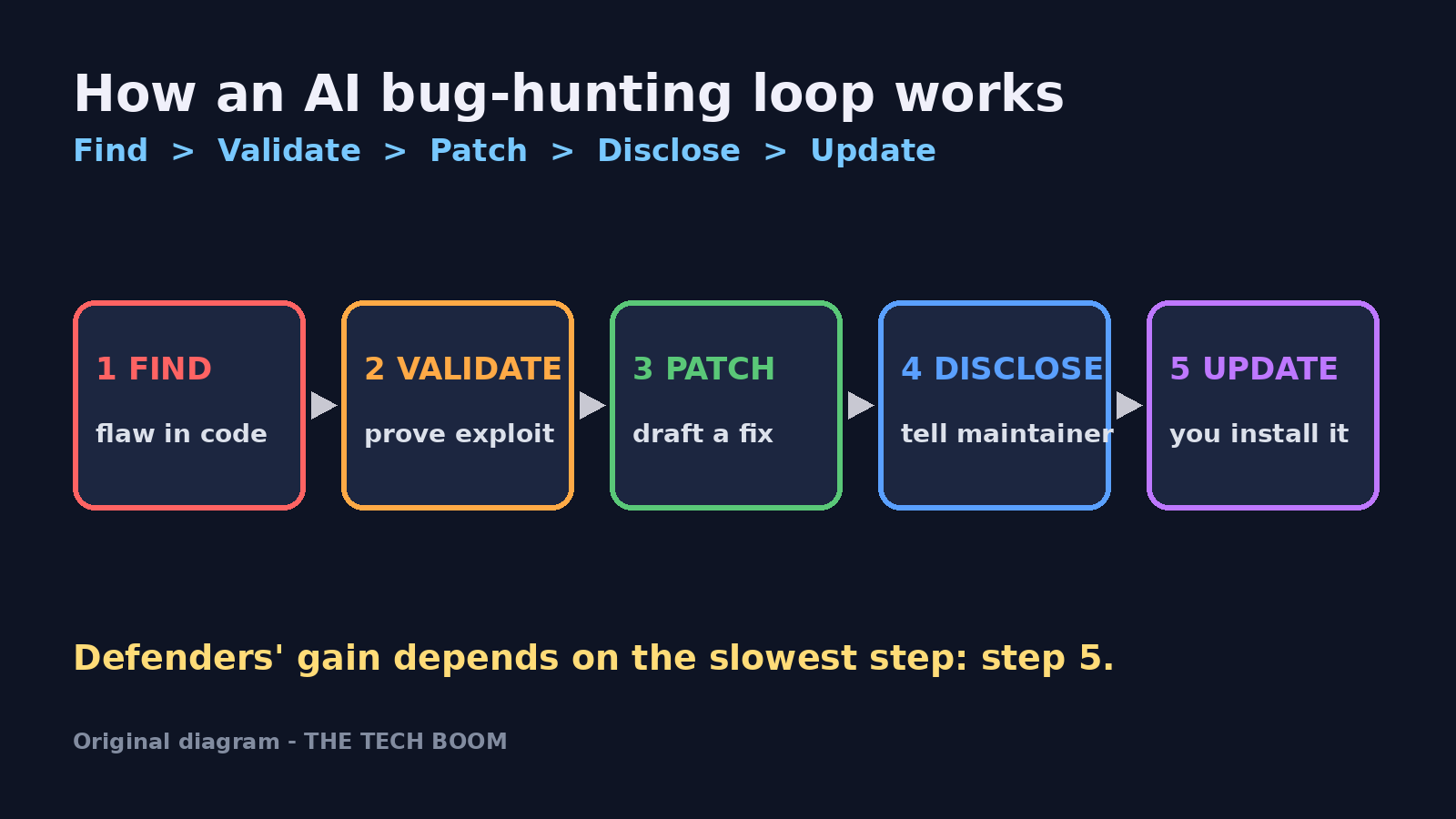
OpenAI’s results suggest that, on the tasks it tested, a model can now find and validate large numbers of vulnerabilities. Even so, finding more bugs doesn’t automatically make anyone safer. A bug only stops being a risk when the vendor ships a patch and you install it. If models like this produce a flood of findings, the slow steps will be maintainers triaging reports, vendors releasing fixes, and households and small businesses actually applying updates. Many open-source projects are run by a handful of volunteers who could be swamped.
So for most people, the practical effect is likely to be more frequent security updates. Turning on automatic updates for your browser, phone and operating system matters more than ever. For small businesses running WordPress or other self-hosted software, our guide to checking whether your WordPress site is safe shows how quickly an unpatched component can become a liability.
What it means for Australia
Australian regulators are already pushing AI developers to show their systems are safe, a debate we covered in Australia’s push for AI safety assurance. A model that can write working exploits sharpens that debate. Who gets access, how it is audited, and whether local critical-infrastructure operators can join programmes like Daybreak are all open questions. OpenAI hasn’t given Australia-specific availability details.
What to do now
- Turn on automatic updates for Firefox, Chrome, your operating system and your phone.
- If you run a website, check that plugins and themes are up to date and remove any you don’t use.
- Businesses should expect more vulnerability reports and plan time for faster patching.
Our take: GPT-6 Cyber’s headline numbers are impressive, but whether defenders come out ahead depends on the slowest part of the chain, which is getting fixes onto real devices.