ASX-listed Peninsula Energy has stopped producing uranium at its Lance project in Wyoming after a cyberattack hit the systems that run the plant and its wellfields, and a week later it still cannot say when the site will restart. Its shares went into a trading halt on Monday 23 November and have been suspended since Wednesday 25 November. The suspension runs until trading opens on Monday 30 November, or until the company announces a restart, whichever comes first.
Most of the cyber incidents we cover involve stolen customer data. This one is different: it hit operational technology (OT), the industrial control systems that physically run a site. Here is what Peninsula has said, what it hasn’t, and what Australian operators of mines, plants and utilities can take from it.
What happened, in order
- Friday 20 November: Peninsula’s US subsidiary, Strata Energy, identified “a cybersecurity incident affecting the plant and wellfield operating and control systems at Lance” on the Friday morning, US time. The company’s trading halt request puts it late on Friday night in Western Australia. Peninsula shut down operations and isolated the affected systems.
- Monday 23 November: Peninsula asked the ASX for a trading halt, saying the breach “was to the Company’s operating system only” and that its administrative systems in the US and Australia had not been breached.
- Wednesday 25 November: before the market opened, the company released a fuller update to the ASX and moved from a halt to a voluntary suspension of its shares.
“The Company’s immediate priorities have been to protect the safety of its employees, secure its operating systems and work towards the restoration of operations in a safe and controlled manner,” Peninsula said. It says it has notified relevant US authorities and hired outside cyber security, forensic and legal advisers.
Based on its investigation so far, the company says the incident “appears to be confined to the plant and wellfield operating and control systems”, and that its corporate systems in the US and Australia, including payroll and financial administration, are unaffected. That is Peninsula’s own account of an investigation that is still under way, not an independent finding.
Why an attack on control systems stops a uranium mine
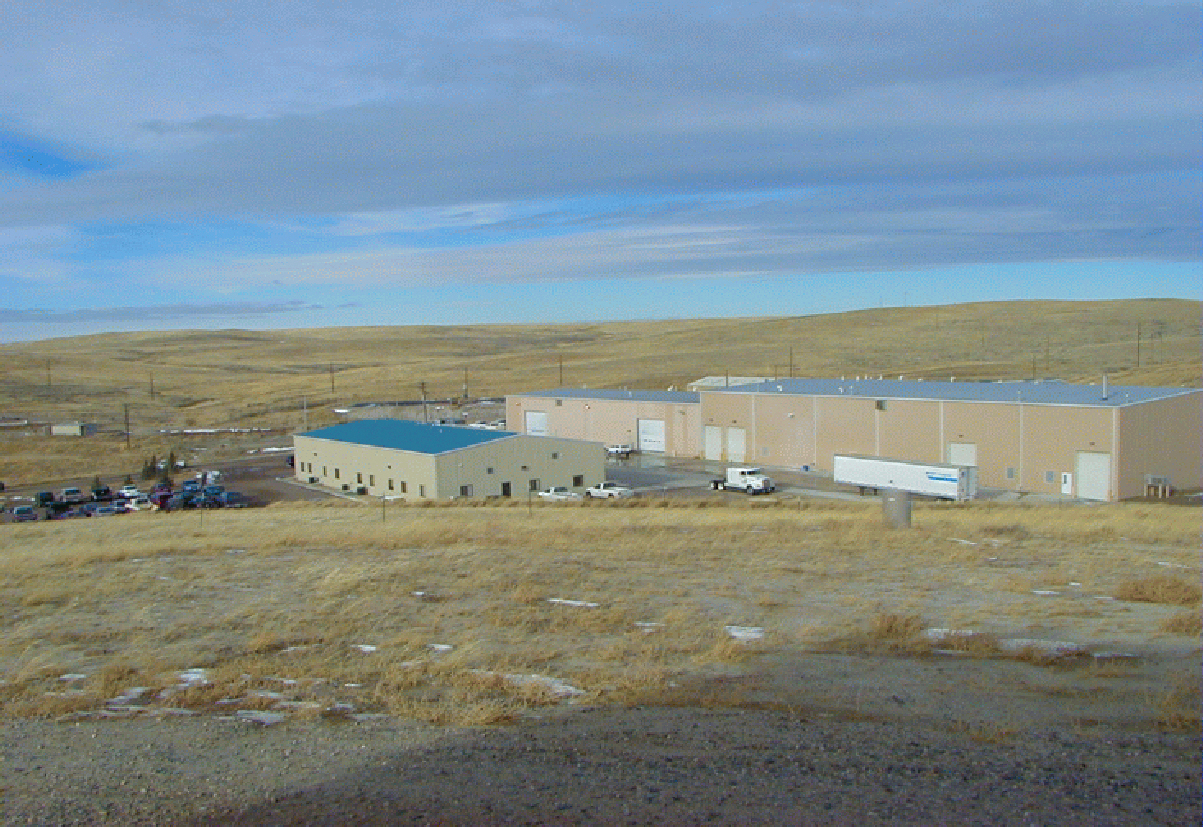
Lance, in Crook County in north-eastern Wyoming, about 50 km east-north-east of the town of Gillette, is not a conventional dig-and-haul mine. It uses in-situ recovery (ISR): a solution is pumped through wells to dissolve uranium underground, then brought back to the surface and processed at a central plant into uranium concentrate, known as yellowcake. Pumps, flows and plant processes are run by control systems, so if the company can’t trust those systems, it can’t safely run the site.
That is why the restart takes time. Peninsula says its recovery program involves “assessing the integrity of affected systems” and verifying that the plant’s control systems “can be safely returned to service”. Industrial cyber security firm Red Tiger Security, in its analysis of the disclosure, put the problem plainly: “Before a plant like this can run again, someone has to prove that the controllers, operator screens and configurations are the ones that should be there.”
The stakes for Peninsula are significant. According to the company’s project page, the Lance plant was built for 2.0 million pounds of uranium concentrate a year, and the company had forecast 500,000 to 600,000 pounds for calendar 2027. The Register notes Peninsula withdrew its 2026 guidance earlier this year after operational problems at Lance. The company now says it is “unable to assess whether the incident will materially impact previously stated production guidance for CY2027”.
What Peninsula hasn’t said
- Who was behind the attack, or whether it involved ransomware.
- How the attackers got in, and which control-system components were affected.
- Whether any data was taken. The company says broader investigations “are also focussed on potential data impacts”.
- When Lance will restart. Peninsula has promised an update on the expected timeline “in the coming days”.
TechRadar reported on 27 November that no group had claimed responsibility and no data had surfaced on the dark web. It also noted that Chinese state-sponsored groups are known to target critical infrastructure and energy companies, but nothing made public so far links any group to this incident.
What it means for Peninsula shareholders
Peninsula, which describes itself as the only ASX-listed uranium company with US production, can’t be traded while it is suspended. The suspension is due to end when trading opens on Monday 30 November, unless the company announces a restart and any impact on production guidance before then, and Peninsula has promised an update on its restart timeline “in the coming days”. As with Bell Financial’s cyber incident last week, an early ASX disclosure reflects what a company knows at that point, and the picture can change as forensic work continues. This is not financial advice.
The lesson for Australian industry (analysis)
Australia’s cyber agency has been warning about this kind of attack for some time. The Australian Signals Directorate’s Principles of operational technology cyber security (October 2024), co-sealed by agencies including the US CISA, NSA and FBI and the UK’s National Cyber Security Centre, opens with “Safety is paramount” and sets out six principles. It also says plainly that “Entities should segment and segregate OT networks from the internet and from IT networks”.
Peninsula’s case shows why. According to the company, its office systems were unaffected, yet the part of the business that earns money stopped. Earlier this month we covered a similar pattern when France blamed Iran for hacking supermarket fridges: attacks on industrial controllers can cause physical damage and losses, not just stolen data. For Australian mines, plants, utilities and factories, the practical checks are:
- Know what you can’t run without. Identify the control systems a site needs to operate safely, and where they connect to office IT, vendors and the internet.
- Keep known-good copies offline. Store backups of controller logic, operator-screen (HMI) configurations and network settings that can’t be reached from the network, so a restart doesn’t depend on rebuilding from scratch.
- Plan the shutdown and the restart. ASD says OT incident response plans should be “integrated into the organisation’s other emergency and crisis management plans, business continuity plans, playbooks and mandatory cyber security incident reporting requirements”, with process engineers involved.
- Watch remote access. ASD warns against engineers doing remote maintenance without telling on-site staff, because operators learn to ignore activity they should be questioning.
- Report it. Australian organisations can report cyber incidents to ASD online or on the 24/7 Australian Cyber Security Hotline, 1300 CYBER1 (1300 292 371).
What to watch next
- Peninsula’s promised update on a restart timeline, and whether its shares resume trading on Monday 30 November.
- Whether the forensic investigation finds that any data was taken.
- Whether any group claims responsibility.
- Any revision to Peninsula’s 2027 production forecast once Lance is running again.
Sources: Peninsula Energy trading halt request, 23 November 2026, Peninsula Energy ASX update, 25 November 2026, Peninsula Energy Lance project page, The Register, TechRadar, MiningNews.net, Red Tiger Security, ASD’s ACSC.
Photo: A central processing plant at a US uranium in-situ recovery site (not Peninsula’s Lance project). U.S. Nuclear Regulatory Commission via Wikimedia Commons, licensed CC BY 2.0 (also tagged as a US government public-domain work); converted to PNG, otherwise unaltered. No endorsement implied.