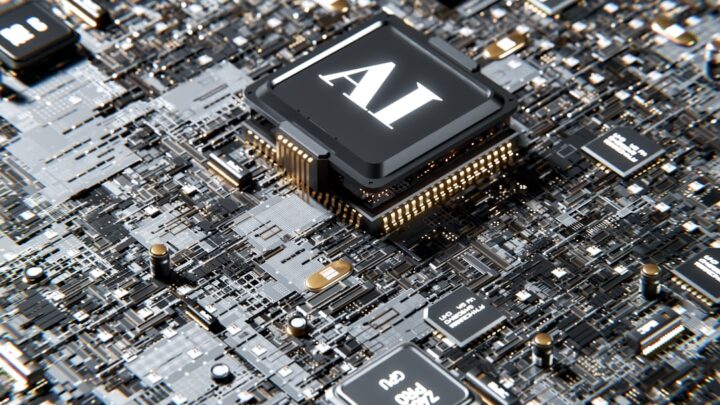
AMD has used IFA 2026 to show just how far the idea of a ‘personal AI workstation’ can be pushed. Its new Threadripper Halo Station is a prototype deskside system combining a 96-core Ryzen Threadripper PRO processor with AMD Instinct-class accelerators and enough memory to tackle AI workloads normally associated with servers.
AMD says the system can be configured with up to 576GB of HBM3e GPU memory, up to 2TB of RDIMM system memory and as much as 2.6TB of combined memory. The company is positioning it for researchers, developers and small teams that want to train, fine-tune and run very large AI models locally instead of relying entirely on cloud infrastructure.
What AMD announced
According to AMD’s official specifications, the Threadripper Halo Station uses the company’s Zen 5 architecture and a Ryzen Threadripper PRO 9995WX-class configuration with 96 cores and 192 threads. AMD pairs that CPU with Instinct-class HBM workstation accelerators.
The headline figures are unusual even for a high-end workstation: up to 2TB of conventional system memory, up to 576GB of HBM3e accelerator memory and up to 16.4TB/s of total system memory bandwidth.
AMD describes the Halo Station as a prototype being shown for the first time at IFA 2026. That distinction matters: AMD has not yet announced normal consumer pricing or a firm retail release date, so this should not be viewed as a PC most people will be ordering next week.
Why this matters for local AI
AI development has largely revolved around cloud-based GPU infrastructure because the biggest models require enormous amounts of fast memory and compute. AMD’s pitch is that some of those workloads can increasingly move onto a workstation sitting beside a developer’s desk.
The company says Threadripper Halo Station has the capacity to work with frontier-class models and intensive agentic workflows locally. For organisations handling proprietary code, research or sensitive data, keeping workloads on-premises can also reduce how much information needs to leave the organisation for cloud processing.
AMD is taking the AI workstation fight beyond the CPU
The more important story is strategic. AMD is no longer relying only on Ryzen and Threadripper CPUs to establish itself in professional computing. The Halo Station combines Threadripper, Instinct accelerators and AMD’s ROCm software ecosystem in one local-AI proposition.
That puts AMD into a market where NVIDIA has been pushing its own personal and workstation AI systems. Raw specifications alone, however, do not establish which platform is better. Software compatibility, real-world model performance, power requirements, pricing and availability will ultimately matter as much as memory capacity.
What it means for PC users
The Threadripper Halo Station is not a gaming PC and it is unlikely to be relevant to ordinary buyers in its current form. But it illustrates where the upper end of personal computing is heading.
Local AI is expanding beyond the relatively small NPUs now appearing in laptops. At one end are mainstream AI PCs designed for everyday assistants and productivity features. At the other, systems like the Halo Station are effectively bringing data-centre-class hardware into a tower workstation.
That could eventually matter to more people as hardware, memory capacity and local AI software improve. Developers may be able to run increasingly capable models without recurring cloud inference costs, while businesses gain more options for keeping sensitive workloads on their own hardware.
What we still don’t know
There are several important unanswered questions. AMD has not provided conventional retail pricing, a firm release date or comprehensive independent performance benchmarks for the Halo Station. Those details will determine whether the concept becomes a broadly available workstation platform or remains primarily a showcase for what AMD’s hardware can do.
For now, the significance is the direction: AMD wants Threadripper and Instinct to form part of a serious alternative platform for running extremely large AI workloads locally.
Sources: AMD Threadripper Halo Station official product page and AMD IFA Berlin 2026 materials. Specifications and availability details are based on AMD’s published information as of September 8, 2026.