Visa, Mastercard and JPMorgan Chase have all confirmed that outside companies they work with were hit by cyberattacks, after a data-extortion gang called n0n listed the three on its leak site and began publishing files. All three say their own payment systems weren’t breached and no card numbers were taken. But the leaked Visa material is focused on the Asia-Pacific, Australia is one of the markets named in it, and researchers who have examined the files say they hold exactly the kind of detail scammers use to sound convincing.
Here’s what the companies have confirmed, what is still only claimed, and what to do if you hold a Visa or Mastercard, particularly a premium card with dining or concierge perks.
What Visa, Mastercard and JPMorgan have said
The statements were given to reporters this week, with Mastercard and JPMorgan speaking on Thursday 19 November US time (Friday in Australia). JPMorgan also posted its statement on X.
- Visa: “Visa is aware of these claims,” a spokesperson told The Register. “They are associated with an incident involving a third-party service provider in Asia Pacific. Visa’s systems were not involved and were not impacted. No payments data such as card numbers were affected.” Visa also said the incident is unrelated to the system disruptions that hit several industries that week.
- Mastercard: Senior vice-president Seth Eisen said the company had been told of “an incident at a third-party provider that resulted in the exposure of a limited amount of email addresses – non-payments information – from a small subset of cardholders enrolled in a specific benefit program”. He added: “There is no impact to the Mastercard payment network or the ability for people to use their cards.” Mastercard says the exposure has been contained.
- JPMorgan Chase: America’s biggest bank said on X that “third parties who provide services to the firm were the target of a cyber attack,” and that “the attackers accessed certain marketing data held by those vendors, which may include some customer names and email addresses.” According to ABC News in the US, it also said: “Where appropriate, we will contact affected customers directly and offer support, including complimentary credit monitoring”. The bank says the breach is not connected to a separate service outage earlier that week.
None of the three would tell The Register who the vendors are, when the breaches happened or exactly what was taken, and BleepingComputer notes that Visa and Mastercard have not confirmed any impact on customers.
What the leaked files contain
n0n posted the three companies to its leak site on 16 November and has since published samples. Reuters reviewed the files and, as reported by iTnews, found the Visa material “appears to be primarily focused on Asian-Pacific markets,” listing Hong Kong, Taiwan, Korea, Japan, the Philippines, Singapore, Malaysia, Australia and Macau among others. Reuters said the spreadsheets include thousands of purported customer email addresses, phone numbers and Visa marketing campaign data, but it could not verify that the data is authentic. The Mastercard files relate mainly to customers in North America, the Middle East and Africa, and the JPMorgan files appear to include more than 16,000 customer email addresses, some with phone numbers and postal codes.
Threat-intelligence firm SOCRadar went through all 14 files in the published Visa and Mastercard archives for The Register. “We found no card numbers, expiry dates, CVVs, passwords, dates of birth, or home addresses in any file,” said Ensar Seker, SOCRadar’s chief information security officer. What the files do include, according to SOCRadar, are mobile numbers, the first digits of card numbers that identify the issuing bank (known as BIN prefixes), and dated airline, hotel and restaurant bookings.
Cybernews, which also examined the Visa data, says it is tied to Visa’s premium dining and loyalty programs in the Asia-Pacific, with file names mentioning “Visa Elite Dining” and “Dining Reminder”, and that more than 6,000 premium Visa customers appear in it. Visa has not confirmed those figures, and it has not said whether any Australian cardholders are affected.
Two further points matter. SOCRadar says the published files are only about 0.4 per cent of what n0n claims to hold, so “a further release is possible”. And it says the Visa and Mastercard files share the same layout and both stop on 26 October, suggesting “two card programs run on one provider’s platform”.
Is this linked to the Qubole supply-chain attack?
Possibly, but nobody has confirmed it. Earlier this month, security company Wiz reported that between 14 and 26 October an attacker used credentials from an AWS account associated with Qubole, a cloud data-analytics platform owned by Idera (as BleepingComputer notes), to get into multiple Qubole customers’ cloud environments through access those customers had granted the vendor. n0n has claimed that attack too. The same gang has also claimed the Expedia breach, which Expedia attributes to a compromised third-party data platform provider; we covered it in what the Expedia breach means for Wotif customers.
SOCRadar’s Seker told The Register: “The timing fits the Qubole supply-chain campaign.” But he stressed this is its assessment and not a confirmed finding. Visa, Mastercard and JPMorgan declined to say whether Qubole was involved, and Idera did not respond to The Register.
What it means for Australian cardholders
On what Visa and Mastercard have said, your card number, expiry date and security code were not in these files, so there’s no reason to cancel a card because of this incident alone. The risk is phishing. A scam call or text that knows your name, your mobile number, which bank issued your card and the restaurant you booked through a card perk is far more believable than a generic one. Seker said that detail “is what a fraudster needs to pose as a concierge desk or a bank”.
Practical steps, drawn from Scamwatch and the Australian Cyber Security Centre’s data breach advice:
- Treat unexpected contact about your card, a booking or a “security check” with suspicion, even if the caller knows personal details. Scamwatch’s advice is blunt: “Never share your personal information, credit card details, passwords or one-time codes with anyone who contacts you unexpectedly, even if they claim to be from your bank or another trusted organisation.”
- Don’t use links or phone numbers in the message. Call your bank on the number on the back of your card, or open its app directly.
- Watch for follow-ups that reference real bookings, such as a “concierge” asking you to confirm card details for a reservation, or a refund offer for a dinner you actually went to.
- Check your statements and turn on transaction alerts in your banking app so you see anything unusual quickly.
- If you think you’ve been scammed, contact your bank straight away. IDCARE, the Australian identity and cyber support service, can help on 1800 595 160.
If your bank or Visa contacts you about this incident, check the message is genuine by contacting them through their official app or website before acting on it.
Our view (analysis): Coming a week after Expedia’s vendor breach, this follows a familiar pattern. The big brand’s own systems hold up; the marketing, loyalty and reporting companies it shares customer data with don’t. Visa’s assurance that no card numbers were affected matches the evidence so far, but it understates the problem: a list of premium cardholders with their phone numbers and restaurant bookings is valuable to scammers precisely because it isn’t payment data, and it doesn’t trigger a new card. Australians also have no clear answer yet on whether they are in the files. Under the Notifiable Data Breaches scheme, organisations covered by the Privacy Act must tell affected people when a breach is likely to cause serious harm, but with an unnamed overseas vendor and Visa saying only “Asia Pacific”, it isn’t clear who would be responsible for telling Australian cardholders. Visa should say plainly which countries’ cardholders are affected and how they will be told.
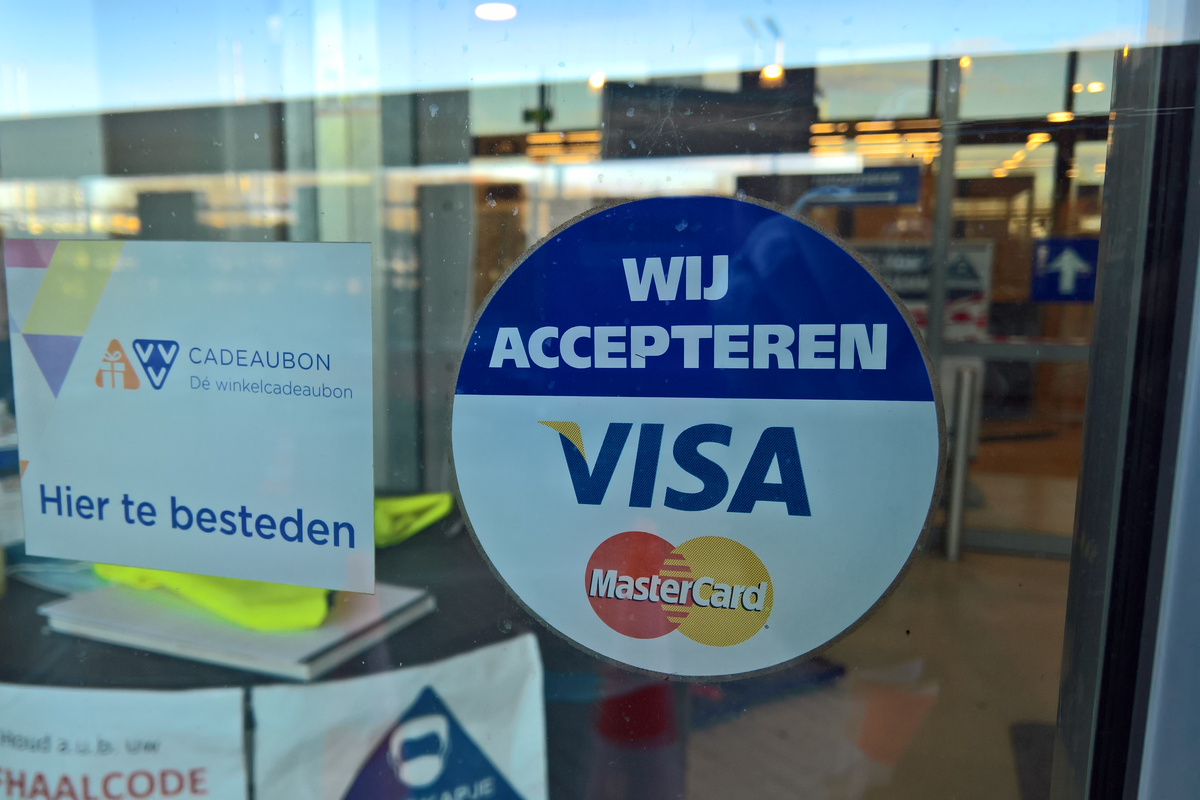
Featured image: a “Wij accepteren Visa / Mastercard” (We accept Visa and Mastercard) sticker on a shop door in Rotterdam, 2021. Photo: Donald Trung Quoc Don (Chữ Hán: 徵國單) – Wikimedia Commons, licensed CC BY-SA 4.0 (cropped and resized).