Black Friday is still more than two months away.
You wouldn’t necessarily know it from looking around Australia’s biggest retailers.
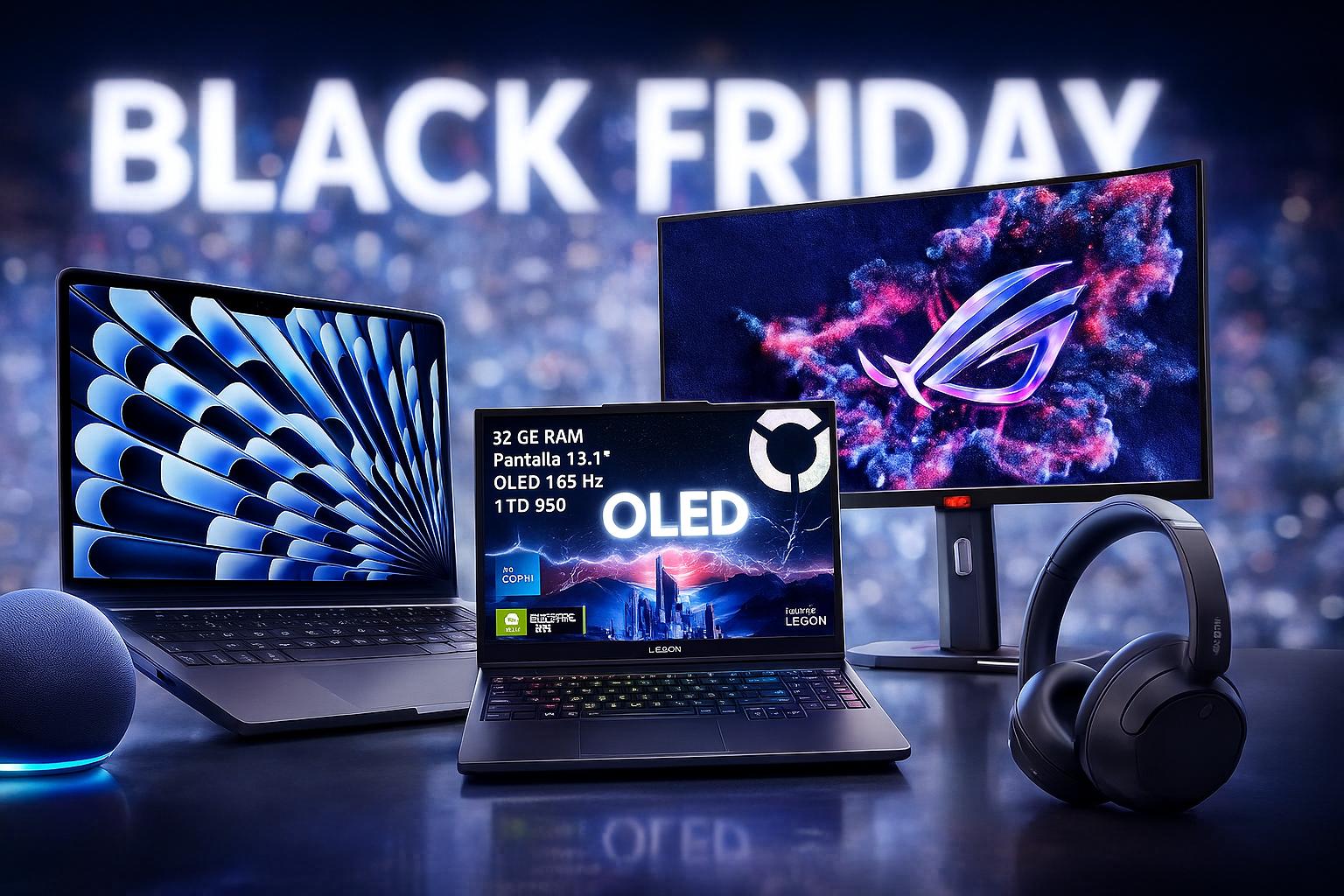
Black Friday landing pages are already appearing, deal guides are being prepared and the annual battle for shoppers looking for cheaper laptops, televisions, phones and gaming hardware is beginning long before the first major discounts arrive.
There’s just one important detail.
Most of the real Black Friday sales haven’t started yet.
Black Friday falls on Friday, 27 November 2026, followed by Cyber Monday on November 30. Yet the event has become so important to Australian retail that the marketing cycle surrounding it now begins months earlier.
JB Hi-Fi already has its Black Friday 2026 page online, while making clear that its actual sale hasn’t started. The retailer suggests shoppers start watching from early November.
The Good Guys is similarly preparing for Black Friday across computers, televisions, gaming, headphones, cameras, smart-home equipment and appliances.
For Australian technology shoppers, that creates an unusual period between now and November.
Some products are worth buying today.
Others may be worth waiting for.
And perhaps the most useful thing you can do before Black Friday isn’t finding a discount at all.
It’s learning what the product you want actually costs.
Black Friday isn’t really a Friday anymore
Black Friday arrived in Australia as an imported American shopping event.
It didn’t stay that way.
It has grown into one of the most important periods on the Australian retail calendar, particularly for consumer electronics.
More importantly, the boundaries of the event have gradually disappeared.
Australian Black Friday promotions increasingly begin before the official Friday, while Cyber Monday extends the event in the opposite direction.
In previous years, some technology promotions appeared from late October, with retailers and manufacturers attempting to capture shoppers before competitors launched their own campaigns.
That means Black Friday 2026 is likely to feel less like a sale weekend and more like a rolling technology sale season.
And that changes how you should shop it.
Waiting until November 27 and buying whatever has the biggest discount sticker may actually be one of the worst strategies.

The best preparation takes about 30 seconds
Suppose you’ve been considering a particular laptop that currently costs $1,799.
Take a screenshot.
That’s it.
Do the same with the television, headphones, gaming monitor or phone you’ve been thinking about buying.
When November arrives, you’ll know whether that spectacular-looking “$500 OFF” banner represents a genuine saving or simply a discount from a reference price that few customers were actually paying.
The percentage isn’t what matters.
The final price is.
This is particularly important during enormous shopping events where hundreds of products can suddenly be advertised as discounted simultaneously.
Black Friday creates urgency extremely well.
Countdown timers appear. Stock warnings appear. Sale prices turn red. Retailers tell you an offer ends tonight.
Knowing the normal price beforehand makes most of that noise considerably easier to ignore.
Laptops could be one of Black Friday’s strongest categories
If your current computer still works, September may not be the ideal time for an impulse laptop upgrade.
Computers are unusually suited to major sale events because manufacturers produce numerous configurations and generations simultaneously.
A retailer may have one laptop with last year’s processor sitting beside a visually identical machine using the latest chip.
When inventory needs to move, the older machine can suddenly become considerably more interesting.
Gaming laptops exaggerate this effect.
New processors and graphics chips don’t make last year’s hardware obsole