Google’s artificial intelligence expansion isn’t only consuming more electricity. Building the enormous data centres behind that expansion requires huge quantities of steel and concrete — and Google is now putting money behind an effort to make one of those materials dramatically cleaner.
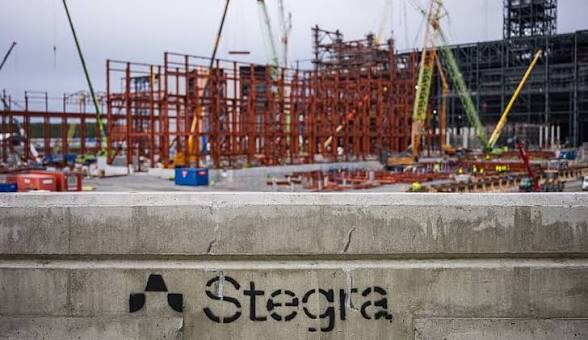
Google announced on September 17 that it is backing Swedish industrial company Stegra as it works to bring a large-scale near-zero-emissions steel plant online in Boden, Sweden.
The project replaces much of the coal traditionally used in steelmaking with hydrogen produced using renewable electricity. Stegra estimates its process could reduce emissions from steel production by as much as 95% compared with conventional blast-furnace methods.
For Google, this isn’t simply another climate investment. It is increasingly connected to one of the company’s biggest challenges: building enough physical infrastructure to support the AI boom without allowing the carbon footprint of that expansion to grow alongside it.
AI’s carbon problem starts before the servers switch on
Much of the debate around artificial intelligence and the environment has focused on electricity.
That’s understandable. Training and running increasingly sophisticated AI models requires enormous computing clusters, and companies including Google, Microsoft, Meta and Amazon are investing billions of dollars in new data-centre capacity.
But a data centre begins producing emissions long before its first AI accelerator is switched on.
Thousands of tonnes of concrete and steel can go into constructing the buildings and infrastructure surrounding those servers. Producing those materials — particularly conventional steel — is itself carbon intensive.
Google says using lower-carbon concrete and steel could reduce the embodied carbon associated with its data-centre construction by as much as 40%.
That makes cleaner construction materials increasingly relevant as the company builds the infrastructure required for Gemini, Google Cloud and its wider AI ambitions.
Google is effectively buying the environmental benefit
The agreement with Stegra is slightly different from Google simply purchasing a shipment of green steel.
Google will acquire environmental attribute certificates corresponding to as much as 91,000 metric tonnes of steel produced during Stegra’s first year of operation.
Those certificates represent the emissions reductions achieved by producing steel through Stegra’s lower-carbon process rather than conventional production.
The arrangement gives Stegra additional financial support while helping create demand for an industry that remains considerably smaller than traditional steelmaking.
Google says it has already incorporated lower-carbon concrete, steel or both into more than 20 construction projects during 2025.
The Stegra agreement suggests the company now wants to push that strategy further upstream.
The AI race is becoming an infrastructure race
This is where the announcement becomes particularly interesting.
The next phase of artificial intelligence won’t be determined solely by who develops the smartest model or buys the most powerful NVIDIA accelerators.
Companies need somewhere to put those chips.
That means land, electricity, cooling systems, transmission infrastructure, concrete — and steel.
As Google, Microsoft, Meta, Amazon and other hyperscalers race to construct increasingly large AI facilities, their influence is spreading into industries that once appeared far removed from Silicon Valley.
Energy companies are building generation capacity around data centres. Nuclear projects are attracting renewed attention. Carbon-removal companies are signing enormous agreements with technology giants.
Now steelmaking is becoming part of the same story.
Google’s Stegra agreement shows how the extraordinary physical requirements of artificial intelligence are beginning to reshape the supply chains surrounding the technology industry.
Google’s climate strategy is getting much bigger
The timing is also notable.
Google’s Stegra announcement follows its agreement with carbon-removal company Terradot, another attempt to address emissions associated with the company’s rapidly expanding infrastructure.
Taken together, these investments reveal the scale of the problem Google is trying to solve.
AI is driving demand for more computing capacity, which drives construction of more data centres, which requires more electricity and physical materials.
Making processors more efficient can reduce part of that footprint.
It can’t eliminate the emissions produced while constructing the buildings around them.
Google therefore appears to be attacking the problem from several directions: cleaner electricity, carbon removal, more efficient computing and now lower-carbon construction materials.
What this means for the rest of Big Tech
Google’s investment may ultimately matter beyond Google’s own data centres.
Large technology companies have enormous purchasing power. If companies building hundreds of billions of dollars’ worth of AI infrastructure begin demanding low-carbon steel, suppliers suddenly have a significant commercial incentive to produce it.
That’s potentially much more consequential than building one environmentally friendly data centre.
It could help establish a market.
And that may become increasingly important as AI infrastructure expands.
The industry’s environmental challenge is no longer simply about how much electricity ChatGPT, Gemini or another AI service consumes when somebody enters a prompt.
It’s about the entire physical machine required to make that prompt possible.
Google’s latest investment is a reminder that somewhere behind the seemingly weightless world of artificial intelligence are enormous buildings filled with processors — and those buildings still need a lot of steel.