More than 250 people rallied on the steps of South Australia’s Parliament House on Sunday to demand that a proposed 1,200-megawatt AI data centre in the Adelaide Hills be scrapped, not just paused. The developer, Quantum DC, had already put its Tungkillo project on hold on Thursday, apologising for how it handled the community. Now the state government says it is writing laws to decide where data centres like this can go, and on what terms.
It’s one of the clearest signs yet that Australia’s AI compute boom is running into local resistance, something Quantum DC chief executive Alby Tomassi himself described to the ABC as “a global issue in regards to social acceptance”. Here’s what was proposed, what has actually changed, and what to watch next.
What Quantum DC has paused
In a media release dated 12 November, Quantum DC said it is pausing the planning approvals programme for its Tungkillo Compute and Energy Hub and will not apply for Crown Sponsorship or lodge a development application this year. Its project page adds that this won’t happen until it has worked through the community’s concerns and the specialist studies “have been independently reviewed in light of them.” The company stresses that “No development application has been lodged and nothing has been approved.”
Tomassi was unusually blunt in the release: “We misread the strength of feeling about this proposal and acknowledge the first weeks of our early engagement created more questions than answers.” He added: “We sincerely apologise for this, and we understand the disappointment and frustration it has caused.”
Quantum DC says more than 350 people have contacted it and community members compiled a list of 432 questions. Instead of the information sessions planned for 20 and 21 November at the Mannum Leisure Centre, which are cancelled, the company says it will run a longer engagement programme, offer to set up a Community Advisory Group, and bring together a panel of experts independent of the company to review its studies. It says the panel’s findings will be made public. It hasn’t named the panel members or given a timeline.
Crucially, Quantum DC has not abandoned the project. It says it remains “committed to South Australia and to getting this right,” and the ABC reported on Thursday that Tomassi had not ruled out progressing the Tungkillo data centre in the future.
What was proposed at Tungkillo
According to Quantum DC’s project page and FAQ (updated 12 November), the hub at 312 Collins Road, Tungkillo, about 55 kilometres east of Adelaide by the company’s description, would include:
- A hyperscale data centre with roughly 1,200 MW of capacity at full development, built in three stages of about 400 MW each
- On-site gas turbines that the company says would run to firm supply when wind and solar output is low, not continuously
- Two new substations connecting to an existing ElectraNet 275 kV transmission line that already crosses the site
- About 120 hectares of infrastructure on a 220-hectare grazing property, with the rest to remain grazing land
The company says the hub is designed so contracted wind and solar supply around 80% of its electricity and the on-site gas around 20%, and that the first two data halls alone are expected to use around 6,500 gigawatt hours of electricity a year when fully operating. It says the project would bring its own supply rather than draw on what homes and businesses rely on, and that it has commissioned independent modelling of the effect on power prices. We couldn’t find that modelling published.
On water, Quantum DC says it would use closed-loop, direct-to-chip liquid cooling with dry, air-cooled heat rejection, and estimates operational demand of around 20 megalitres a year, mainly from harvested rainwater topped up by water carriers. Construction water needs are still being assessed, it says. Opponents dispute the water picture: SA Greens leader Robert Simms, moving a motion in parliament, said the project would use “150 to 250 million litres of water during the construction phase,” InDaily reported. Neither figure has been independently verified.
Quantum DC’s own FAQ says Tungkillo would not be Australia’s largest data centre proposal, describing it as one of a number of gigawatt-scale campuses now proposed in the country. Its current estimates are up to 600 construction jobs and about 200 ongoing jobs.
Why locals are still protesting
Sunday’s rally shows the pause hasn’t settled things. Organiser Magdalene Lippett told the ABC: “There has been a pause, but a pause isn’t a stop. We want this thing stopped.” Local farmer Kym Gladigau and Liberal leader Ashton Hurn argued the land should be kept for agriculture, and the ABC reported support at the rally from the SA Liberals, Greens, One Nation and independent federal MP Rebekha Sharkie. An online petition against the project, launched on 26 October, had 13,510 signatures according to InDaily’s report on the pause.
The concerns listed by Quantum DC itself are broad: water, energy and the proposed on-site gas generation, farming land, the nearby River Murray International Dark Sky Reserve, noise, traffic, bushfire risk, local ecology, Aboriginal cultural heritage, and whether the region would genuinely benefit. Mid Murray Council Mayor Simone Bailey said the council had “big concerns” about the location, the ABC reported on Thursday. Not everyone is opposed: a Northern Areas councillor said he would welcome the data centre in his district, according to the same report.
The Greens want more than a rejection. Simms said at the rally his party is calling for a statewide moratorium on data centres: “We don’t want to see South Australia become the test dummy for the nation.”
South Australia’s planned data centre law
The bigger long-term story may be the state’s response. Energy Minister Tom Koutsantonis told the ABC on Sunday the government is developing legislation that would “comprehensively deal with the roll-out of data centres.” His test is a strict one: “Data centres have got to have almost no impact on the grid for them to operate in South Australia, and until that time is achieved, we won’t license them.” He also criticised the developer, saying it had never spoken to him.
Premier Peter Malinauskas said on Thursday that the Tungkillo episode showed “we desperately need as a state to make sure we have a strong and strict regulatory framework to ensure that data centres aren’t being built, or even being proposed, in places they shouldn’t be.” Earlier, the ABC reported the government had drafted laws proposing tougher energy and water requirements, and that Labor will need support in the upper house, where it doesn’t hold a majority, to pass them. Koutsantonis describes the legislation as still being developed, so the detail of what developers would have to prove is still unknown.
Why it matters beyond the Adelaide Hills
AI services need enormous amounts of computing power, and Australia is in a rush to host it. We’ve covered Anthropic’s plans for a Queensland AI data centre and the investor scramble around listed operator NEXTDC. Tungkillo is a reminder that the hard part isn’t only chips and capital. It’s power, water, land and local consent.
Two things are worth watching: whether Quantum DC publishes the names and findings of its independent panel, and what South Australia’s legislation actually requires on grid impact, water and location. Other states are likely to be watching too.
Our read
Our read: Quantum DC’s apology is unusually frank, but a pause with no timeline settles little. The project could return in 2027 with the same site and a better consultation plan, which is exactly why residents are still marching. The more lasting outcome may be South Australia writing one of the country’s first specific rulebooks for AI data centres. If the final law really demands “almost no impact on the grid,” developers will need to show credible, independently tested energy and water plans before they knock on a single door, not after. That would be good for communities and, arguably, for serious operators too. The risk is rules so vague or politicised that projects simply shift interstate. We’ll judge it when the bill is published.
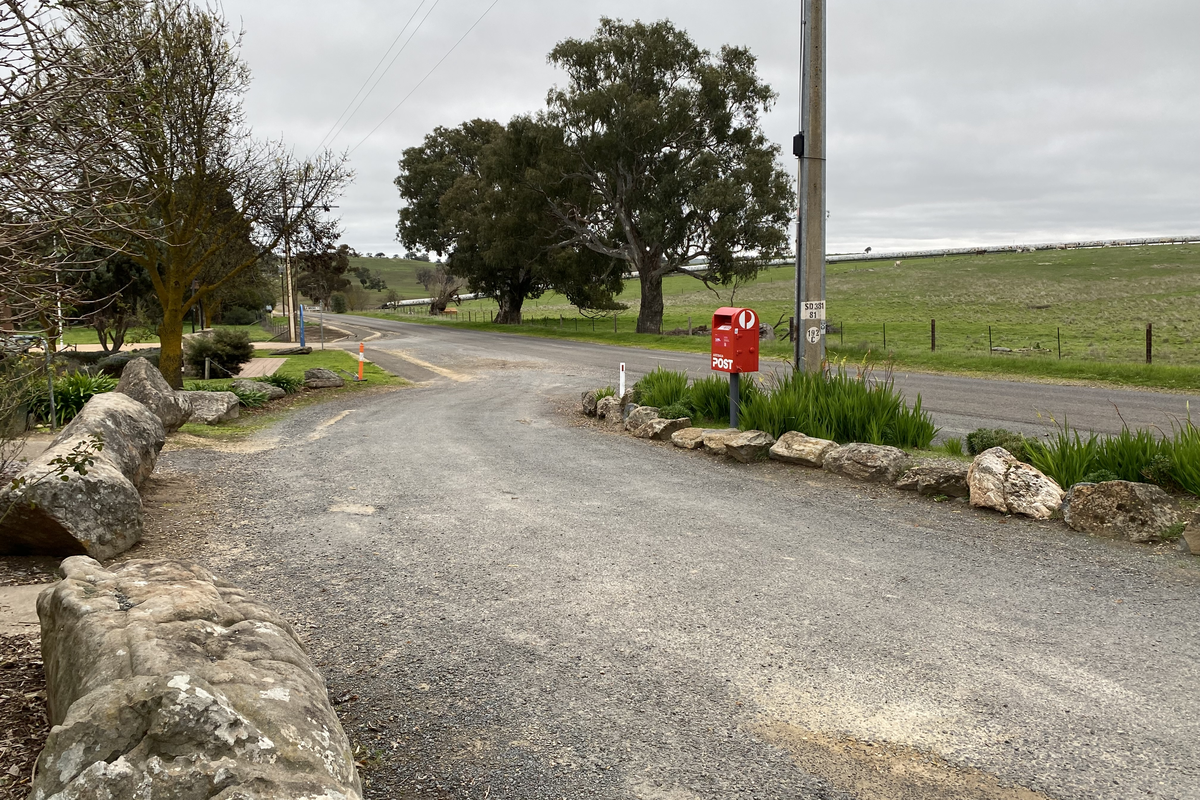
Featured image: a rural road and grazing land at Tungkillo, South Australia, July 2022 (illustrative; not the proposed data centre site). Photo: RegionVisitor90, via Wikimedia Commons, dedicated to the public domain under CC0 1.0; cropped to 3:2, resized and converted to PNG.