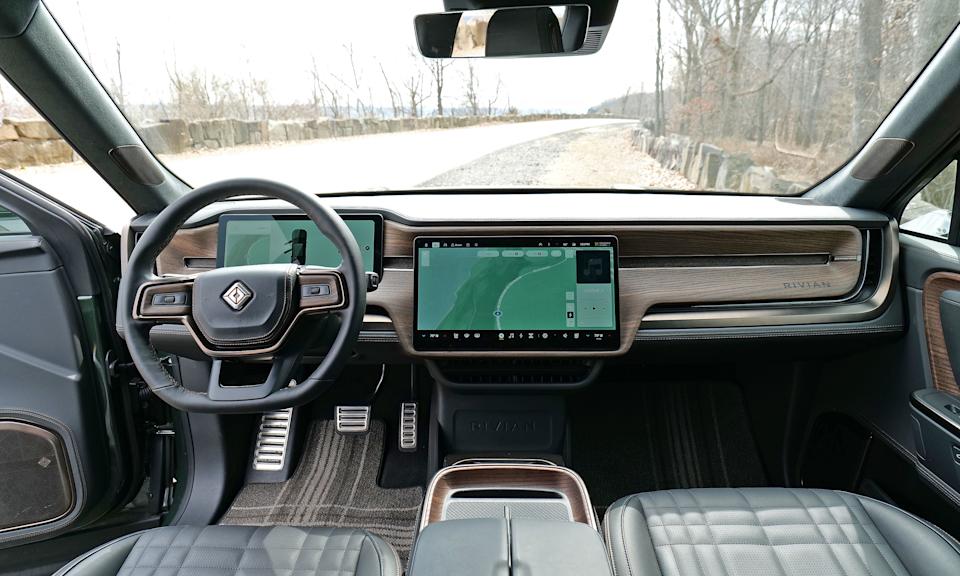
Rivian is rolling out one of its biggest software upgrades yet, bringing the new RivianOS 2 experience to existing R1S and R1T electric vehicles through an over-the-air update.
The update is a useful reminder that modern EVs are increasingly becoming software platforms on wheels: major interface, navigation and AI features can arrive long after the vehicle leaves the showroom.
What happened
Rivian announced on September 4 that software update 2026.31 begins moving eligible R1 vehicles onto RivianOS 2, the software platform also used by the newer R2.
Rivian calls it the biggest software transformation in the R1’s history. The company says the unified platform means R1 and R2 can share future interface improvements and capabilities, while individual features can still be adapted to the different hardware inside each generation of vehicle.
What RivianOS 2 adds
The update introduces a redesigned in-car interface with dynamic controls that change depending on what the driver is doing. Quick controls and media panels can be positioned on either side of the central display, while a redesigned Settings 2 interface adds context-aware controls and universal search.
Navigation is also getting more connected. Rivian says real-time route alerts sourced through Google Maps can show information including police presence and speed cameras, drawing on local authorities, third-party sources and contributions from Google Maps and Waze communities.
Connect+ subscribers gain a dedicated weather app with real-time conditions, air-quality information and a 10-day forecast. They can also start, view and update active trips from the Rivian mobile app.
AI is becoming part of the car
RivianOS 2 also expands Rivian’s AI capabilities. Gen 1 and Gen 2 R1 vehicles receive expanded cloud-assisted voice features, while the more powerful computers in Gen 2 R1 and R2 vehicles enable additional low-latency and local AI processing.
There are hardware differences between generations. Rivian says newer R1 and R2 vehicles can use Unreal Engine 5 for advanced real-time 3D visualizations, while first-generation R1 vehicles retain Unreal Engine 4 to maintain responsive performance on their older display hardware.
Why this matters
Software is becoming an increasingly important part of choosing a new car. EV buyers traditionally compare range, charging speed, performance and price, but the quality and longevity of a manufacturer’s software platform now matters too.
RivianOS 2 shows why. Owners of an existing R1 can receive a substantially redesigned interface and new connected features without replacing the vehicle.
That smartphone-like model of continuous software updates is becoming one of the major differences between newer software-focused automakers and traditional approaches to vehicle development.
What it means for owners
The 2026.31 update is beginning its rollout to eligible R1 and R2 vehicles. Rivian advises owners to check the Rivian app or the vehicle’s centre display for update availability.
Not every feature is identical across every Rivian because available computing hardware differs between generations, and some connected features require a Connect+ subscription.
But the broader change is significant: Rivian now has R1 and R2 operating on a common software foundation, which should make it easier for the company to deliver future features across its vehicle lineup.
Sources
Rivian — New Software: Bringing RivianOS 2 to the R1 Lineup
Car and Driver — RivianOS 2 Update Makes the R1 Look and Feel More Like an R2