Starting an independent technology website seemed like an achievable project. With a domain name, WordPress and an interest in technology, we set out to build The Tech Boom, an Australian publication covering consumer electronics, software, AI and gaming. The plan was simple: publish stories worth reading and gradually develop an audience.
We underestimated the work that would come after launch. Choosing a layout, organising categories and making the site usable on mobile were manageable. Getting articles discovered, understanding indexing and persuading people to return proved much harder. Having a functioning website and having an audience are different things.
We began by publishing across subjects we followed closely, including Apple products, games and practical software guides. Traffic was inconsistent. Some stories took hours to prepare and barely registered in analytics. Eventually we stopped guessing which topics should work and started examining what visitors actually did.
An unexpected source of traffic
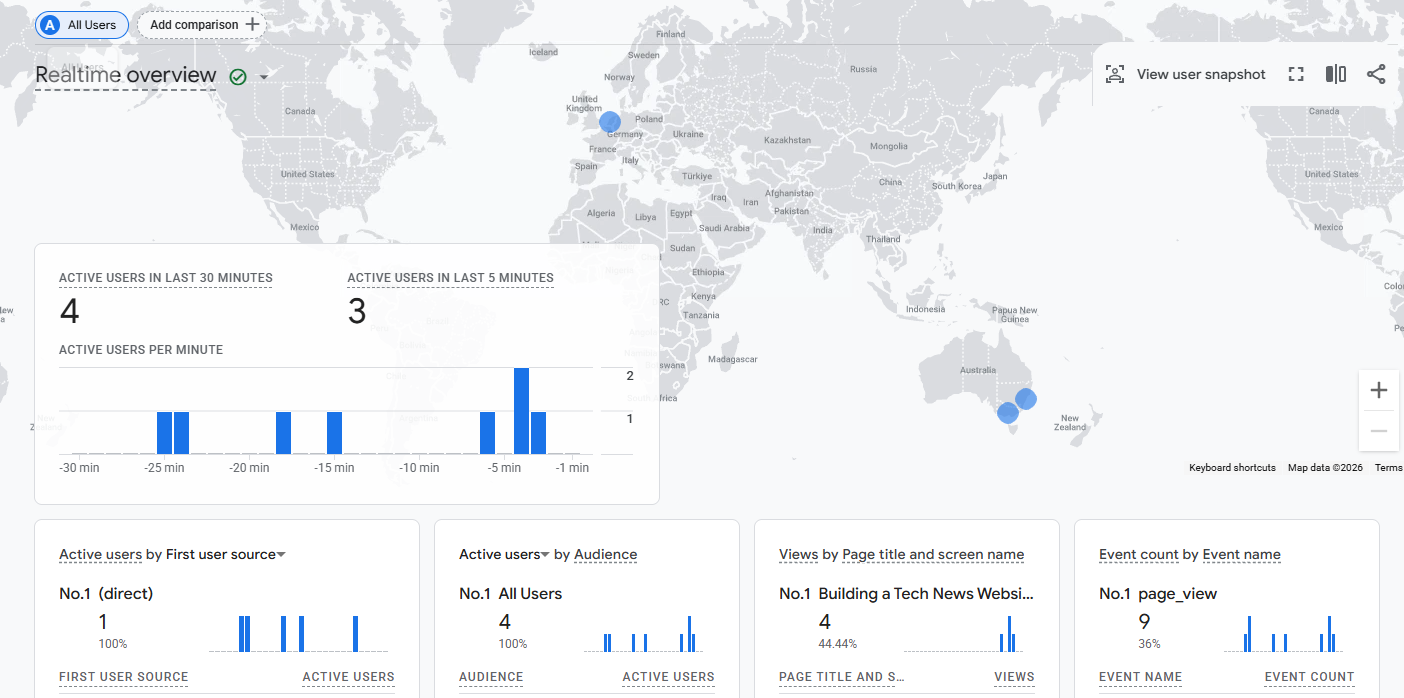
Our Google Analytics report for 16 September to 13 October 2026 recorded 279 active users and 294 new users. These are small numbers, but they are enough to begin asking better questions. The biggest surprise was the source of those visits.
Hacker News accounted for 73 sessions, compared with just four Google organic sessions among the sources shown in the report. Direct traffic accounted for 186 sessions, although direct does not necessarily mean someone typed our address: analytics can use that category when attribution is unavailable. We also saw traffic attributed to ChatGPT and Bing.
We had spent a lot of time considering search visibility and article titles, yet a community discussing technology was sending more visits than Google Search. One month cannot establish a trend, but it changed how we thought about distribution. Publishing a story and finding the people who might care about it are separate jobs.
The problem with getting readers to stay
The less encouraging figure was average engagement time: 12 seconds per active user. Our PS5 compatibility article received 59 views, while an iPhone 18 editorial received 54. Both had relatively high bounce rates. A bounce is not necessarily a failure—someone may find their answer and leave—but the combination made us look more closely at the reading experience.
Were introductions getting to the point quickly enough? Did a story offer something beyond its headline? Could someone easily find another relevant article? We had spent more time thinking about getting clicks than what happened afterward. That led us to revisit navigation, contextual links and related-story recommendations.
An AdSense setback
Our AdSense application was also rejected for low-value content. The rejection did not identify individual articles or establish one precise cause, so we cannot claim to know exactly why. It did prompt an uncomfortable question: what were we providing that readers could not find on dozens of larger technology sites?
A small publication cannot out-report a major newsroom on every product launch. Publishing more summaries of the same announcements is not much of a strategy. We want to put more effort into firsthand experiments, useful explanations and practical comparisons that show their methods and limitations.
What we are changing
We are reviewing existing articles before adding more. That includes tightening introductions, improving internal navigation and connecting related stories more thoughtfully. Our About page explains what the publication is trying to do, and our editorial policy sets out how we approach sourcing and corrections.
We also want to document technical problems we have encountered while running the site, rather than pretending the process has been seamless. For readers interested in our usual coverage, recent pieces include our look at the privacy questions surrounding smart glasses in Australia and our explanation of AI agents. These are different subjects, but they reflect the practical, explanatory direction we want to develop.
Next we will track more than page views. Engagement, movement between articles and returning visits should help us see whether these changes are useful. With a small audience, referral spikes can distort short-term results, so we will compare results over a longer period rather than declaring victory after a good day.
Building an audience takes more than publishing
The Tech Boom is still a small website with a modest readership. We have not found a secret formula for search traffic, and the data does not justify grand conclusions. What it has shown us is that the technical work of launching a site is only the beginning. Publishing, distribution and giving readers a reason to come back are ongoing challenges.
If you have built an independent publication or technical blog, what helped you get beyond your first few hundred visitors? Was it search, community referrals, a particular kind of article, or something unexpected? We would be interested in comparing notes. send us an email and we would like to hear from you contact@thetechboom.com
Figures are from The Tech Boom’s Google Analytics 4 reporting snapshot for 16 September–13 October 2026.