Editorial | 15 October 2026. Apple has spent years making the iPhone the centre of our digital lives. Now it wants the front door, security cameras, heating and living room to work with the same effortless logic. Its newly announced Apple Home Collection, developed with LG Electronics and Schneider Electric, is the clearest sign yet that the company intends to compete for more than the smart speaker sitting on a kitchen bench.
The ambition is enormous. The practical question is more interesting: can Apple persuade people to replace perfectly serviceable Ring cameras, Google Nest products and Samsung SmartThings setups, or is it arriving late to a market that has already moved on?
Our view is that Apple has a credible path to becoming the most appealing smart-home platform for households already invested in iPhones. But that is not the same as beating the whole industry. To win beyond its loyal customer base, Apple must prove that convenience, privacy and reliability outweigh higher upfront costs, existing device investments and the advantages of open ecosystems.
Apple’s smartest move is not the hardware. It’s removing the hassle.
Ask someone who has assembled a smart home from several brands what frustrates them. The answer may be less about picture quality or speaker volume and more about everything that happens between the products: installing another app, creating another account, remembering which service controls the porch light, reconnecting devices after a router change, or explaining to another family member why an automation stopped working.
Apple’s pitch goes straight at that friction. The Home Collection promises one-tap pairing with an iPhone, control through the Home app without a separate manufacturer’s account, Thread connectivity, and automatic updates to network credentials when household Wi-Fi changes. Apple also says home data is end-to-end encrypted. These are company claims about the new collection, not features we have independently tested in a home.
That approach could be more persuasive than another megapixel contest. A security camera is only useful if everyone in the household can find the footage. A smart lock is only smart if guests, children and family members can use it confidently. A thermostat is only convenient if the routine works when people leave and return, without somebody constantly fixing the automation.
Apple is attempting to turn the smart home from a collection of gadgets into a coherent household experience. If it succeeds, that would be a bigger achievement than simply making a more attractive doorbell.
What Apple has actually announced
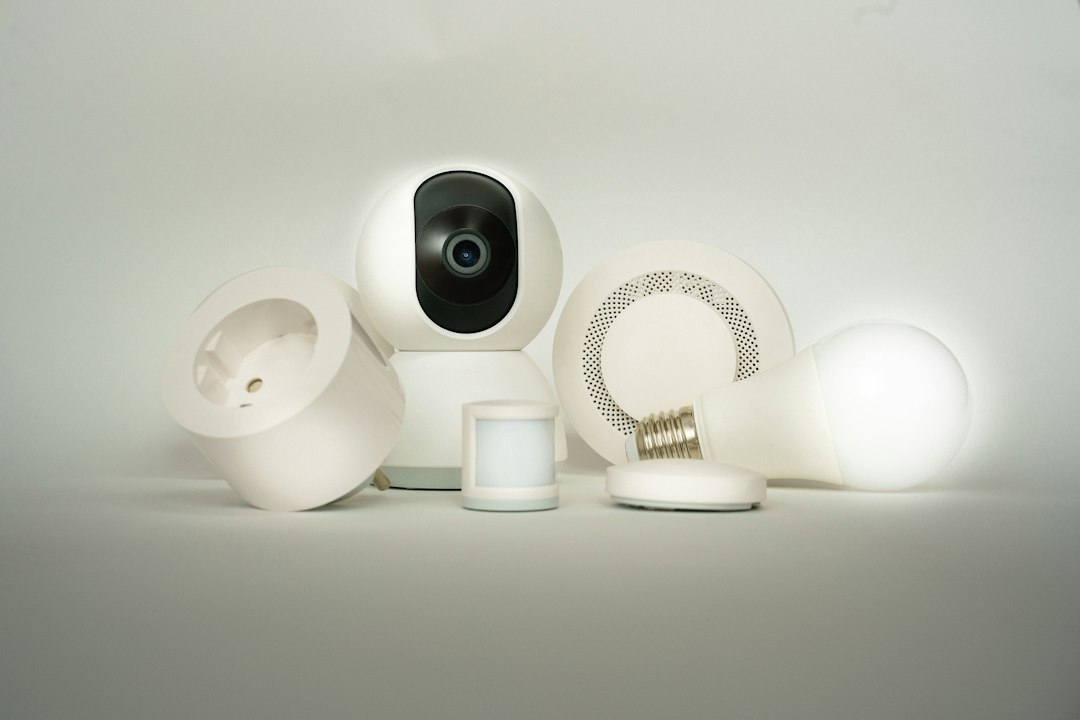
The collection includes indoor and outdoor security cameras, a video doorbell, a smart deadbolt, thermostats and room sensors. LG Electronics is behind much of the security and access hardware, while Schneider Electric contributes climate-control products and installation accessories. Rather than manufacture every category under its own name, Apple is working with established partners and making Apple Home the unifying interface.
For example, Apple’s proposed front-door experience combines the doorbell and smart lock in one view. A visitor can ring the bell, a notification can appear on compatible Apple devices, and a resident can see the visitor and unlock the door from the same interface. The LG lock uses Ultra Wideband proximity detection and supports Matter and Aliro; Apple says core access functions can continue locally without an internet connection. Meanwhile, compatible thermostats can use household presence to adjust temperatures automatically.
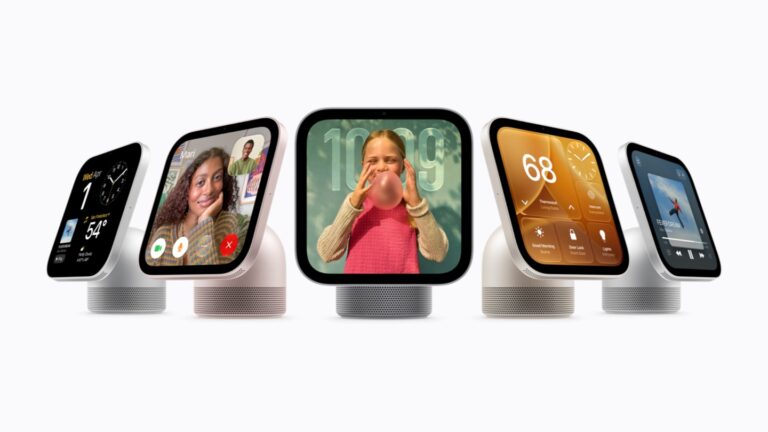
The HomeView display is the other half of this strategy. Its seven-inch screen is designed as a shared control point, with Siri AI, FaceTime, entertainment and personal views for up to six recognised users. It is a more direct response to Amazon’s Echo Show and Google’s Nest Hub than anything Apple has previously sold.
But an important distinction remains: Apple has announced a system, not proved that it works better than competitors in real homes. Setup reliability, voice-command accuracy, camera responsiveness and third-party compatibility will need independent testing after the products ship.
Apple versus Ring, Google Nest and Samsung: who has the advantage?
| Platform | Its strongest argument | Potential weakness | Who should consider it? |
|---|---|---|---|
| Apple Home + Home Collection | Tightly coordinated iPhone, HomeView, Siri and accessory experience; privacy-focused design | Premium pricing, iPhone dependence for key experiences, and limited initial Home Collection regions | Apple-heavy households prioritising simplicity |
| Amazon Alexa + Ring | Established security-device ecosystem and familiar video-doorbell workflows | Multiple services, potential subscriptions and different integration paths across products | Households primarily focused on doorbells and cameras |
| Google Home + Nest | Google Assistant/Gemini direction, home displays and integration with Google services | Features and hardware support can differ by product, region and generation | Android and Google-service households |
| Samsung SmartThings | Broad automation and connections to appliances and multiple brands | More choices can mean more setup complexity; not every feature works on every device | Mixed-brand homes and appliance-heavy setups |
| Home Assistant | Local control and extensive customisation across brands | Requires more technical involvement and maintenance | Enthusiasts who value flexibility and control |
Editorial comparison based on platform positioning and publicly described features, not a hands-on product benchmark. Product support and subscription requirements vary.
Can Apple beat Amazon Ring on home security?
Ring’s advantage is that consumers already know what its products do. A doorbell that shows a visitor, a camera that records movement and an app that sends alerts are familiar propositions. Apple cannot simply arrive with a prettier enclosure and assume those customers will throw away equipment that works.
Its opportunity is to make security part of a broader household routine. Imagine an Apple-centric home where the lock, doorbell, indoor camera and family presence settings coordinate without switching apps. That is a compelling promise, particularly if Apple delivers on encryption and easy management. But video quality, recording plans, alert accuracy and the cost of a complete installation will matter just as much. A superior user interface will not excuse missed security events.
Can Apple beat Google Nest on the kitchen counter?
HomeView has an attractive proposition for people who want a permanent family screen rather than another device that lives in a pocket. It can present household controls, calendars, FaceTime and personalised information. Apple’s face-recognition approach could help make a shared device feel personal without making it confusing.
Yet HomeView is not automatically a better media device. Early reporting indicates it relies on AirPlay for some video and audio services instead of running the same native apps that users might expect on a tablet or television. That could matter to anyone who imagines buying a screen primarily to watch videos while cooking. Apple needs to be judged on the experience it ships, not the experience consumers assume it will have.
Can Apple beat Samsung SmartThings in a mixed-brand home?
This may be the toughest contest. SmartThings has spent years appealing to households with connected appliances and devices from different manufacturers. A home with Samsung appliances, assorted lights, blinds and sensors is not necessarily looking for one technology company to make every product feel identical. It may prefer a flexible platform that adapts to the hardware already installed.
Apple’s involvement with Matter and Thread helps reduce this tension. Matter is designed to improve interoperability across platforms, meaning a compatible accessory may work with more than one ecosystem. But Matter support is not a blanket guarantee that every feature works identically everywhere. Buyers still need to check device category, hub requirements and individual functions.
Ironically, open standards could be both Apple’s advantage and its obstacle. They make it easier for an iPhone household to adopt Apple Home without replacing everything. They also make it easier for that household to avoid buying Apple’s new accessories at all.
The Australian problem Apple cannot ignore
There is a reason we should be cautious about declaring an Australian smart-home revolution this week. The new HomeView hub is priced locally at A$449 and launches here on 13 November. The Home Collection accessories, however, do not have confirmed Australian prices or release dates in Apple’s announcement. The cameras and doorbell are initially planned for the US, Canada and UK; the smart lock and thermostats for the US and Canada.
That is more than a footnote. Australians may want to build a complete setup around the new Apple experience, only to discover that the specific doorbell, lock or thermostat shown in promotional images cannot be ordered locally. Importing a smart lock or thermostat also raises practical questions about physical fit, wiring, installation, warranty and compliance. A product designed for North American heating systems or door hardware should not be assumed suitable for an Australian property.
It would also be misleading to convert Apple’s US accessory prices into Australian dollars and label the results local retail prices. Taxes, distribution, regional certification and final pricing have not been announced. For now, the defensible buying advice is simple: Australians can consider HomeView, but should not budget for an entire Apple Home Collection installation until local availability and compatibility are confirmed.
Is A$449 too much for a smart-home screen?
At A$449 including GST, HomeView is a meaningful purchase. It does not replace the cost of cameras, smart locks, lighting, thermostats or any required subscriptions. The wall-mounted version is also A$449, with purpose-built mounts priced separately; Apple’s Australian announcement lists compatible Schneider mounts starting at A$94.95 for the USB-C connector and A$124.95 for the AC wired option.
That means a wall-mounted HomeView plus the least expensive listed connector starts at A$543.95, before installation and any other accessories. With the A$124.95 wired option, the device-and-mount total becomes A$573.95. These are arithmetic examples using Apple’s listed prices, not quotes for a completed installation.
Is the expense justified? For a family that already owns an iPhone, HomePod, Apple TV and compatible smart accessories, a shared control screen could be a worthwhile convenience upgrade. For someone with only one smart bulb and a basic camera, the same money might be better spent on devices that solve an immediate problem. The value is proportional to how much of the home it can actually manage.
Privacy may be Apple’s strongest weapon — if people trust the implementation
Home security and household presence data are unusually intimate. A camera can reveal when children arrive home. A lock can record when a property is empty. A thermostat can reveal daily routines. Apple is leaning into this sensitivity by promising end-to-end encryption for Home Collection data, with camera footage processed locally or through its privacy-focused cloud infrastructure. The company says supported recordings stored with iCloud+ remain encrypted and inaccessible to Apple.
That is a meaningful point of differentiation in Apple’s marketing. It is not proof that every privacy concern disappears. Consumers should still review what is stored, which people have access, how account recovery works, whether optional cloud recording requires a paid plan, and what happens if their Apple ID is compromised. No connected-home system should be treated as immune to security incidents.
The challenge for rivals is clear: if Apple can make strong privacy protections easy to understand and easy to use, consumers may reward it. The challenge for Apple is equally clear: a privacy promise must be supported by dependable real-world behaviour and transparent settings, not simply polished launch material.
Three Australian homes, three different decisions
1. The iPhone family starting from scratch
This is Apple’s ideal customer. The household already uses iPhones, shares Apple services and wants a camera, doorbell and convenient way to control lighting. HomeView may become an appealing centrepiece, particularly if compatible third-party Matter products cover needs that the Home Collection cannot yet meet in Australia. The sensible strategy is to choose the first useful accessory, verify compatibility and build gradually rather than pre-commit to a complete system.
2. The household already using Ring or Google Nest
Do not replace working cameras merely because Apple has announced a new collection. First ask whether the current system is unreliable, too expensive to maintain, difficult for family members to use or missing a genuinely valuable feature. If not, switching ecosystems creates cost and electronic waste without an obvious benefit. A HomeView purchase should be justified by its shared-home functions, not by an assumption that all existing accessories must be discarded.
3. The mixed-device home with smart appliances
For a household with Samsung appliances, multiple brands of lights and a few older sensors, interoperability should come before loyalty to a logo. Make an inventory of devices and check Matter, Thread, hub and platform support. A flexible SmartThings or Home Assistant setup may remain the more practical choice. Apple’s collection could still play a role, but it does not automatically become the only sensible controller.
What would convince us that Apple has actually won?
Apple does not need to dominate every smart-home category to succeed commercially. But a genuine competitive victory should be judged against more demanding criteria than attractive product photography. We would look for:
- Reliable setup: accessories pair easily and stay connected through ordinary router changes and power interruptions.
- Fast local response: lights, locks and automations work promptly even when cloud services are unavailable, wherever supported.
- Transparent total cost: buyers can understand hardware, installation and recurring storage or recording charges before purchase.
- Real interoperability: households can mix supported devices without losing essential functionality.
- Broad regional availability: Australian customers can buy locally compatible products, not just admire overseas launch videos.
- Family usability: guests, children and less technical household members can use the system without a tutorial.
Until independent reviewers can assess shipping products against those standards, claims that Apple has already beaten Ring, Nest or SmartThings are premature.
The Tech Boom verdict: Apple can shake up the industry, but it has not won it
Apple’s greatest strength is its ability to make complicated technology feel ordinary. It did not invent the smartphone, wireless earbuds or the tablet, yet it helped redefine what mainstream consumers expected from those categories. The smart home presents a similar opportunity, because many existing systems still feel like separate gadgets connected by fragile workarounds.
But the comparison has limits. Home security, electrical systems and household appliances have longer replacement cycles than phones. A door lock must fit the door. A thermostat must suit the building. A camera needs to perform reliably for years. The market rewards compatibility, repairability and sensible pricing as well as design.
Our prediction: Apple has a strong chance of becoming the default smart-home experience for many iPhone-first households. It is far less certain that it will displace established security brands or open, mixed-device platforms. In Australia, the immediate obstacle is simpler still: the new accessories need a confirmed local launch.
For now, the most important Apple smart-home product may not be the new doorbell or lock. It may be the idea that a connected home should finally work like one home. Whether Apple can deliver that promise better than everyone else is the contest worth watching.
Sources and editorial disclosure
- Apple Newsroom: Introducing Apple Home Collection (14 October 2026)
- Apple Newsroom: HomeView features and Australian prices (14 October 2026)
- Apple Australia: HomeView product and availability information
- The Verge: Early look at Apple Home Collection hardware
- The Verge: HomeView app and AirPlay limitations
This is independent editorial analysis based on Apple’s published announcements and third-party reporting. The Tech Boom has not tested unreleased Home Collection hardware or been provided review units. Product availability, prices and features may change. Comparisons are assessments of publicly described ecosystems, not laboratory performance results.
Related reading: Our earlier look at how HomeView could change Australian homes and our guide to what AI subscriptions really cost Australians.