Editorial analysis
AI glasses have a strange problem in Australia.
Australians increasingly want to wear them. They are considerably less enthusiastic about standing in front of somebody else who is.
That contradiction may become one of the defining consumer-technology stories of the next few years.
New Australian research from Telsyte says 66% of Australians would consider smart glasses. More than two-thirds of people who already own them use Meta’s AI glasses, including Ray-Ban and Oakley models. Hands-free photos and video, real-time information about what the wearer sees and reducing phone use rank among the most wanted features.
But the same research exposes the problem underneath the enthusiasm.
Nearly half of Australians surveyed — 47% — said they would feel self-conscious wearing smart glasses in public. More strikingly, only 30% said they were comfortable with people around them regularly wearing camera-equipped smart glasses.
In other words, Australia may be becoming an early test of the AI-glasses paradox:
We like the idea of intelligence on our own face. We are much less certain about the camera on somebody else’s.
AI glasses are no longer a Google Glass experiment
Smart glasses spent years looking like a technology permanently stuck in the future.
Google Glass became the cautionary tale. It was technically ambitious but socially awkward, expensive and immediately associated with the uncomfortable possibility that someone could be recording you without you knowing.
The new generation has changed the formula.
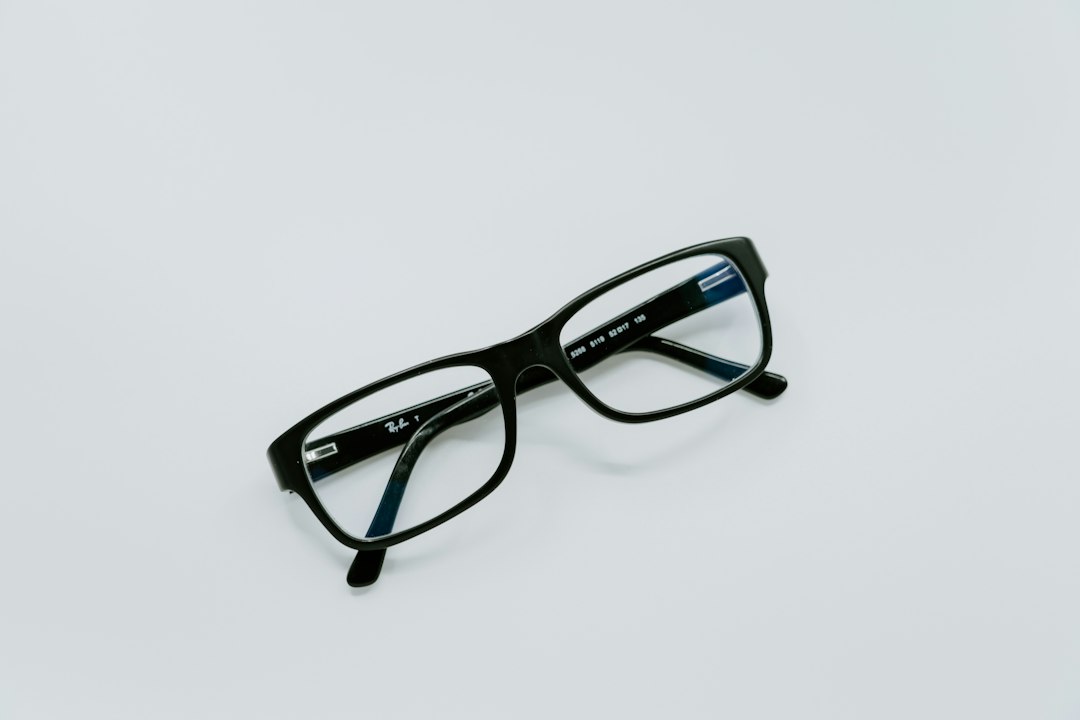
Instead of making people look like they’re wearing a computer, products such as Meta’s Ray-Ban and Oakley glasses deliberately look much closer to ordinary eyewear. Cameras, microphones, speakers and AI are built into frames people might otherwise wear anyway.
That apparently small design change matters enormously.
The technology becomes easier to wear — but also easier for everyone around the wearer to forget is there.
And the market is moving quickly. Counterpoint Research says global smart-glasses shipments grew 215% year-on-year in the second quarter of 2026, with Meta continuing to dominate an otherwise fragmented market.
Australia is not watching that shift from the sidelines.
Australia’s $89 Kmart glasses changed the conversation
One of the clearest signals didn’t come from Meta, Apple or Samsung.
It came from Kmart.
The retailer’s A$89 Anko camera glasses sold out after attracting intense interest earlier this year. The glasses offered hands-free photo and 1080p video capture, Bluetooth calling, music and an AI assistant at a price dramatically below premium smart eyewear.
That matters because the future of smart glasses may not be decided by whether enthusiasts will spend hundreds of dollars on Ray-Bans.
It may be decided when cameras and AI become cheap enough to appear in ordinary glasses sold beside mainstream consumer electronics.
Sub-A$100 eyewear turns smart glasses from an expensive gadget into something almost disposable.
It also magnifies every unresolved question around privacy, security and consent.
The privacy problem isn’t theoretical anymore
Australia’s Office of the Australian Information Commissioner has already raised concerns about what it calls “surveillance wearables”.
The timing is important because Australian attitudes toward privacy are hardening at exactly the moment wearable AI is becoming easier to buy.
The OAIC’s 2026 Australian Community Attitudes to Privacy Survey found 87% of Australians are more concerned about privacy than they were five years ago. Only 4% regarded AI companies as trustworthy when it comes to protecting and appropriately using personal information.
That doesn’t mean Australians reject AI. The same OAIC research found people are more willing to use digital services when they believe their information is handled fairly and responsibly.
The issue is trust.
A smartphone camera is obvious. Someone usually has to take the phone out, point it and hold it in a way that signals what is happening.
A camera built into ordinary-looking glasses changes that social cue.
Some premium smart glasses use recording lights to alert people nearby. But an indicator light is not the same thing as meaningful consent — particularly in crowded public spaces where most people may never notice it.
Cheap AI glasses have another problem: protecting the wearer
There is an irony in the smart-glasses privacy debate.
Much of the discussion focuses on protecting people from the wearer. Recent Australian testing suggests we also need to think about protecting the wearer from the glasses.
An ABC News investigation published in September commissioned independent cybersecurity testing of ultra-cheap AI smart glasses available to Australian consumers.
Researchers found serious vulnerabilities in the tested devices and associated software. In some cases, a nearby attacker could connect over Bluetooth without a password, access stored images and video, or interfere with data moving between the glasses and a phone.
The investigation also raised questions about where information submitted to built-in AI services was being sent.
Those findings should not be treated as evidence that every pair of AI glasses has the same weaknesses. Premium devices and different manufacturers use different hardware, software and security architectures.
But they highlight an important problem as the category expands.
When a device can continuously see and hear the world around its owner, poor cybersecurity isn’t just a compromised password.
It potentially exposes a record of the owner’s life.
There is a side of AI glasses the privacy debate can easily miss
It would also be a mistake to reduce smart glasses to covert cameras.
For people who are blind or have low vision, AI glasses can be genuinely transformative.
ABC News has documented Australian users relying on the technology to identify objects, read labels and documents, describe surroundings and increase independence. Similar capabilities can provide live captions and other assistance for people with hearing impairment.
That matters when discussing bans and restrictions.
A camera that feels unnecessary to one person can be the sensor another person relies on to understand what is directly in front of them.
It is why the Australian debate is likely to become more complicated than simply deciding whether smart glasses are good or bad.
The more useful question is where, when and how their cameras and AI should be used.
Australia is already testing those boundaries
The federal government has said it is not currently pursuing a blanket import ban on smart glasses, while acknowledging community concerns and examining whether existing privacy protections are sufficient.
Local restrictions are emerging in specific environments. Brisbane City Council has moved against secret filming with wearable recording devices at public pools, while schools, childcare settings, workplaces and other sensitive environments are confronting similar questions.
That patchwork may become increasingly common.
Smart glasses are unusual because the same pair can be a camera, microphone, AI assistant, accessibility device, headphones and ordinary prescription eyewear.
Rules designed for phones do not always map neatly onto something worn continuously on a person’s face.
The biggest barrier to AI glasses may not be technology
The hardware will improve.
Cameras will get better. Batteries will last longer. AI models will respond faster. Frames will become lighter. More processing will happen locally rather than in the cloud.
Those are engineering problems, and the technology industry is very good at solving engineering problems.
The harder problem is social permission.
For smart glasses to become as ordinary as wireless earbuds or an Apple Watch, people need to become comfortable not only wearing them but being around them.
Australia’s numbers suggest we are nowhere near that point yet.
Two-thirds of Australians being willing to consider smart glasses is a remarkable signal of potential demand.
Only three in ten being comfortable around regularly worn camera glasses is an equally remarkable warning.
Both things can be true at once.
AI glasses could be the next major wearable — if they earn trust first
The technology industry has spent years asking what device might come after the smartphone.
AI glasses have one of the strongest answers yet.
They sit where a phone cannot: directly in the wearer’s field of view, able to hear questions, see surroundings and respond without requiring someone to pull a rectangle of glass from their pocket.
That makes them potentially powerful.
It also makes them unusually intimate.
Australia’s early reaction suggests the winners in this market won’t necessarily be the companies with the smartest AI model or the highest-resolution camera.
They may be the companies that make bystanders feel safe, make recording unmistakable, minimise unnecessary data collection, secure the devices properly and give wearers clear control over what leaves the glasses.
Google Glass showed that impressive technology can fail when society isn’t ready to accept how it is used.
The new generation of AI glasses looks better, costs less and is vastly more capable.
But the fundamental challenge hasn’t disappeared.
The future of AI glasses in Australia may depend less on whether people want to wear them — and more on whether everyone else is willing to live around them.
Sources: Telsyte Australian Digital Consumer Study 2026; Office of the Australian Information Commissioner 2026 Australian Community Attitudes to Privacy Survey and guidance on surveillance wearables; ABC News reporting and independent testing of smart glasses sold in Australia; Counterpoint Research Q2 2026 smart-glasses market tracker. Featured image: Claudio Schwarz / Unsplash. Editorial analysis. Statistics and market information checked 6 October 2026.