Google has opened up Gemini 4 Carbon, the AI model it announced two weeks ago but kept restricted to a small group of cybersecurity defenders. From Tuesday 10 November (US time; early Wednesday in Australia), paying developers and businesses can use it through the Gemini API, and it is rolling out to Google AI Ultra subscribers in the Gemini app, AI Mode in Search and Google’s Antigravity coding tool.
Google calls Carbon its strongest model, aimed at long, multi-step work such as hard coding and debugging jobs, research and security analysis. It is not a free upgrade for most Gemini users, though, and several of Google’s headline claims can’t yet be checked. Here is who can actually use it, what it costs in Australian dollars, and what the evidence does and doesn’t show.
Who gets Gemini 4 Carbon, and who doesn’t
According to Google’s announcement and its developer post, Carbon is now available to:
- Developers on the paid tier of the Gemini API, through Google AI Studio and Android Studio. Ultra subscribers can also try it in AI Studio and Antigravity.
- Businesses using Gemini for business, through the API or the model picker.
- Consumers on Google AI Ultra, in the Gemini app and AI Mode in Search.
- Scientists who apply to Google’s research program, which offers six months of free access to Antigravity’s highest usage tier, subject to eligibility and capacity.
Google AI Pro subscribers don’t get Carbon. They keep Gemini 4 Argon, the model Google released in October, which Google says “remains the ideal choice for the majority of software engineering and knowledge work”. 9to5Google reports that the Gemini app’s model picker now labels Argon for “Code & analysis” and Carbon for “Most complex work”, and that the older 3.1 Pro option has been removed from the app.
The most capable security version, which Google calls “Carbon for cyber”, stays behind its Fairwind Program. That program is for vetted defenders such as governments, healthcare providers and telecommunications companies, and Google says access is “strictly controlled”.
What it costs in Australia
For consumers, the price of entry is a Google AI Ultra plan. Google’s Australian subscriptions page lists Ultra at A$149.99 a month (five times the usage limits of AI Pro) or A$329.99 a month (20 times), and lists access to Gemini 4 Carbon under Ultra. The US equivalents are US$99.99 and US$199.99, as VentureBeat reports. Google’s AI plans page says Carbon is available to Ultra subscribers “in select countries”, and VentureBeat notes Google has not published a country-by-country rollout schedule, so Australian subscribers may see it appear in stages.
For developers, Carbon costs the same introductory rate as Argon: US$2 per million input tokens and US$10 per million output tokens until 30 November 2026. After that, Google’s footnote says the price doubles to US$4 and US$20. At the Reserve Bank’s 10 November rate of US$0.6924 per Australian dollar (RBA), that is roughly A$2.89 and A$14.44 per million tokens now, rising to about A$5.78 and A$28.88. These are straight currency conversions, not Google’s Australian billing prices, and exclude any GST. Australia is on the Gemini API’s list of available regions, although Google has not published a Carbon-specific country list.
Token prices are only half the story. Google itself says Carbon uses more tokens than Argon “to explore thoroughly, reason deeply, and run extended verification loops”. A model that thinks for longer can cost more per job even at the same per-token rate.
What Google claims, and what has been checked
Google says Carbon ranks first on three benchmarks built around real work (CursorBench 4.0, Perplexity’s WANDR and Zapier’s AutomationBench) at “more than 2X lower cost per task” than the next-best outside model. VentureBeat checked the public results and found mixed support:
- AutomationBench backs Google up. VentureBeat reports Carbon at 53.88 per cent at about US$2.12 per task, ahead of Anthropic’s Claude Fable 5.2 at 51.45 per cent and US$4.64.
- CursorBench and WANDR don’t, yet. The public tables VentureBeat reviewed had no Carbon entry, so it describes those two claims as unverified.
- On broad rankings, Anthropic is ahead. Artificial Analysis’s general intelligence index, as reported by VentureBeat, puts Fable 5.2 at 65 and Carbon at 60. Carbon debuted in first place there in October, but Fable 5.2, which Anthropic launched the day before Carbon’s wider release, has since overtaken it.
One more wrinkle: Google’s announcement says Carbon ranks second on a new Multimodal Knowledge Agent benchmark it built with Artificial Analysis, at more than six times lower cost per task than the top model. 9to5Google’s report quotes Google saying Carbon ranks first on that test while using three times fewer tokens. We have used the wording on Google’s page as it reads now, but the change is a reminder that launch-day benchmark claims can shift.
When Carbon was first announced on 28 October, Ars Technica noted that every frontier model scored “in the same neighborhood” on Google’s charts, with a gap of just a few points. That still looks like the fair summary. If you want to compare it with Anthropic’s latest, our explainer on Claude Fable 5.2 covers that model’s prices and claims.
The security angle: finding bugs, and proving Signal’s code
Security is where Google is pushing Carbon hardest. In its October evaluation, run without the public model’s guardrails, Google reported 88.2 per cent on SEC-bench Pro (finding vulnerabilities), 54.8 per cent on ExploitGym (showing they can be exploited) and 71.0 per cent on CWE-bench (patching them), according to VentureBeat. Google also says security firm Wiz used Carbon for cyber to find previously unknown flaws in two major software-as-a-service providers in under two hours. It hasn’t named either company, so that claim can’t be independently checked.
The more concrete result involves Signal. SecurityWeek reports that Google DeepMind researchers used agents running on Carbon, working with humans and Claude Opus 5.5, to mathematically prove core security properties of libsignal, the reference code for the Signal protocol. Versions of the protocol also run in WhatsApp and Google Messages. Carbon-based agents generated roughly 6.5 million lines of proofs in the Lean language, and five researchers finished the work in four weeks. SecurityWeek notes the results cover Google’s own build of the code, “not Signal’s own applications”. Signal CTO Ehren Kret said: “As AI-driven security threats grow, rigorously verifying the Signal protocol implementation gives us even greater confidence in our code’s privacy guarantees.”
On safety, Google says Carbon’s safeguards blocked 99 per cent of attack trajectories from its own adaptive red-teaming agent in simulated cyberattack tests, and cut the per-attempt breach rate to 0.8 per cent, down from 3.1 per cent for Argon. It also reports a 0 per cent success rate for prompt-injection attacks on Gray Swan’s benchmark, while conceding that prompt injection robustness “remains an area for continued improvement”. These are Google’s own figures.
Our read: what it means for Australians
Our read: for most people using Gemini on a phone or on the free or Pro plans, nothing changes today. Carbon is a premium tool for long, difficult jobs, and A$149.99 a month is hard to justify unless you are already hitting the limits of Argon or a rival model. Developers and businesses are the real audience. The introductory price ends on 30 November, which gives Australian teams a few weeks to test Carbon on their own tasks against whatever they use now, and to work out what those runs would cost at December’s doubled rate.
The security results cut both ways. Models that can find, prove and patch flaws in hours help defenders, but the same skills are why Google, OpenAI and Anthropic all keep their strongest cyber versions behind vetted programs. As we wrote about OpenAI’s GPT-6 Cyber, the practical lesson for Australian organisations is to shorten the time it takes to apply patches, because bugs are likely to be found faster than before.
This article is based on Google’s announcement and the independent reports linked above, published on 10 November US time. Prices and availability were checked on Google’s Australian pages on Wednesday morning, 11 November. We will update it if Google publishes Australian API pricing or changes Carbon’s rollout.
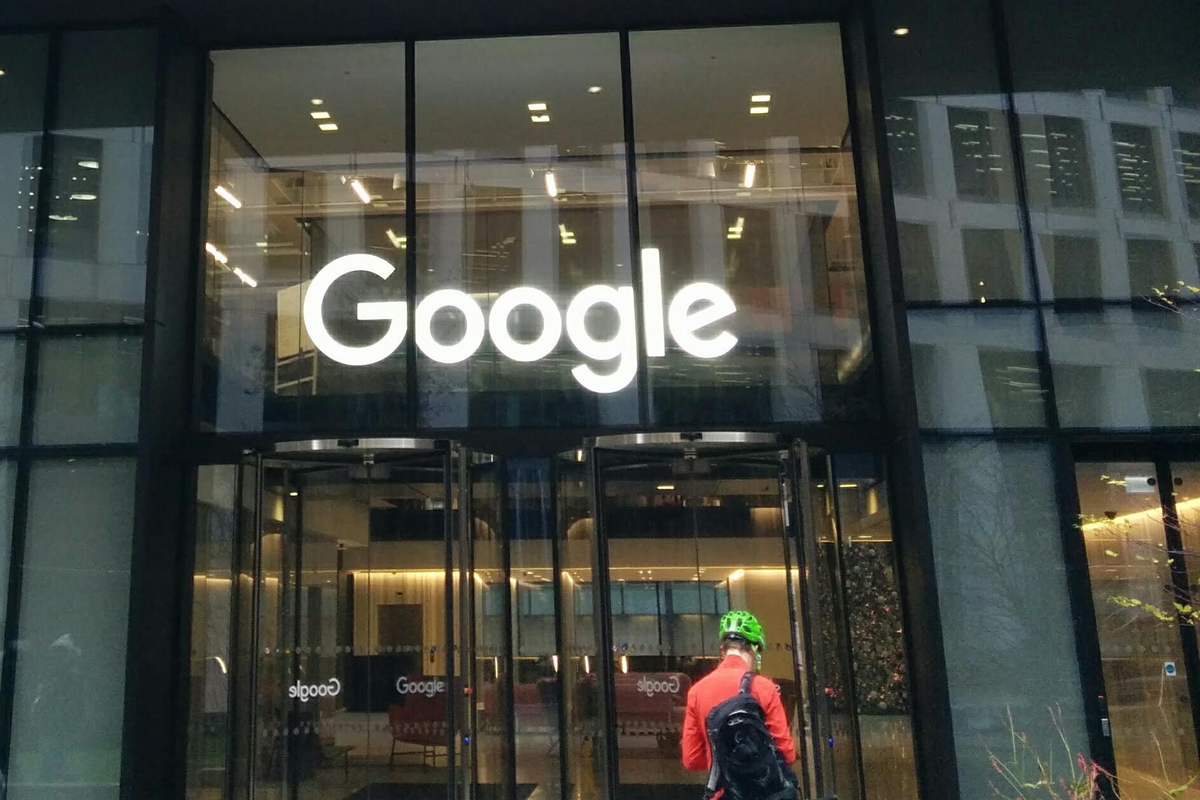
Featured image: the entrance to Google’s building at 6 Pancras Square, London, which houses Google and Google DeepMind, December 2017. Photo: Gciriani via Wikimedia Commons, licensed under CC BY-SA 4.0; cropped to 3:2, resized and converted to PNG. The adapted image is shared under the same licence. Google trademarks are shown for editorial purposes and do not imply endorsement.