Australia’s biggest overhaul of online safety law has cleared Parliament. The Online Safety Amendment (Digital Duty of Care) Bill 2026 passed both houses on Wednesday 25 November, after Labor struck a deal with the Greens to get it through the Senate. It puts a legal duty on social media platforms, games, apps and AI chatbots to protect Australians from serious online harm, backed by fines of up to 5% of a company’s global turnover and, for the first time, a right for individuals to sue.
Most of the new obligations will not bite straight away. The government says the duty takes effect in 12 months, which means platforms have until late 2027 to change how their services work in Australia. Here is what passed, what it means for ordinary users and for businesses that run websites or apps, and what is still unclear.
What Parliament passed
The bill rewrites the Online Safety Act 2021. According to the Parliament’s bill page, it replaces the existing industry code framework and the Basic Online Safety Expectations with a single duty of care requiring online service providers to take measures to provide a safe online environment, and expands the eSafety Commissioner’s powers.
Communications Minister Anika Wells introduced it on 15 October. It passed the House of Representatives on 28 October, went to the Senate on 16 November and was amended there, with 42 government and 10 Greens amendments agreed, before the House accepted those changes on 25 November. The Associated Press reported the Senate vote as 36 to 23.
In its media release, the government describes the core obligation this way: online services must protect Australians from seriously harmful material and conduct and ensure their features and tools don’t cause harm to users. Under-18s get an extra layer of protection from material, conduct and features that are harmful to them, which the government says includes content that glorifies crime or life-endangering stunts, causes serious mental distress, encourages eating disorders or promotes hostile attitudes towards women.
The changes the Greens won
The version that passed is tougher than the one Labor introduced. At a Parliament House press conference on 24 November, Wells listed the amendments agreed with Greens senator Sarah Hanson-Young:
- Bigger fines. Penalties for breaching the duty are now up to 5% of global turnover or $109.2 million, whichever is greater. The original bill capped them at $109.2 million, the same maximum we covered when it was applied to the under-16 social media rules.
- A private right of action. Individuals or groups can take an online service provider to court over a breach of the duty that caused them loss or damage.
- Addictive design. Platforms must treat addictive tools as a specific risk in the risk assessments they give eSafety. Wells pointed to features such as “the toxic popularity meters, the endless scroll”, according to The Guardian, but said eSafety would make the final decisions.
- An external complaints pathway. The government gets a rule-making power to set up an external dispute resolution scheme, which the ABC describes as a possible future digital complaints ombudsman for small claims.
- Nudify apps and privacy. eSafety gets expanded powers to remove nudify apps and websites, and privacy protections were strengthened.
- A clearer definition of “hostile attitudes to women and gender equality”, which Wells said was “not about disagreeing with feminism or about expressing an opinion”.
Hanson-Young’s message after the vote was blunt. “My message to Big Tech companies is it’s time to make your platforms safe or we will see you in court,” she said in a Greens statement. Wells said she imagined it would be “fairly rare” for Australians to sue, the ABC reported.
What changes for everyday users, and when
The most visible change for most people is the “My Feed, My Way” initiative, which the government calls an Australian first. It is meant to give users control over their social media algorithms, including the option for people aged 16 and over to switch off algorithm-driven feeds and see only accounts they follow, as the ABC reports. We explained how that is supposed to work in our earlier My Feed, My Way explainer.
Timing matters. The minister’s release says the duty comes into effect in 12 months. The Senate committee report on the bill explains the split: the expanded eSafety takedown powers in Schedule 1 start the day after Royal Assent, while the duty itself, the risk-assessment and user-empowerment requirements, and the repeal of the existing industry codes start 12 months after Royal Assent. So don’t expect your feeds to change over summer. The Guardian puts the algorithm opt-out at late 2027.
Until then, the current rules stay in place, including eSafety’s complaints schemes, the existing industry codes and the under-16 social media minimum age rules.
What it means for businesses with a website or app
This is the part many small Australian businesses haven’t noticed. The duty applies to online services broadly, not just to Meta, TikTok and Google, and the Senate committee heard from retailers, schools, charities and industry groups worried about being caught.
- Risk assessments. As described in the committee report, providers must conduct written risk assessments at least annually, and before significant changes to a service that could add new risks, and hand them to eSafety within 30 days if asked.
- Proportionality and exemptions. The department told the committee the obligations scale with how much risk a service poses, and the minister can exempt a low-risk service, or a class of services, by legislative instrument. A department official told senators that “the vast majority of entities will be low-risk entities” and that eSafety expected the risk assessment for them to be “a very simple, checkbox kind of process”.
- The exemption fight isn’t settled. The ABC reported Labor flagged on 23 November that small businesses with low-risk websites would be exempted. Coalition senator Sarah Henderson, who moved the Opposition’s amendment in the Senate, says there was “no amendment exempting low-risk websites from the duty”, leaving it to ministerial discretion.
If you run a typical brochure site, online shop or blog with no user-generated content, the practical step for now is to watch for eSafety guidance and any exemption instruments over the next 12 months, rather than to rush out compliance work. If your service hosts user posts, chat, comments, community features or an AI chatbot, it is worth planning for a risk assessment.
Who opposes it
The Coalition voted against the bill and has promised to repeal it. Henderson’s statement calls the laws “a blank cheque for political censorship” and argues the vague definitions of harm will make them hard to comply with. Opposition Leader Angus Taylor told Parliament “This bill is a blank check for political censorship”, the AP reported, adding he would repeal it if the Liberal Party wins the 2028 election.
The United States has also objected. US Ambassador David Brat posted that “Vaguely defined ‘harms,’ backed by penalties of up to 5% of global revenue, will push platforms to censor lawful speech”, according to the AP. The Tech Council of Australia told The Guardian it supported the legislation but was concerned about the amendments, warning: “A private right of action is a complex undertaking with significant consequences.” Google, Meta and Snapchat declined to comment to Reuters, in a report republished by iTnews.
Prime Minister Anthony Albanese, by contrast, called it a “victory for our children and young people”, and Wells’ release compares it to “compulsory seatbelts, plain packaging for cigarettes and gun reform”.
Our view (analysis)
The shift that matters is from content to systems. Australia has spent years chasing individual posts with takedown notices; this law asks platforms to show eSafety, in writing, that they have looked for foreseeable harms in how their products are designed and done something about them. Fines tied to global turnover give that real weight for the biggest companies. The private right of action is the wildcard: it could become a meaningful check, or, as industry warns, a source of drawn-out litigation. For most Australians the visible test will be whether ‘My Feed, My Way’ and the curbs on addictive design actually change how apps feel in late 2027. And with the Coalition pledging repeal, the law’s long-term shape may depend on the 2028 election.
What we don’t know yet
- When the bill receives Royal Assent, which starts the 12-month clock. The Parliament bill page lists it as passed both houses.
- Which services the minister will exempt as low-risk, and what eSafety’s guidance and risk-assessment requirements will look like in practice.
- Whether and when the government will use its new power to create an external complaints scheme or ombudsman.
- Whether tech companies will mount a legal challenge, and how the US government will respond beyond public criticism.
Sources: Minister for Communications media release and press conference transcript, Parliament of Australia bill page, Senate Environment and Communications Legislation Committee report, Department of Communications, Australian Greens, Senator Sarah Henderson, Associated Press, ABC News, The Guardian, iTnews/Reuters.
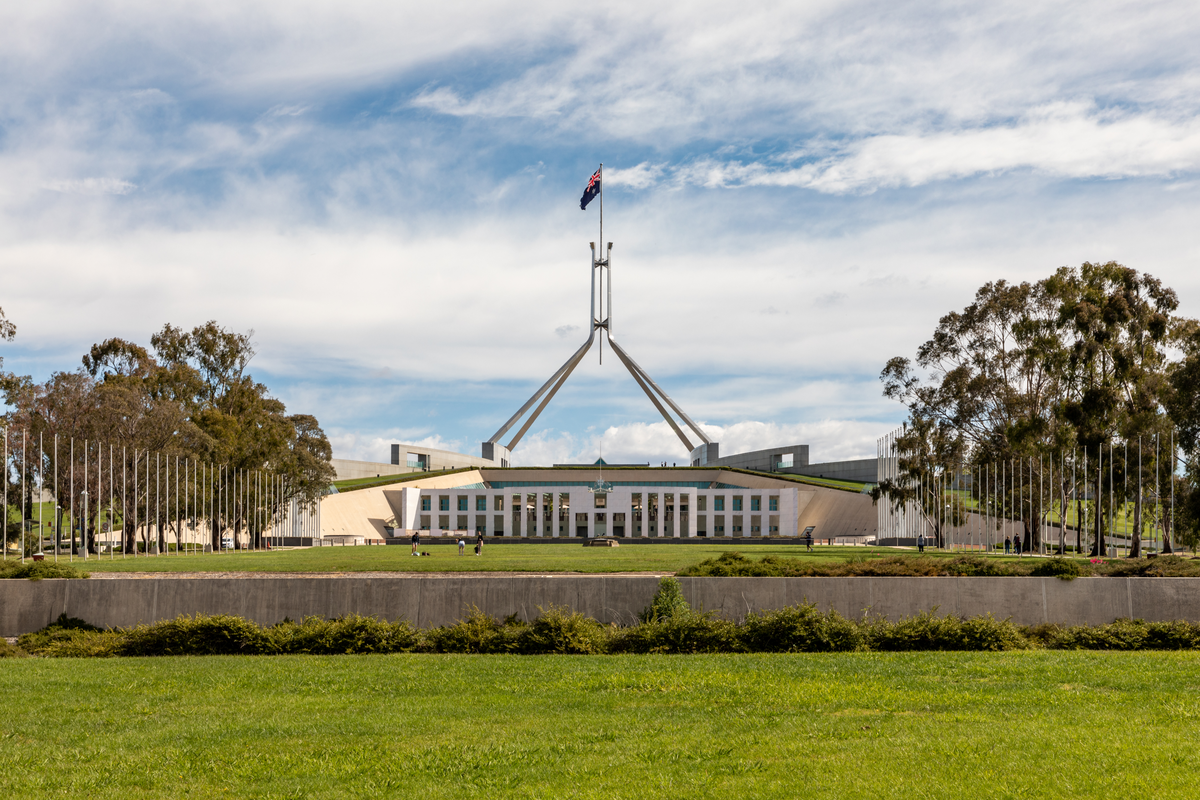
Photo: Parliament House, Canberra, by Dietmar Rabich via Wikimedia Commons, CC BY-SA 4.0 (resized).