X has switched on parental controls for the first time, 20 years after the service launched as Twitter. A parent or guardian can now link to a teenager’s account, see how much time they spend on the app, set a daily limit and rein in who can follow or message them. What they can’t do is read the teen’s messages, see their searches, or get into the account.
The announcement came from X’s Safety account on Thursday morning Australian time. For most Australian families, though, there is a catch: X is one of the platforms covered by Australia’s social media minimum age, so under-16s here are not supposed to have an account at all. In practice the new tools matter mainly to parents of 16- and 17-year-olds.
What X has announced
In a post from its @Safety account, published at 8.54am AEDT on 26 November (21:54 UTC on 25 November), X said parental controls “designed for families with teens aged 13–17 are now available on X.” According to the company, a linked parent or guardian can:
- See how much time their teen has spent on X over the past week, and set a daily limit.
- Require approval for new followers, which also makes the teen’s account private.
- Limit For You recommendations and videos to accounts the teen already follows.
- Filter specific words and turn off sensitive media.
- Control who can send the teen direct messages.
- See which accounts the teen has chatted with one-on-one, without seeing the messages themselves.
One adult can supervise up to five teen accounts, and each teen can be linked to only one parent or guardian at a time. X says “Both sides must agree before supervision starts”, and that the arrangement ends automatically when the teen becomes an adult.
These controls sit on top of defaults X says already apply to teen accounts: “Their accounts default to protected mode, sensitive media is restricted, and targeted advertising is blocked.” X has not published a detailed definition of protected mode in the announcement, a gap Gizmodo also noted in its coverage.
What parents can’t see
The design is deliberately limited. X says: “Parents and guardians cannot read private messages, see searches or viewing history, post as their teen, or access the account.” The teen keeps ownership of the account, and “Every change is recorded and visible to the teen.”
X’s head of safety, Michael O’Herlihy, framed it as a balance: “Parents want practical tools, and teens deserve room to grow.” Product engineering lead Mridul Singhai put it more bluntly: “Parents get guardrails, not a window into their teen’s private life.”
That approach, where the teen must agree, can see every change and keeps their messages private, is the main thing that sets X’s version apart, as TechCrunch and 9to5Mac both pointed out. It also means supervision only works if the teenager accepts it.
The Australian catch: under-16s shouldn’t be on X at all
Since 10 December 2025, platforms classed as age-restricted social media have had to take reasonable steps to stop Australians under 16 from creating or keeping accounts. The eSafety Commissioner’s list of platforms it considers age-restricted includes X, alongside Facebook, Instagram, Snapchat, Threads, TikTok, Twitch, YouTube, Kick and Reddit.
eSafety’s own explainer stresses that the obligation falls on the platforms, not on families: “It’s not a ban, it’s a delay to having accounts.” There are no penalties for under-16s or their parents, but a court can order a platform that fails to take reasonable steps to pay up to $109.2 million. We covered that maximum when the fines were raised in October.
X’s own wording leaves room for this. It says users must be at least 13, “or older where required by law”. So while the announcement talks about teens aged 13 to 17, an Australian family following the rules is really looking at a two-year window: 16- and 17-year-olds. If a younger child in your house is on X, the new controls are not the fix. Under Australian law the account shouldn’t exist.
The timing also overlaps with Australia’s next layer of regulation. Parliament passed the Digital Duty of Care laws this week, which will require online platforms to assess and reduce risks to users, including risks from addictive design. Whether features like these count towards that duty will depend on rules and guidance that haven’t been written yet.
Why now: Grok, lawsuits and regulators
X didn’t link the launch to any particular event, but it lands during a rough stretch for the company on child safety. On Monday, US time, the attorneys-general of Oregon and Virginia filed separate consumer-protection lawsuits against SpaceX, which now owns X and xAI, over sexualised deepfakes made with the Grok Imagine tool. The Verge reports that the Virginia complaint describes Grok’s weak safeguards as “not a failure but a feature.” X’s Safety team responded that people who misused Grok Imagine had broken its terms and that “we acted promptly to tighten its protections”.
Australia’s regulator has been watching too. In January, eSafety said it had seen reports rise “from almost none to several” relating to Grok-generated sexualised imagery, and that it had written to X about its safeguards. In a February Senate Estimates statement, Commissioner Julie Inman Grant said eSafety had “two pending related investigations into xAI and illegal content on the X platform.” Separately, in May the Federal Court ordered by consent that X Corp. pay a $650,000 civil penalty for failing to fully comply with an eSafety transparency notice about child sexual exploitation material.
None of that is directly about parental controls. But it explains why a platform that, in X’s words, “is not designed for or promoted to children” is now building family tools at all.
How it compares
Parental supervision tools are not new. As 9to5Mac put it, most social platforms “have long had parental controls”, and X is late to that. Its feature list (time limits, follower approval, message limits, keyword filters) is similar to what other big apps offer. The consent handshake and the visible change log are the parts that stand out.
Policy is moving in the same direction elsewhere. California, for example, has restricted addictive feed features for minors. In the US, where X’s minimum age is 13, these controls will cover a much bigger group of teenagers than in Australia.
Our view (analysis)
For parents of older teens on X, the controls are a real improvement. A follower-approval switch, a daily time limit and tighter message settings deal with the most common worries without turning the account into surveillance. Keeping messages private is a defensible choice for 16- and 17-year-olds, and one many teens are more likely to accept.
The weakness is the same thing that makes it appealing: it is opt-in on both sides. A teen who doesn’t want supervision can say no. A teen who is lying about their age, which is the problem Australia’s law is aimed at, will never show up as a teen account in the first place. Parental controls help families who are already talking to each other. They don’t replace age assurance or safer defaults.
What Australian parents can do
- If your child is under 16, the honest answer is that they shouldn’t have an X account under Australian law. eSafety has guidance on talking to kids about the age restrictions on its social media age restrictions page.
- If you have a 16- or 17-year-old on X, ask them about linking accounts. X says both of you must agree, and your teen will see every change you make.
- Start with follower approval and DM limits. Those two settings do the most to cut unwanted contact.
- Don’t rely on one app’s settings. eSafety advises that “Parental controls are most effective when used alongside supervision and other online safety strategies,” and its parental controls guide covers phones, consoles, browsers and generative AI tools as well.
What we don’t know yet
- How X decides who is a teen. The announcement doesn’t explain whether it relies on the birthdate a user enters or on other age signals, or what happens if that birthdate is false.
- How the controls are set up for Australian accounts, and whether X has made any Australia-specific changes for 16- and 17-year-olds.
- Whether X checks that the linked adult really is a parent or guardian.
- Whether a teen can unlink supervision on their own before turning 18.
- Whether the controls cover Grok inside X, such as limiting a teen’s access to image generation.
- What exactly protected mode restricts. X’s Help Center page with full details was not accessible to us at the time of writing.
Sources: X Safety announcement, 26 November 2026 (AEDT), The Verge, TechCrunch, Gizmodo, 9to5Mac, GSMArena, The Verge on the Oregon and Virginia lawsuits, eSafety Commissioner (age restrictions, age-restricted platforms, Grok statement, Senate Estimates statement, X Corp penalty, parental controls).
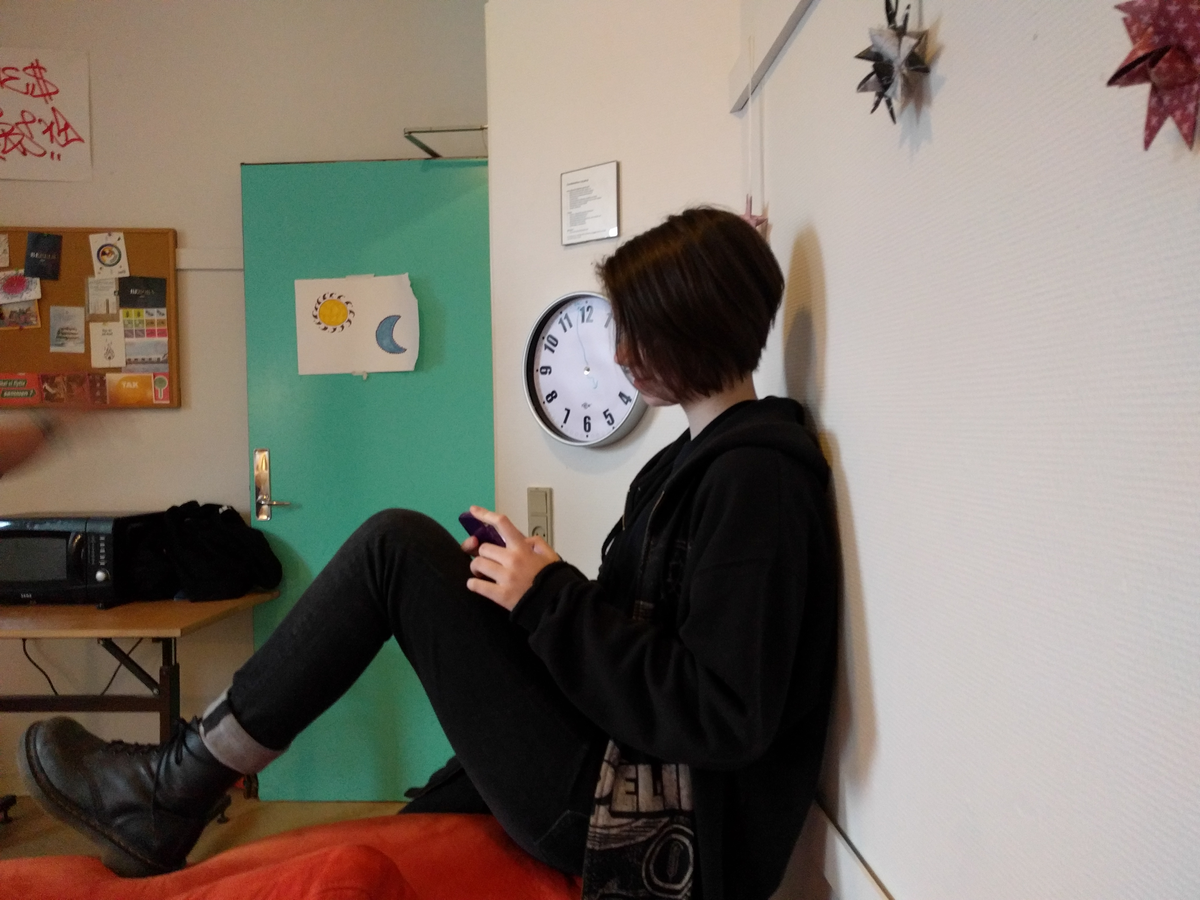
Photo: A teenager using a mobile phone, by TheEgdeLord via Wikimedia Commons, CC BY-SA 4.0 (resized). Illustrative image; not taken on X.