Hyundai Motor Group has put a date on one of the biggest questions hanging over its software-defined car strategy — and NVIDIA is going to help bridge the gap.
The Korean automaker says production vehicles using NVIDIA-based Level 2+ driver assistance are targeted for the first half of 2028, followed by Level 2++ in the second half of that year. Hyundai’s own Atria AI-powered Level 2++ system is scheduled to follow in the second half of 2029.
That timeline matters because Hyundai had previously aimed to bring its proprietary driver-assistance software to market earlier. Reuters reports the in-house launch is now roughly two years later than originally planned. Instead of waiting, Hyundai is pursuing two tracks at once: deploy NVIDIA technology sooner, while continuing to build the software it ultimately wants to control itself.
NVIDIA is becoming Hyundai’s shortcut to 2028
At its Autonomous Driving Media Day, Hyundai described the NVIDIA partnership as the fast lane of its new strategy. The company plans to integrate NVIDIA’s vehicle AI computing platform and autonomous-driving software into its software-defined vehicle architecture.
The roadmap is unusually specific. NVIDIA-based Level 2+ production is targeted for the first half of 2028, with Level 2++ following in the second half. Hyundai says sensor systems across Hyundai Motor, Kia, 42dot and Motional will progressively standardise around NVIDIA DRIVE Hyperion 10.
This is not a declaration that Hyundai is abandoning its own technology. It is almost the opposite. NVIDIA gives the group a way to ship more capable systems while Hyundai buys itself time to develop Atria AI.
Hyundai wants its millions of cars to become an AI advantage
The more interesting part of Hyundai’s announcement is what it calls a Data Flywheel. Vehicles collect real-world driving data, that information feeds AI training and validation, and improvements can then return to production vehicles. Repeat that loop often enough and the fleet itself becomes part of the development infrastructure.
Hyundai and Kia together sell millions of vehicles each year. If the group can turn even part of that scale into useful training data, it gains something that cannot simply be purchased from a chip supplier.
That helps explain why Hyundai is still investing in Atria AI rather than handing the entire autonomous-driving stack to NVIDIA. Its 42dot software unit is developing the end-to-end model to interpret the road and make driving decisions, with dedicated data-collection vehicles already gathering real-world information.
Level 2++ is still driver assistance, not a robotaxi
The terminology around automated driving can make increasingly capable assistance systems sound more autonomous than they are. Hyundai’s 2028 roadmap is not a promise that drivers will be able to stop paying attention and let the car handle every journey.
The NVIDIA-backed systems are part of Hyundai’s progression toward more advanced driver assistance. Hyundai is also evaluating lidar for future Level 3 technology, but that sits further along the automation ladder and carries different technical and regulatory requirements.
For buyers, the practical improvements are more likely to arrive as better lane handling, traffic awareness, automated manoeuvres and more sophisticated assistance before anything resembling fully autonomous personal transport becomes commonplace.
Why this deal matters beyond Hyundai
NVIDIA is already synonymous with the infrastructure powering the generative-AI boom. Automotive computing gives it another enormous market where the same basic strengths — high-performance processors, AI software and a development platform around them — can become deeply embedded in products for years.
For Hyundai, the calculation is different. Tesla, Waymo and fast-moving Chinese manufacturers have pushed vehicle software and autonomous driving into a race measured in data as much as horsepower. Waiting until 2029 for a completely home-grown answer risks giving competitors more time to pull away.
The dual-track plan is therefore a pragmatic compromise: use NVIDIA to move faster now, learn from the vehicles that reach the road, and funnel that experience toward Hyundai’s own platform.
The Tech Boom take
The most revealing part of Hyundai’s NVIDIA deal is that it does not look like surrender. It looks like an admission that the autonomous-driving race is moving too quickly to wait for perfect vertical integration.
If Hyundai executes the roadmap, NVIDIA-powered cars arriving in 2028 could become both products and learning machines for the Atria AI vehicles that follow in 2029. That would make NVIDIA more than a temporary supplier — it would become part of the bridge Hyundai uses to build its own future.
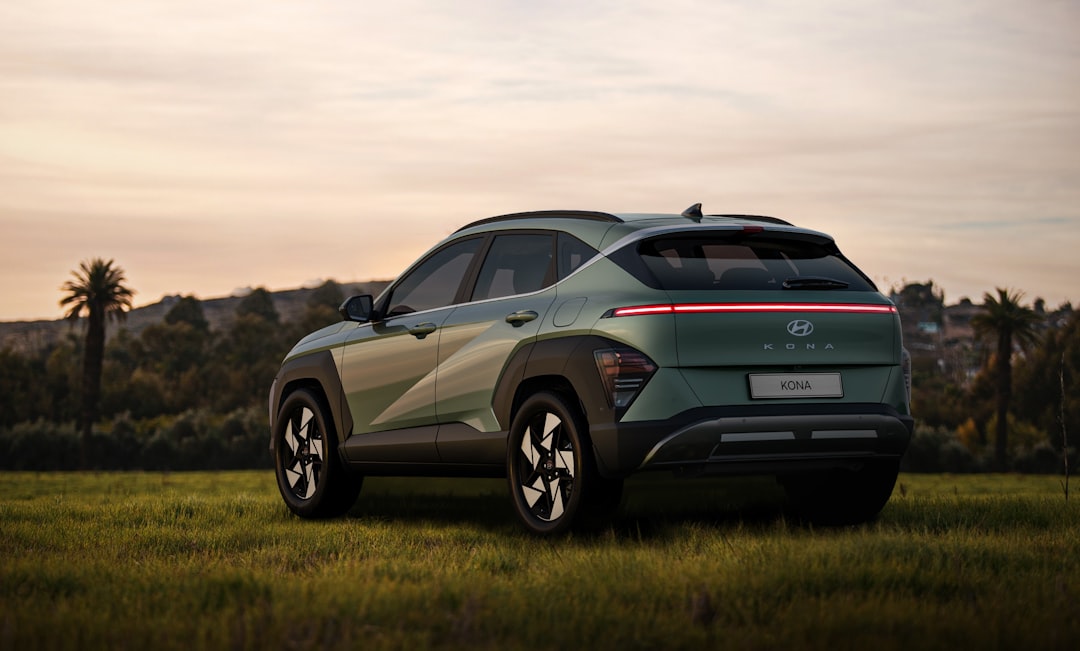
Featured photo: Hyundai Motor Group/Unsplash.