High blood pressure rarely causes symptoms, which is why so many people don’t know they have it. Google now says the sensors already in a consumer smartwatch can pick up the signs, without the arm cuff that blood pressure readings normally need.
In a peer-reviewed paper published in Nature on 5 November, Google Research scientists describe an AI system that analysed a week of ordinary smartwatch data. It flagged hypertension about as reliably as a first blood pressure check in a doctor’s office. The company’s research blog says the work “helped inform” the blood pressure trends feature that Google started rolling out to Pixel Watch owners in September.
The results are real and peer-reviewed, but they’re narrower than the headline suggests. The watch missed about a third of the people who had high blood pressure. The study was small. And the consumer feature carries a disclaimer saying it isn’t a hypertension screener at all.
What Google built
The system has an unwieldy name, AI-PPG-ACC-HTN, but its job is simple. It doesn’t try to produce a blood pressure number. It estimates whether someone is persistently hypertensive, using days of data instead of a single reading.
It uses two sensors that most smartwatches already have. The optical heart-rate sensor (photoplethysmography, or PPG) tracks the shape of each pulse wave at the wrist. The accelerometer detects when the wearer is still, and also picks up the tiny vibrations caused by the heart pushing blood into the aorta. Google says it combines those signals with the wearer’s height, which serves as a rough proxy for artery length.
According to Google, the model was first trained without medical labels on 492,347 hours of sensor data from 2,109 consenting participants. It then averages its readings over several days of wear to cancel out short-term noise such as movement or temperature. Crucially, it needs no calibration against a cuff. Google argues that is what sets it apart from earlier cuffless wearables, which mostly track changes relative to a cuff reading.
The numbers, and what they mean
Google tested the system in a prospective study at five US sites. The 196 participants had no known cardiovascular disease and weren’t taking blood pressure medication. Each wore the watch for seven days. Their results were checked against 24-hour ambulatory blood pressure monitoring, the clinical gold standard, in which a cuff inflates automatically throughout a day and night.
Used as a first screen, the watch detected 65.8% of the people who had hypertension (sensitivity). It correctly cleared 90.0% of those who didn’t (specificity). When it flagged someone, it was right 80.6% of the time. An initial office reading in the same group caught 55.3%, with the same 90.0% specificity and a 77.8% hit rate. The Nature press release notes that the gap in sensitivity between the watch and the office reading was not statistically significant. So the fair summary is “comparable to”, not “better than”.
Google also looked at 48 people whose first office reading was high, the group doctors would normally send for follow-up testing. Here the watch caught 78.4% of those with sustained hypertension, with 90.9% specificity. A repeat office reading did worse on every measure. Multi-day home cuff monitoring still caught more cases (89.2%), though it produced more false alarms.
Put plainly, the watch was cautious. When it raised a flag, it was usually right. But in the screening scenario it stayed quiet for roughly one in three people who really did have high blood pressure. A watch that says nothing is not an all-clear.
The research isn’t the product
This is where it pays to read the fine print. Google’s research blog calls the work “early feasibility research” and says the methods “are not indicative of any existing or upcoming commercial product feature or device capability”. The same post also says the findings “helped inform” the blood pressure trends feature in the Google Health app. That feature began rolling out on 24 September, with the first monthly reports arriving in early October.
According to Google’s help centre, the shipping feature uses pulse and motion patterns to report, once a month, whether your trend was “High” or “Not high”. It never gives a blood pressure number. To get a result, you need at least five continuous days of wear in a month, with at least eight hours a day of good signal. Google recommends wearing the watch to sleep. Per Google’s Health Guardian page, it’s free on Pixel Watch 3, 4 and 5, while Fitbit Edge and Fitbit Air owners need a Google Health Premium subscription. Google says availability varies by country and device, and the pages we checked didn’t confirm which countries get it.
The help centre doesn’t cite the Nature paper as the feature’s supporting research. It points to a separate Google paper on a model called WavesFM, and the product page names “WavesFM 2”. Google hasn’t said whether the shipping model performs the same as the one in the study. Our reading: the 65.8% and 90% figures describe the research system under study conditions. Don’t assume they apply exactly to what’s on your wrist.
The regulatory framing differs too. The study presents the watch as a screening tool. Google’s consumer disclaimers describe the feature as being “for general wellness purposes only”, say it “is not a prescreener for hypertension”, and say a “Not high” result “should not be interpreted as ruling out a medical condition”. Google also says the feature isn’t designed for anyone who is pregnant or who has already been diagnosed with high blood pressure or kidney disease.
How it compares with Apple Watch
Google isn’t first to put a hypertension alert on a watch. Apple’s Hypertension Notification Feature received FDA 510(k) clearance on 11 September 2025, and Apple has been pushing its watches further into continuous health sensing since. Apple’s own validation paper reports 41.2% sensitivity and 92.3% specificity over 30-day windows.
Comparing those figures with Google’s 65.8% is tempting, but it isn’t apples with apples. Apple measured against 30 days of twice-daily home cuff readings in a much larger group. Google measured against 24-hour ambulatory monitoring in 196 people. The populations and wear periods also differ. What the two studies share is the design philosophy: alert rarely, so most alerts are genuine, and accept that many cases will be missed.
What doctors still rely on
Hypertension specialists remain wary of cuffless devices. In a November 2025 commentary in Hypertension Research, George Stergiou and colleagues at the University of Athens wrote that “there is no convincing evidence that any cuffless BP technology has adequate accuracy as required for clinical use”. They added that European and American guidelines advise against using such devices to make clinical decisions. They did, however, see a role for notification-style tools in finding undiagnosed hypertension, provided a cuff confirms the result.
Google effectively says the same thing. If your monthly trend comes back “High”, its help centre tells you to take readings with a validated upper-arm cuff twice a day for a week and share them with your doctor. If a cuff reading disagrees with the watch, Google says the cuff wins.
Why this matters
Google says more than half of adults with hypertension don’t know they have it. A device millions of people already wear to bed could prompt some of them to get checked years earlier. That’s the real promise here, and a peer-reviewed study in a top journal is a meaningful step beyond marketing claims.
Just be clear about what the technology is. It’s a nudge, not a measurement or a diagnosis. Even in Google’s best results it misses a substantial share of cases, so a reassuring trend is no substitute for an occasional cuff reading. If your watch does flag a high trend, take it as a reason to book a check with your GP, not a reason to worry.
The Tech Boom provides general information, not medical advice. Speak to a doctor about your blood pressure.
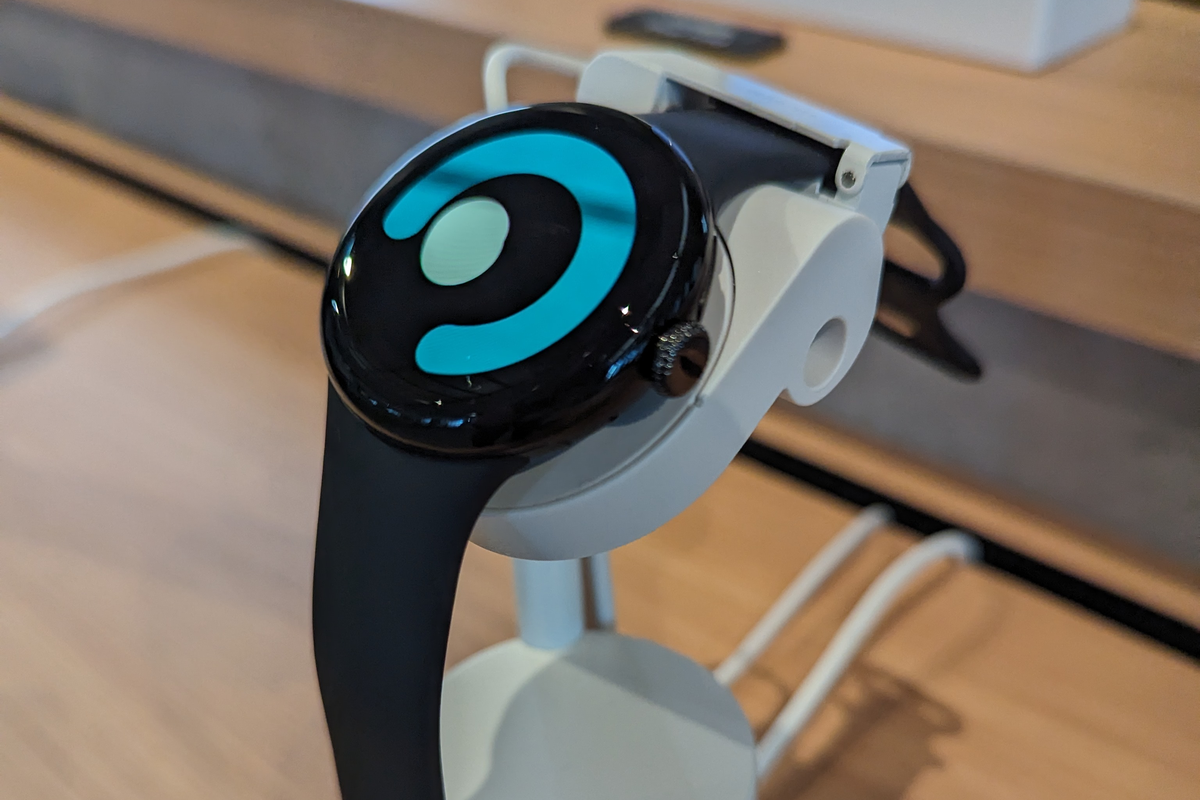
Featured image: Google Pixel Watch 2 on display at Google’s Shibuya Stream office, Tokyo, photographed by Syced via Wikimedia Commons, CC0 1.0; cropped and resized. Pixel Watch 2 is shown for illustration; blood pressure trends require Pixel Watch 3 or later or a supported Fitbit.