Nvidia has posted another record quarter, and its first since co-founder Jensen Huang quit as chief executive. The chipmaker reported revenue of US$115.8 billion for the three months to 25 October, up 103% on a year earlier, and forecast about US$130 billion for the current quarter. The results came out on Tuesday afternoon US time, which was Wednesday morning in Australia. Both figures beat Wall Street forecasts.
The quarter matters well beyond Silicon Valley. Nvidia’s chips run most of the world’s AI data centres, including the ones being planned here, and its share price moves the AI trade that many Australian super funds and ETFs are exposed to. Here’s what Nvidia reported, what changed at the top, and what it means for Australia. For background on Huang’s exit, see our explainer from last week.
The numbers: what Nvidia reported
All figures are in US dollars and come from Nvidia’s results release unless noted. Nvidia’s financial year runs ahead of the calendar, so this is the third quarter of its 2027 financial year.
- Revenue: US$115.8 billion, up 20% from the previous quarter (US$96.2 billion) and up 103% from US$57.0 billion a year ago.
- Data centre revenue: US$107.6 billion, up 110% year on year. That is about 93% of everything Nvidia sold.
- Edge computing (PCs, gaming graphics, workstations, cars and robotics): US$8.2 billion, up 42% year on year.
- Profit: net income of US$65.3 billion on standard accounting (GAAP), up 105%, with a gross margin of 74.8%. Earnings per share were US$2.70.
- Returns to shareholders: US$28.1 billion in buybacks and dividends during the quarter, with about US$227.3 billion of buyback authority left. The next dividend of US$0.25 a share is due on 23 December.
Analysts had expected revenue of nearly US$109 billion, according to FactSet figures cited by CBS News, and about US$109.5 billion according to Visible Alpha’s survey cited by Investopedia. Nvidia’s own guidance in August was about US$108 billion. So this was a clear beat, of roughly 6%.
The outlook: US$130 billion next quarter, and a bigger 2028
For the quarter ending in January, Nvidia expects revenue of US$130 billion, plus or minus 3%, with gross margins of 71% to 72%. That quarter includes an extra week. Visible Alpha’s average analyst estimate was US$124.8 billion, Investopedia reports. Nvidia says the forecast assumes no data centre compute revenue from China.
On the earnings call, interim CEO Colette Kress also raised Nvidia’s forecast for its 2028 financial year, which starts in February. Nvidia now expects revenue growth of about 75%, up from 70%, from a higher base. Kress said the new Vera Rubin platform brought in nearly US$20 billion in its first quarter of production shipments, which she called the fastest product ramp in Nvidia’s history. Nvidia says Vera Rubin NVL72 rack systems are now running at partners including CoreWeave, Google Cloud, Microsoft Azure, Oracle Cloud Infrastructure and Nebius.
Kress said sales to the biggest cloud companies were about US$60 billion, up 23% on the previous quarter. She put the cloud industry’s order backlog at US$2.5 trillion, up from US$2 trillion three months earlier. She also said GPU rental prices are rising: older Hopper chips have been re-contracted at up to twice their original price, and rates for B300 chips are up more than 60% since launch. Those are Nvidia’s own figures and describe its customers’ businesses, not audited numbers.
China and export controls
Nvidia sold US$2.4 billion of licensed Hopper data centre chips to China in the quarter. But Kress told analysts that “we are no longer shipping licensed Hopper data center products to China”, and that none are included in the forecast. She did not explain why. She also noted that “New export controls were released by the U.S. Commerce Department this week”, and said Nvidia was still studying them. That appears to refer to the licensing rule we covered on Tuesday, which adds licence requirements for AI chips sent to Singapore, Malaysia and three other countries.
Who is running Nvidia now
This was Kress’s first results announcement as interim CEO. She is still also chief financial officer. In the release she said: “Our momentum is real. NVIDIA is an exceptional technology leader, powered by the relentless innovation of our people.” The release did not mention Huang.
The board did address him. Board chair Harvey Jones opened the call by restating the board’s 12 November announcement that Huang had resigned, and said the board “does not intend to reinstate Jensen as CEO”, according to the call record and The Register. He said the board has hired the recruitment firm Heidrick & Struggles to search for a permanent chief executive. Earlier on Tuesday, Huang had said he would consider returning if the board asked him, Investopedia reports. Jones also said Nvidia would not take questions on the circumstances of Huang’s resignation or the board’s continuing investigation.
Nvidia also announced on Tuesday that its board has set up a National Security and Export Control Oversight Committee. Jones said on the call that it will include independent directors, senior outside advisers and legal counsel, and will “enhance our engagement with the U.S. government”. Separately, the Wall Street Journal reported that the US Securities and Exchange Commission is investigating Nvidia, according to Market Index. Nvidia had not responded to that report and the SEC declined to comment, so treat it as unconfirmed.
How the market reacted, in the US and here
Nvidia shares rose nearly 4% to US$161.57 in after-hours trading, according to CBS News. At 9:30am AEDT, the ABC reported they were up 3.3% at US$160.60. Those were after-hours moves. Wall Street’s first full trading session since the results opens early on Thursday morning, Sydney time. Before the results, Nvidia shares were down 16% for 2026, according to Investopedia, after falling sharply during the Huang scandal.
The good news did not lift the ASX. The S&P/ASX 200 fell 0.69% to 8,821.8 on Wednesday, its fifth straight loss, AAP reports. Hotter-than-expected wage figures raised the prospect of another interest rate rise. The ASX 200 information technology sector fell 2.3%, with TechnologyOne down 6.1% and Xero down 3.8%, according to Market Index. In other words, one strong Nvidia result was not enough to end the recent sell-off in AI-linked shares.
What it means for Australia
AI data centres. Kress mentioned Australia on the call. She pointed to Nvidia’s September collaboration with local cloud partners to develop up to 2 gigawatts of land, power and shell capacity by the end of 2027, which we covered at the time. Nvidia’s announcement named Firmus, Sharon AI, IREN, ResetData, Megaport, CDC, NEXTDC and AirTrunk. Kress also said Nvidia’s “sovereign AI” revenue, from national and government-backed projects, more than tripled year on year. Nvidia did not break out how much of that came from Australia.
One line is worth watching for the smaller local players. Kress said Nvidia had supported the growth of “neoclouds”, the specialist GPU cloud companies, and would “continue to be disciplined and selective in our support”. Market Index read that as a sign of less financial backing for smaller AI cloud providers. Several partners in the Australian build-out are neoclouds. Nvidia did not name any customers it would support less.
Cloud and AI costs. If GPU rental prices are rising as Kress says, Australian businesses and universities that rent AI compute could pay more. Demand also still exceeds supply, which matters for local projects competing for Nvidia chips. Both points are Nvidia’s account of its market, not independent data.
Super and shares. Nvidia is one of the largest companies in global share indexes, so many Australians own a slice through international share options in their super or through ETFs. Thursday’s US session will show whether the after-hours gain holds. This article is general information, not financial advice.
Gamers and PC buyers. The result says little about local graphics card prices. Edge computing, which includes gaming, grew, but it is now only about 7% of Nvidia’s sales. Kress also told analysts that Nvidia had secured memory supply, but did not give any pricing guidance for consumers.
What we don’t know yet
- Who will be Nvidia’s permanent CEO, and when. The board has given no timeline.
- What the board’s investigation will find, and whether the reported SEC inquiry is real and what it covers.
- How Nvidia will be affected by the new US export rules, which it says it is still studying.
- Why Nvidia stopped shipping licensed Hopper chips to China.
- How Wall Street reacts in Thursday’s full session (Australian time).
Our read
On the numbers, this was the result Nvidia needed. Revenue and the outlook both came in well above forecasts, and the new Rubin chips are shipping in volume. On governance, the board was blunt: Huang is not coming back, and it would not discuss why he left. For Australia, the AI data centre build-out looks safe on Nvidia’s figures. The tougher test may be how selective Nvidia gets about backing smaller cloud partners, and whether rising compute prices reach local customers.
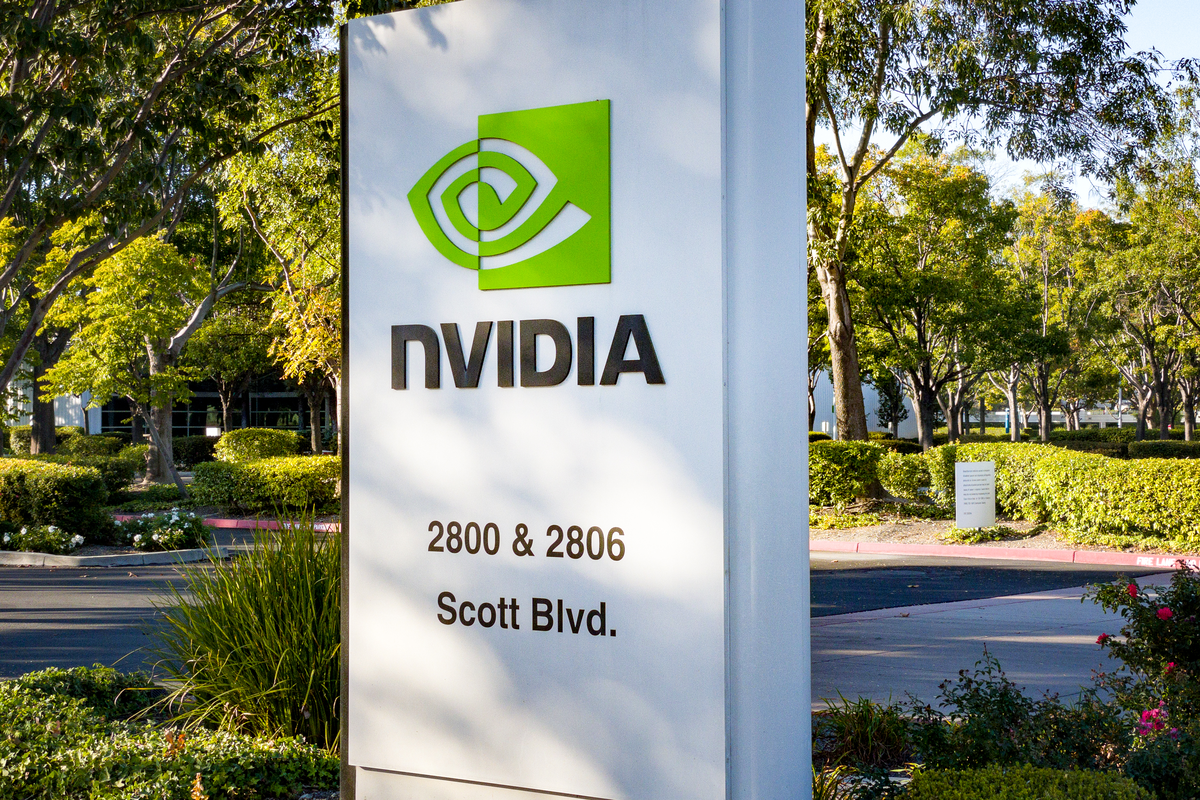
Featured image: Nvidia sign outside its Scott Boulevard offices in Santa Clara, California (file photo, 2020). Photo: “Nvidia sign” by Will Buckner via Wikimedia Commons, licensed under CC BY 2.0; cropped to 3:2, resized and converted to PNG. The Nvidia name and logo are trademarks of Nvidia Corporation, shown for editorial purposes; no endorsement implied.