OpenAI has hit back at Apple in court. In an 81-page filing lodged in the US District Court in San Jose on Friday 27 November (US time, early Saturday in Australia), OpenAI accuses Apple of obtaining secrets about its unreleased AI devices through a returning employee and of pressuring manufacturers that work for both companies to limit their OpenAI work. Apple calls the counterclaims “a transparent attempt to distract”.
The filing is OpenAI’s formal answer to the trade secret lawsuit Apple brought in July, and it turns a one-sided case into a two-way fight between two companies heading for a collision in consumer hardware. Everything below is an allegation that neither side has yet proven. Here’s what OpenAI claims, how Apple has responded, and why the employment arguments at the centre of the case match a debate Australia is having right now.
How the dispute got here
- 10 July 2026: Apple sued OpenAI, its hardware company io Products and two former Apple employees, Chang Liu and Tang Tan (court docket). It alleges confidential hardware and manufacturing information was taken to benefit OpenAI’s consumer device plans. OpenAI and the employees deny this. Tan spent 24 years at Apple and was a vice president of product design for iPhone and Apple Watch before helping start io, which OpenAI bought in 2025, Reuters reports.
- 14 October: OpenAI first told the court that an employee who had gone back to Apple sent more than 100 confidential files to personal accounts. Apple told the court that day that its initial search had found no confidential OpenAI information, according to Anadolu Agency.
- 16 October: the judge, Edward J. Davila, approved a joint stipulation that settled Apple’s request for a preliminary injunction. Under it, the defendants “shall not access, acquire, use, or disclose Apple confidential or trade secret information in any manner” and must hand relevant devices and accounts over for forensic inspection. This is the order Apple is pointing to when it says OpenAI “has already been ordered to stop using Apple’s confidential information”.
- 27 November: OpenAI, io Products, Liu and Tan filed their answer and counterclaims, and the defendants withdrew their pending motion to dismiss Apple’s case. Their one-line notice gives no reason.
A jury trial is set for 19 July 2027, according to the court’s case management order. The new filing was first reported by the Financial Times.
What OpenAI alleges: the returning employee
The core trade secret claim concerns a worker the filing calls “Employee X”. OpenAI says he came to work at OpenAI from Apple “late last year”, told his supervisor on 19 May 2026 that he was leaving to care for family in China, and finished on 2 June 2026 without saying he was going back to Apple.
In the days before he left, OpenAI alleges, he sent confidential material to personal destinations. The filing names compressed archives including “structure.zip”, which it says reveals “nonpublic features and geometry of an unreleased OpenAI device”, along with manufacturing-quality and colour-finishing data. OpenAI goes further: “given the timing, it now appears that stealing those documents may have been his reason for joining OpenAI in the first place.”
OpenAI then makes the claim that involves Apple directly. “On information and belief”, a legal phrase meaning OpenAI believes it but hasn’t yet shown evidence for it, the employee briefed senior Apple operations staff in the Asia-Pacific region in July 2026, at Apple’s request, on OpenAI’s hardware work and plans for unreleased products. OpenAI says it sent Apple a cease-and-desist letter on 9 October 2026. Apple denied using the rehired employee to get OpenAI’s confidential information, Reuters reports.
What OpenAI alleges: pressure on shared suppliers
The second part of the filing may matter more for how quickly OpenAI can ship hardware. OpenAI says that for many manufacturing jobs it has only one or two qualified suppliers, and that many of them also work for Apple, by far the bigger customer.
- OpenAI claims Apple’s supply-management staff demand that suppliers “identify their OpenAI projects” and the workers on them.
- A finishing supplier with a shared anodising line (the process that colours and hardens aluminium parts) allegedly moved OpenAI’s work “to a separate overnight shift” after Apple objected to the two companies’ parts going through at the same time. OpenAI says this raised costs for the supplier and for OpenAI.
- Another manufacturer allegedly told OpenAI it “could no longer undertake the planned work with OpenAI because of threats from Apple”. OpenAI says that forced it to significantly rework its operations.
- “Suppliers have expressed fear of losing Apple business and have moved or rescheduled meetings with OpenAI to avoid Apple seeing them,” the filing says.
None of the suppliers is named. OpenAI sums up Apple’s alleged aim as being “to compete unfairly by any means available”. It says it isn’t challenging lawful dedicated-capacity contracts or genuine confidentiality safeguards, only what it calls a broader restriction on shared resources.
The employment arguments: iCloud, iMessage and a one-year no-poach clause
The filing’s sharpest language is about how Apple treats staff who leave. OpenAI claims Apple encourages employees to keep work files in personal iCloud accounts and do work over personal iMessage. Then, when someone leaves for a rival, Apple can accuse them of holding on to “Apple confidential” material. It says “400 Apple employees have left Apple for OpenAI so far” and accuses Apple of trying to scare off the next wave.
OpenAI also targets Apple’s Intellectual Property Agreement. That includes a clause barring former staff from soliciting Apple employees “for a period of one (1) year following your termination”, which OpenAI argues is unenforceable under California law. Liu separately claims Apple accessed his personal iCloud data without permission after he left, and says he withdrew permission for his iMessages on 26 January 2026.
Apple’s answer, in a statement to 9to5Mac: “This case is about OpenAI employees deliberately stealing, accessing, and using Apple’s secret and confidential information regarding our unreleased technologies, processes, and products — not about inadvertent retention of Apple information. OpenAI’s counterclaims are a transparent attempt to distract from the substance of Apple’s lawsuit, in which OpenAI has already been ordered to stop using Apple’s confidential information.”
The counterclaim plaintiffs want damages, court orders to stop the alleged conduct and a jury trial; the filing puts no dollar figure on the damages. Reuters says OpenAI and lawyers for Tan and Liu did not immediately respond to requests for comment. AppleInsider and Anadolu have also reported the filing.
What it means in Australia
Nothing changes today for Australians using an iPhone or ChatGPT. OpenAI’s own filing describes its devices as unreleased, and this is a US civil case that will take months to play out. What it shows is how hard it is to break into hardware against an incumbent: OpenAI says it relies on specialist suppliers, many of them in Asia, that also make things for Apple. That fits with OpenAI’s wider hardware push, which already includes custom AI chips.
The employment fight will sound familiar here. In September the federal government released draft laws to ban non-compete clauses for workers earning up to $190,100 a year. The exposure draft would also ban co-worker non-solicitation clauses, the kind of no-poach term OpenAI is attacking in Apple’s contract, for employees “regardless of income”, law firm Allens notes. It is still a draft: as at 18 November, no bill had been introduced to Parliament, Sprintlaw reports.
For Australian workers, the case is a reminder that it’s worth keeping work and personal accounts apart. If your job pushes work files into your personal cloud storage or messaging, ask how they will be separated when you leave. Before you resign, read any restraint and confidentiality clauses, and get advice if you plan to join a competitor. How iCloud data is handled has come up before, in our coverage of the UK’s secret encryption order to Apple.
What happens next
Apple now has to respond to the counterclaims, either by answering them or by asking the court to throw some of them out. Both sides are already exchanging evidence under court-approved discovery orders, and the October order requires forensic inspection of relevant devices and accounts. Expect fights over what the documents show and who Employee X is. Unless the parties settle, both sides’ claims are scheduled to go before a jury in San Jose from 19 July 2027.
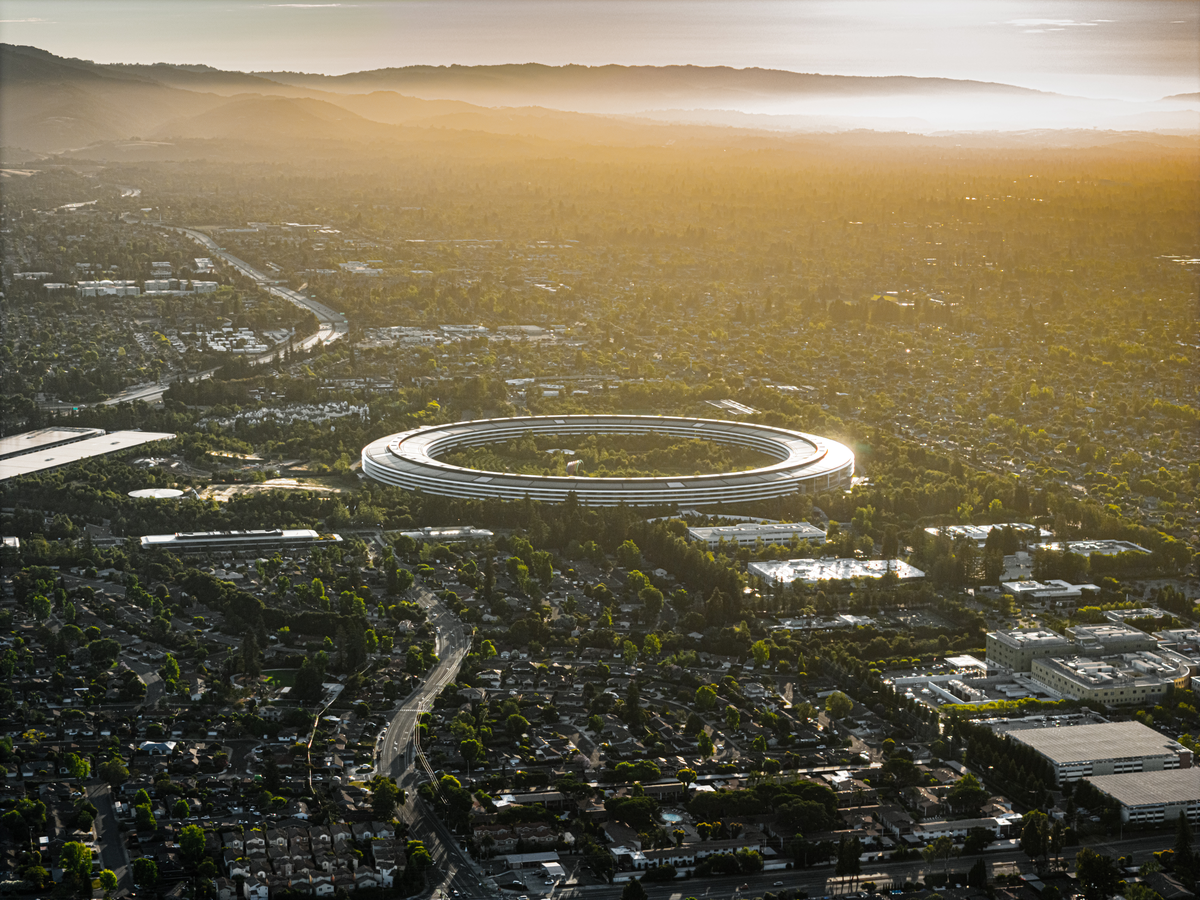
Sources: OpenAI, io Products, Liu and Tan, Counterclaims and Answer, Apple Inc. v. Liu, No. 5:26-cv-07078-EJD (N.D. Cal., filed 27 November 2026), via CourtListener; Reuters; 9to5Mac; Anadolu Agency; AppleInsider; Australian Treasury ministers; Allens; Sprintlaw. Featured photo: Apple Park in Cupertino, aerial view, June 2024, by Nils Huenerfuerst via Wikimedia Commons, released under CC0 1.0 (public domain dedication); resized and converted to PNG. No endorsement by Apple or the photographer implied.