Can a film shot on a phone genuinely compete with a Hollywood production? It’s a more interesting question than it sounds. One director used three iPhone 5s handsets to make a Sundance breakthrough. Another used an iPhone 7 Plus to shoot a psychological thriller. And in 2025, Danny Boyle took the concept into big-budget horror, with custom rigs carrying as many as 20 phones.
The argument isn’t that a smartphone has suddenly become a better camera than an ARRI or a RED. It’s that a smaller camera can make a different kind of movie possible. Sometimes that difference matters more than the sensor size.
For this edition of The Tech Boom Versus, we’ve assembled four real films, their official YouTube trailers, production details and a practical verdict. Watch the trailers, consider how each director used the technology, and decide whether you would have noticed the camera if nobody had told you.
A note on the comparison: these trailers are marketing edits, not controlled camera tests. Compression, grading, lighting and YouTube playback affect what you see. We’re comparing filmmaking choices and the resulting aesthetic, not claiming a scientifically fair image-quality shootout.
The four contenders: from a pocket camera to a 20-iPhone rig
| Film | Release | Phone used | Why the choice matters |
|---|---|---|---|
| Tangerine | 2015 | iPhone 5s | Small, discreet camera made energetic street filmmaking possible |
| Unsane | 2018 | iPhone 7 Plus | Intimate, unsettling perspective in a psychological thriller |
| High Flying Bird | 2019 | iPhone 8 | Mobility and carefully controlled widescreen framing |
| 28 Years Later | 2025 | Primarily iPhone 15 Pro Max | Multi-phone rigs and agile shooting for a major studio film |
Round 1 — Tangerine (2015): when limitations became the style
Director Sean Baker’s Tangerine follows two friends through Los Angeles on Christmas Eve. Its camera setup sounds almost comically modest by feature-film standards: three iPhone 5s handsets, a FiLMiC Pro camera app, an anamorphic lens attachment and a stabiliser. But the film wasn’t a stunt about proving an iPhone could record a picture. It was about getting close to people and locations without the bulk of a conventional camera package.
In an Australian ABC interview, Baker explained the importance of the widescreen adapter, manual camera control and stabilisation. Those accessories matter: this wasn’t simply the default Camera app pointed at a cast.
Our take: Tangerine makes the best case for the phone as a creative enabler. The small form factor gave the production an intimacy and street-level mobility that were central to the story. Its saturated, high-energy aesthetic is a deliberate choice, not proof that technical compromises disappeared.
Watch: Tangerine — official trailer
Content advisory: Magnolia Pictures labels this a red-band trailer; it contains strong language and mature subject matter. Watch on Magnolia Pictures’ YouTube channel if the player does not load.
Round 2 — Unsane (2018): the camera as an unsettling presence
Steven Soderbergh’s Unsane, starring Claire Foy, used iPhone 7 Plus cameras for its psychological-thriller world. According to the film’s production notes, Soderbergh used three phones and FiLMiC Pro to control exposure, focus and other parameters.
The phone’s small sensor and wide-angle character don’t automatically create a luxurious, shallow-focus Hollywood image. But that can be a strength in a story about confinement and uncertainty. An image that feels slightly too close or too exposed can serve the mood.
Our take: Unsane is the clearest example of using a phone’s visual limitations as a dramatic tool. It’s also a reminder that choosing a phone doesn’t eliminate skilled lighting, production design, performances or post-production.
Watch: Unsane — official studio trailer
Video: 20th Century Studios UK on YouTube.
Round 3 — High Flying Bird (2019): can a phone look more conventional?
Soderbergh returned to iPhone filmmaking for Netflix’s High Flying Bird, this time using an iPhone 8 with anamorphic lens accessories and FiLMiC Pro. The film follows a sports agent navigating a professional basketball lockout. It’s a dialogue-driven story with a very different visual purpose from Unsane.
In a Los Angeles Times report, the production was described as using lens adapters similar to those used on Tangerine. Soderbergh has also discussed the freedom of putting a small camera in places that would be awkward for a traditional rig.
That doesn’t mean the technology was frictionless. In interviews, Soderbergh has discussed the effort required to correct changes in exposure during post-production. Small camera, yes; effortless finishing, no.
Our take: High Flying Bird is the strongest argument here for the phone as a legitimate tool for an established director who wants speed and unusual framing without making the camera itself the subject.
Watch: High Flying Bird — official Netflix trailer
Video: Netflix on YouTube.
Round 4 — 28 Years Later (2025): when a phone joins a Hollywood-scale production
Danny Boyle and cinematographer Anthony Dod Mantle took the smartphone experiment much further with 28 Years Later. The iPhone 15 Pro Max was the principal camera platform, but the production also used action cameras, drones and other equipment. In other words, the claim that the entire movie was made on one ordinary iPhone would be misleading.
As WIRED reported in an interview with Boyle, custom arrangements could mount up to 20 phones to capture action from multiple angles. More recent cinematography reporting from befores & afters details the professional rigs, software and other cameras used.
The point wasn’t to replace a film crew with a device from a phone shop. It was to use small, relatively agile camera bodies for shots and remote locations that suited Boyle’s urgent, kinetic filmmaking. The final result still depended on cinematography, sound, visual effects, editing and grading.
Our take: 28 Years Later wins on ambition. It shows that phones can be integrated into a sophisticated studio workflow. But it is also the least persuasive example for anyone claiming that buying a premium smartphone is all it takes to reproduce a Hollywood movie.
Watch: 28 Years Later — official Australian trailer
Video: Sony Pictures Releasing Australia on YouTube. Contains horror imagery.
Smartphone versus cinema camera: where does each win?
| Category | Smartphone advantage | Cinema camera advantage |
|---|---|---|
| Mobility | Easy to place in tight spaces, move quickly or use discreetly | Better integrated professional handling with a full crew |
| Image control | Manual apps and modern codecs can deliver impressive flexibility | More predictable optics, exposure, monitoring and colour workflows |
| Low light | Modern computational processing helps casual shooting | Large sensors and professional lenses give filmmakers more control over noise and highlights |
| Depth of field | Deep focus can be an intentional stylistic choice | Optical flexibility for selective focus and lens character |
| Cost | Low barrier to starting if you already own a capable phone | Higher equipment cost, but reliable professional production features |
| Production scale | Ideal for fast, intimate, location-heavy or experimental work | Typically easier to manage on complex productions with multiple departments |
These are general workflow trade-offs, not measurements from a controlled test. The camera model, lighting, lenses and crew can change the outcome substantially.
The part the ‘shot on iPhone’ headline leaves out
It’s tempting to watch one of these trailers and think the secret ingredient is the phone. It isn’t. Even the comparatively small Tangerine setup used specialised optics, stabilisation and careful colour treatment. Unsane and High Flying Bird benefited from Soderbergh’s experience. 28 Years Later brought in an extensive professional production apparatus.
And YouTube itself complicates the comparison. You’re not looking at raw camera files; you’re watching edited trailers that have been colour graded, mixed, compressed and delivered through the same online player. A cinema camera’s extra latitude may matter enormously to a colourist without being obvious in a two-minute online trailer.
What these films really challenge is the assumption that the most expensive camera automatically produces the most compelling images.
Could you make a short film on your phone in Australia?
Yes, and the most useful lesson from these directors is to start with a scene rather than a shopping list. If you’re making a three-minute short film for a local competition, university project or YouTube channel, try this practical setup:
- Write a scene that suits your locations. One apartment, a quiet street or a backyard is easier to control than a crowded public space.
- Record horizontally if you’re aiming for a conventional film presentation, and choose a consistent frame rate such as 24 or 25 fps.
- Lock focus and exposure using the camera’s manual controls or a compatible video app. Automatic brightness changes can be distracting between shots.
- Prioritise sound. A simple external microphone and quiet recording space often improve perceived quality more than a new phone.
- Use available light thoughtfully. Position actors near windows, avoid mixed lighting when possible, and watch for blown-out highlights.
- Stabilise only when it serves the shot. A tripod is useful for dialogue; handheld movement can work when it supports the story.
- Edit for emotion and clarity. Pacing, performances, colour consistency and sound design are what make the footage feel like a finished film.
For Australians shooting in public, check local council, venue and property permissions where applicable, and get appropriate consent from participants. A small camera does not automatically remove filming obligations.
Our earlier iPhone 18 Pro everyday-use editorial examines a related question: which smartphone upgrades actually make a difference outside the marketing.
The Tech Boom verdict: the camera matters, but the choice matters more
Best example of creative freedom: Tangerine, because the tiny camera is inseparable from the film’s energy and access.
Best use of an unsettling visual style: Unsane, which embraces the phone’s particular look rather than hiding it.
Best argument for a phone as a working filmmaker’s tool: High Flying Bird, where speed and framing serve a dialogue-driven story.
Biggest demonstration of technical ambition: 28 Years Later, where smartphones became part of a much larger cinema production.
So can a movie shot on a mobile phone compete with Hollywood? Clearly, yes — these films exist, have been professionally released and have found audiences. But that doesn’t mean phones and cinema cameras are interchangeable. It means talented filmmakers can choose tools for their storytelling rather than treating a camera price tag as a guarantee of quality.
The most encouraging takeaway is for the person with a story but no film-school equipment budget: the camera in your pocket is enough to start learning how to make a film. It is not a shortcut around learning how to make one well.
Sources and video credits
Production reporting: ABC on Tangerine; Unsane production notes; Los Angeles Times on High Flying Bird; WIRED’s Danny Boyle interview; befores & afters cinematography report.
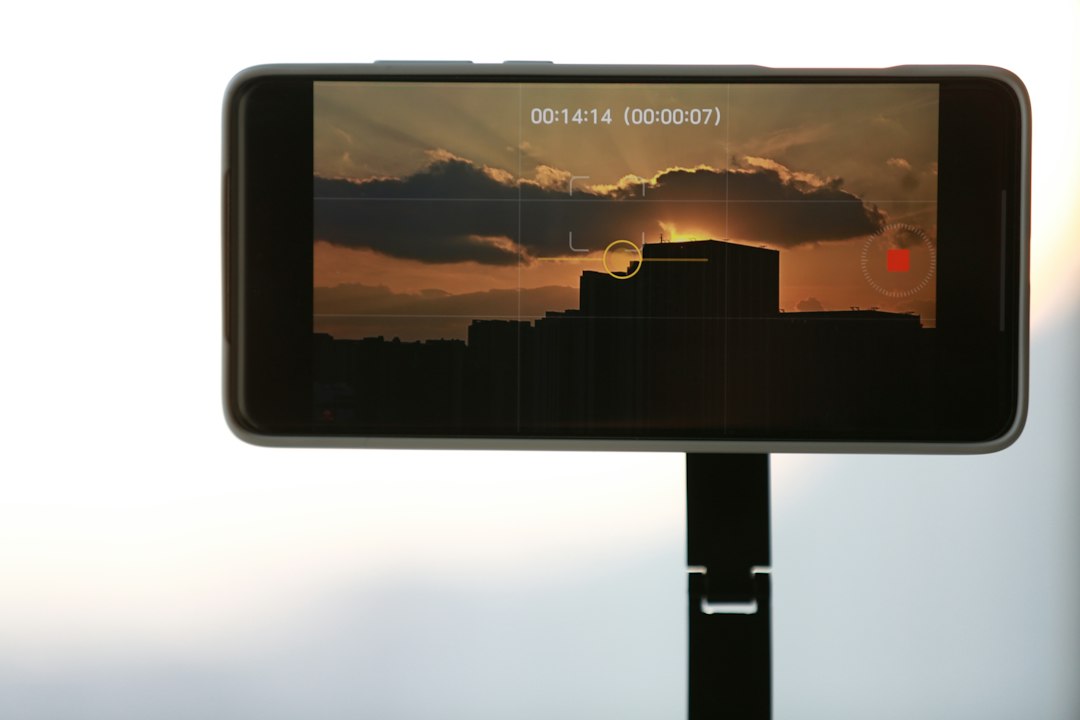
Embedded trailers remain hosted by their respective YouTube publishers: Magnolia Pictures & Magnet Releasing, 20th Century Studios UK, Netflix and Sony Pictures Releasing Australia. Their inclusion is for commentary and criticism; The Tech Boom does not own the videos or imply endorsement by the studios. The comparisons and verdicts are editorial analysis, not laboratory testing or claims of an independently conducted screening. Featured photograph: Zhao Xing / Unsplash; illustrative image, not a still from any of the films.