Opinion & analysis | 24 October 2026. Apple’s first foldable iPhone is finally in Australian hands. Its arrival should be a triumph: a refined folding screen, ambitious software and a phone that opens into something approaching a small tablet. But after years of waiting, the question facing Australian buyers is less flattering. How can a device starting at A$3,499 still demand so many compromises?
That is the contradiction at the heart of the iPhone Duo. It may be the most interesting iPhone Apple has made in years. It may also be one of the hardest to recommend at full price. This is an editorial assessment based on Apple’s published specifications and independent reviews, not a claim that The Tech Boom has personally tested or owned the phone.
The good: Apple’s foldable feels like more than a gimmick
1. The screen gives the iPhone a new purpose
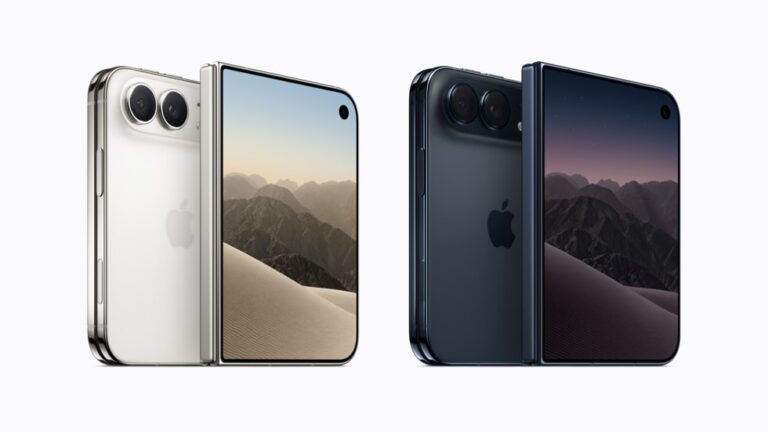
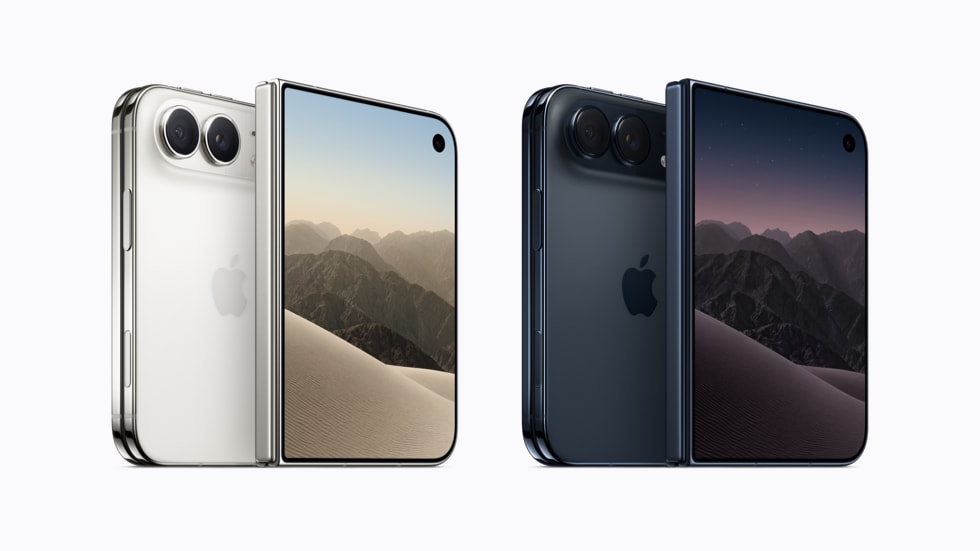
Closed, the Duo has a 5.4-inch external display. Open it and you get a 7.6-inch inner OLED panel. Both support ProMotion with adaptive refresh rates up to 120Hz, while the inner display uses a nano-texture finish to reduce reflections. The engineering matters, but the everyday possibilities matter more.
Reading a long document, viewing a spreadsheet, comparing travel information with a map or keeping a conversation open beside another app can feel more natural on a wider screen. This is the central argument for buying a foldable: it does things a conventional phone cannot comfortably do without forcing you to carry a separate tablet.
Early reviews from TechRadar and other publications have praised the display’s polish and the reduced visibility of the crease. That does not make the crease vanish, nor does it mean the screen will be ideal for every app. It does show that Apple’s long wait produced a credible first-generation design.
2. The software makes the folding idea easier to understand
Apple’s strongest advantage is its control over hardware and iOS. The Duo can operate as a conventional phone, unfold for multitasking or rest partly folded on a table. Its layout adapts to different positions, and features such as Duo Preview take advantage of the outer and inner displays.
In theory, this is what makes the device compelling for a traveller or professional. You can move from checking a notification to reading a detailed document without switching to another gadget. It is a small change in behaviour that could become surprisingly valuable over time.
But the software story is not entirely positive. Reviews also report third-party apps that have not been optimised for the unusual aspect ratio and multitasking that remains more restricted than some users may expect. Apple has made the basic experience elegant; developers still need to catch up.
3. Battery life is more reassuring than expected
Foldable phones create an awkward engineering problem: a larger screen demands power, while a thin folding body leaves limited room for batteries. Apple uses two built-in rechargeable batteries and quotes up to 31 hours of video playback on the inner display under its own test conditions, or up to 44 hours using the outer display.
Those figures are laboratory claims rather than a promise of how long a particular person’s phone will last. Still, independent reviews have generally found respectable everyday endurance. For a first-generation foldable, avoiding a disastrous battery compromise is an achievement.
4. Its shape creates genuinely useful camera tricks
The Duo can prop itself up for hands-free photography and video calls. Duo Preview can show a subject their framing on the external screen. Those features exploit the folding design instead of simply treating it as a large display.
For group photographs, video calls or filming yourself without a tripod, this could be convenient. But a clever camera workflow is not the same thing as the best camera hardware, and that distinction becomes uncomfortable at this price.
The bad: A$3,499 should buy fewer compromises
1. You lose a dedicated telephoto camera
Apple gives the Duo a 48MP main camera and 48MP ultra-wide. The main camera also offers a 12MP optical-quality 2x crop. What the device lacks is a separate longer-range telephoto lens of the sort buyers can find on some premium non-folding phones.
If you photograph concerts, wildlife, sport or distant subjects, that omission is more significant than the marketing suggests. The Duo can take impressive photographs, but buyers are paying for its folding form factor rather than getting every photographic capability Apple offers elsewhere.
2. Face ID is gone
Instead of Face ID, the Duo uses a fingerprint sensor built into the side button. Touch ID may be practical in several folding positions, and some users will prefer it. Yet many long-time iPhone owners have grown accustomed to unlocking and authenticating with a glance.
Having to relearn a basic interaction on Apple’s most expensive iPhone is not a deal-breaker for everyone. It is still a trade-off worth highlighting before someone spends thousands of dollars.
3. The big screen does not fix every app
There is an uncomfortable possibility with foldables: you pay extra for more screen space, then discover that some of your favourite apps do not use it well. Early reviews describe layouts that feel cramped or awkwardly stretched and limitations when working with multiple applications.
Before buying, the important question is not whether the inner display looks spectacular in a demonstration. It is whether the apps you personally use every day behave well when the phone is unfolded.
4. At 254 grams, it is not a lightweight everyday phone
The Duo weighs 254 grams, according to Apple’s Australian specifications. That may be reasonable for a folding device with two screens, but it changes the experience of holding, pocketing and using a phone one-handed. Some people will love opening it for longer sessions; others may find themselves leaving it closed for most of the day.
If you rarely unfold it, the extra size, weight and cost become difficult to defend. A feature is only valuable when you actually use it.
The Australian price is the real controversy
Apple’s Australian store lists the following outright prices. These are the manufacturer’s prices, not necessarily the lowest retailer offers or the total cost of a phone-and-plan contract.
| iPhone Duo storage | Apple Australia price | Device price divided by 24 months* |
|---|---|---|
| 256GB | A$3,499 | A$145.79/month |
| 512GB | A$3,899 | A$162.46/month |
| 1TB | A$4,699 | A$195.79/month |
| 2TB | A$5,899 | A$245.79/month |
*Illustrative arithmetic, rounded to cents. These are not financing quotes. Mobile service, insurance, accessories, fees and financing conditions are excluded. Prices checked against Apple’s Australian store on 24 October 2026.
For perspective, the 256GB Duo is A$1,200 more than the 256GB iPhone 18 Pro Max at Apple’s listed launch prices. That is a substantial premium to pay for the folding display while giving up Face ID and a dedicated telephoto lens. The premium is not necessarily irrational; it simply needs a convincing reason.
The 2TB version reaches A$5,899. At that price, the argument is no longer about whether the Duo is innovative. It is about whether one device genuinely replaces enough of your other technology to make the expense worthwhile.
And now the uncomfortable question: what about the cracked screens?
Within hours of the 23 October launch, a small number of owners began sharing reports of damaged inner displays near the hinge. MacRumors and The Verge have reported on photographs and accounts from early users.
One Australian owner said the screen cracked after roughly six hours and fewer than 20 openings. The reported fault appeared near the fold, and an Apple Store replaced the device. Other posts have described bright lines or damage in similar areas.
These are early reports, not evidence that the iPhone Duo has a widespread manufacturing defect. We do not yet know how many devices are affected, what caused each failure or the rate of problems among all units sold. Online posts can bring legitimate problems to light, but they cannot establish a reliable failure percentage.
It is equally unhelpful to dismiss the reports. Durability is especially important for a folding phone, and customers spending A$3,499 have every reason to expect the display to survive normal use. Apple and independent repair specialists will need time to establish whether these are isolated faults or a broader concern.
For cautious buyers, waiting for more owner feedback and longer-term reviews is a reasonable decision, not a rejection of innovation.
Who should actually buy an iPhone Duo?
The enthusiast who wants Apple’s newest idea
If experiencing a new form factor is part of the appeal and the price is comfortably affordable, the Duo offers something genuinely different. You may accept first-generation limitations because the folding experience itself is valuable to you. Just go in knowing that novelty is part of what you are buying.
The professional who works across documents and apps
This is the most persuasive practical use case. Someone who spends hours reading, editing, researching and communicating while travelling could benefit from a larger screen that fits in a pocket. But it is worth testing your essential apps first. A brilliant display is not much use if your work software behaves poorly on it.
The everyday iPhone user
If your routine is messaging, banking, social media, photos, navigation and occasional streaming, a conventional premium iPhone is likely to offer better value. You may enjoy showing friends the folding screen, but that is an expensive demonstration if you seldom need the extra space.
Buy now or wait? Our Australian advice
Before purchasing, try the Duo in person. Open and close it, check how comfortable the 5.4-inch outer screen feels for typing, and test how the inner display handles the apps you use most. Compare the cameras with an iPhone 18 Pro or Pro Max, particularly if zoom photography matters to you.
Then calculate the full cost. Include any accessories, insurance, plan charges and the potential value of a trade-in. If you are considering financing, read the provider’s actual terms rather than treating a simple 24-month division as a guaranteed payment offer.
Finally, watch the durability reporting over the next few weeks. A small number of launch-day complaints should not be exaggerated into a crisis, but a phone with a new folding mechanism deserves careful long-term scrutiny. If you do not urgently need a new phone, waiting costs nothing.
The Tech Boom verdict: Apple’s most exciting iPhone may be its hardest to recommend
Apple deserves credit for entering the foldable market with a product that feels deliberate rather than experimental. The 7.6-inch screen, polished design and thoughtful folding features suggest a future in which a phone can comfortably take on some tablet tasks.
But the compromises are real. No Face ID. No dedicated telephoto lens. A 254-gram body. Third-party apps that still need work. And an Australian price that starts at A$3,499 before adding a case, insurance or mobile service.
The early hinge-damage reports are another reason to stay curious but cautious, without pretending a few cases prove an industry-wide problem.
Our verdict: the iPhone Duo could be Apple’s most exciting phone in years — and still be the wrong purchase for most people. It makes the future of smartphones look fascinating. It does not yet make the case that everyone should pay to live in that future today.
Sources and editorial disclosure
- Apple Newsroom — iPhone Duo announcement, Australian launch and starting price
- Apple Australia — iPhone Duo technical specifications
- Apple Australia — storage configurations and prices
- TechRadar — independent iPhone Duo review
- MacRumors — early owner reports of cracked inner screens
- The Verge — early reports and uncertainty about scale
Editorial note: This is an independent opinion piece based on Apple’s official specifications, Australian retail pricing and attributed third-party reviews and owner reports. The Tech Boom has not personally tested or owned an iPhone Duo, and does not claim a confirmed widespread screen defect. Prices and product information are current as checked on 24 October 2026.
Related reading: Our Australian iPhone Duo buying checklist and Apple versus Samsung in the foldable phone race.