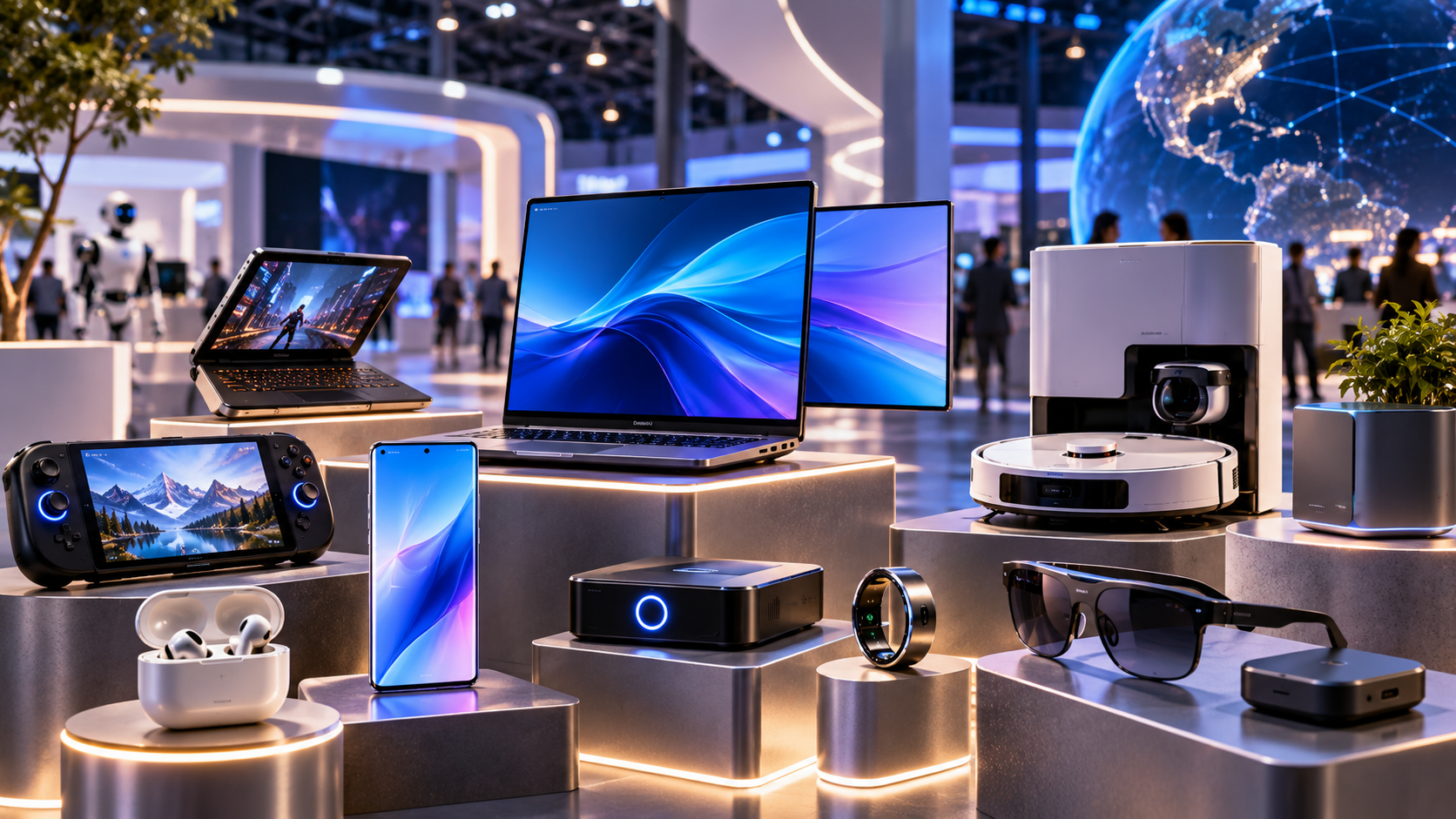
Every year, IFA gives us a glimpse of where consumer technology might be heading next. The Berlin technology show brings together some of the world’s biggest brands alongside smaller companies hoping their latest idea will become the next big thing.
IFA 2026 is no exception. This year’s show is packed with experimental laptops, smarter wearables, increasingly capable home robots and a growing number of devices designed around artificial intelligence.
What’s particularly interesting, however, is that AI isn’t always the main attraction. Some of the most compelling ideas are surprisingly practical: computers that are easier to repair, displays that expand when you need more space, and smart-home systems designed to keep more of your data inside your home.
Not everything shown at IFA will eventually make it into stores, of course. Some of the devices below are finished products, while others are concepts intended to demonstrate what could be possible in the future.
Updated 12 October 2026: These are The Tech Boom’s editorial picks, not the official IFA award winners. For the official results, IFA named Anker RIC Hearing Aids Pro Best of IFA, Insta360 Luna Ultra Best of Tech, and LG Electronics Best of Brand. The awards and our selection answer different questions: the awards recognise judged entries, while we focus on practical and unusual ideas worth watching. See IFA’s official 2026 winners announcement. With that distinction in mind, here are 10 pieces of technology that caught our attention at IFA 2026. Product status and Australian availability should be checked before buying.
1. Lenovo Project Swan — a laptop that gets wider when you need it
Status: Concept
Buying a laptop usually involves a compromise. A larger screen gives you more room for spreadsheets, editing and multitasking, but it also means carrying a larger computer everywhere you go.
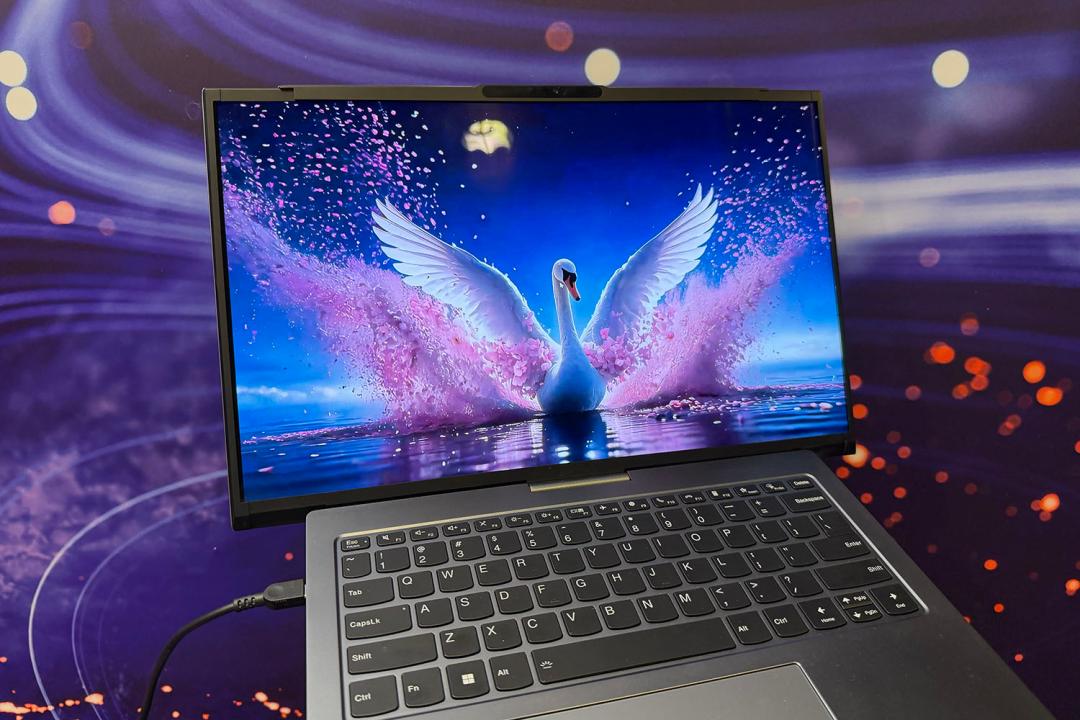
Lenovo’s Project Swan explores a clever solution: instead of making the entire laptop bigger, make the display expandable. The concept starts with a conventional 14-inch screen, but its rollable panel can expand horizontally to approximately 17 inches when additional workspace is needed.
It’s easy to imagine where that could be useful. Someone travelling could carry a relatively compact laptop, then expand the screen when working from a desk, hotel room or temporary office. Rather than carrying a portable monitor, the extra display space would effectively be built into the computer.
There is an important catch, though. Project Swan is currently a proof of concept, so there’s no guarantee this exact machine will become a commercial product.
Even so, it demonstrates an intriguing possibility. If flexible displays become durable and affordable enough, the size of a laptop screen may eventually stop being something you have to decide when you buy the computer.
2. Acer Project DualPlay Mini — part handheld, part laptop
Status: Concept
Portable gaming PCs have become increasingly powerful, but Acer’s Project DualPlay Mini asks whether they could also become something closer to a miniature laptop.
In handheld mode, the device behaves much like a portable gaming machine, with physical controls surrounding the display. Open it up and the screen can reposition itself to reveal a compact keyboard underneath, creating a tiny computer that could potentially handle basic productivity as well as gaming.
It’s certainly unconventional, and a full-sized laptop will still make considerably more sense for most people. But the concept highlights how the line between portable gaming hardware and conventional PCs is becoming increasingly blurred.
As handheld processors become more capable, carrying one device that can switch between entertainment and light computing starts to sound less ridiculous. For now, however, DualPlay Mini remains an experimental concept rather than something you can add to your shopping cart.
3. Tecno’s almost bezel-free smartphone
Status: Concept
Smartphone manufacturers have spent years shrinking the borders around their displays, and Tecno is pushing that idea close to its logical conclusion.
The company’s IFA concept features an almost bezel-free screen, creating the impression that nearly the entire front of the phone is display. It’s visually impressive, particularly when combined with the large battery Tecno has managed to fit inside the relatively lightweight design.
Whether eliminating the final few millimetres of bezel fundamentally changes the smartphone experience is debatable. Thin borders already exist on many premium phones, and there are practical considerations around durability and accidental touches.
Still, concepts aren’t always about solving an urgent problem. Sometimes they’re useful because they show us what manufacturers are technically capable of building.
There’s no confirmed mass-market release for this particular device, but don’t be surprised if today’s concept starts looking much more ordinary on future smartphones.
4. Acer Vero 16 — making repairability part of the specification sheet
Status: Product
Some of the most useful technology at IFA isn’t particularly futuristic.
Acer’s Vero 16 stands out because the company has placed repairability and longevity alongside the specifications consumers normally consider when buying a laptop. The machine combines contemporary hardware, including a high-resolution 16-inch OLED display, with a design intended to make repairs and upgrades more accessible.
That’s significant because modern laptops have often moved in the opposite direction. Pursuing thinner and lighter designs can result in components becoming increasingly difficult — or sometimes impractical — to replace.
Sustainability isn’t only about what materials a computer is made from. How long you can realistically keep using it matters too.
A laptop that can be repaired or upgraded more easily could potentially remain useful for longer, reducing the pressure to replace an otherwise functional computer because one component has failed or become outdated.
It’s not as visually dramatic as a rollable display, but it’s arguably the kind of innovation consumers could benefit from much sooner.
5. Plaud One — putting the AI assistant in your ears
Status: Product
The technology industry still hasn’t settled on what dedicated AI hardware should actually look like. We’ve seen pins, pendants and other standalone devices, but Plaud is exploring something people are already accustomed to wearing: earbuds.
Plaud One combines wireless earbuds with an AI assistant designed to capture and organise information throughout the day. Rather than functioning solely as headphones or a meeting recorder, the idea is to create a wearable assistant that can understand more of the context surrounding what you’re doing and help make that information useful later.
Connectivity is another interesting part of the concept, with eSIM support designed to reduce dependence on a nearby smartphone.
There are obvious privacy considerations whenever a device is capable of capturing information from the environment around its wearer. How recordings are triggered, processed and stored will be just as important as the AI features themselves.
Still, the form factor makes sense. The successful AI wearable may not need to convince people to carry another unfamiliar device — it might simply become part of something they’re already wearing.
6. Violoop — an AI agent designed to work with your existing computer
Status: Upcoming product
Violoop approaches AI hardware from a completely different direction. Instead of replacing your laptop or trying to become another wearable, it’s designed to connect to an existing Windows PC or Mac and assist with what’s happening on the screen.
The interesting part is its emphasis on multi-step actions. Rather than simply answering a question about something you’re doing, the goal is for the system to understand a task and help carry out parts of that workflow across the computer.
That sounds convenient, but it also introduces an important issue: permissions. An AI that can explain how to perform an action is very different from one that has permission to actually perform it.
Violoop says sensitive actions require user approval and that personal information can be processed locally. Those kinds of safeguards are likely to become increasingly important as AI assistants evolve into agents capable of interacting directly with our devices.
The product is expected to begin its journey through Kickstarter before a broader release. Whether Violoop itself succeeds remains to be seen, but the idea behind it represents a much larger trend in AI: moving from answering questions to completing tasks.
7. Roborock Saros 20 Flow — smarter cleaning without the chatbot
Status: Product
Artificial intelligence doesn’t always need a conversation box.
Roborock’s Saros 20 Flow demonstrates a much less glamorous — but arguably more practical — application of AI. The robot vacuum combines cleaning and mopping with increasingly sophisticated navigation and object recognition designed to help it move through real homes without constantly getting stuck.
That’s important because homes aren’t controlled laboratory environments. There are cables, furniture, shoes and other objects that a robot needs to recognise and navigate around reliably.
The system also tackles one of the less appealing parts of owning a robot mop: maintenance. Its docking system can use very hot water to clean the mop after use, reducing the amount of manual cleaning required from the owner.
This may ultimately be where consumers experience some of the most useful forms of AI. You don’t necessarily need to know that artificial intelligence is involved; you simply notice that the appliance performs its job more effectively.
Sometimes the best smart technology is the technology you barely have to think about.
8. Xreal Aura — making spatial computing easier to carry
Status: Upcoming product
Spatial computing has produced some impressive demonstrations, but there’s an obvious obstacle to widespread adoption: people need to be willing to wear the hardware.
Xreal’s Aura attempts to make that proposition more practical by separating some of the computing hardware from the glasses themselves. The system pairs the eyewear with a small pocketable computing unit and uses Google’s Android XR platform to create a portable spatial-computing experience.
The idea is to place applications, virtual displays and other digital objects within the user’s environment without requiring all of the necessary computing hardware to sit directly on their face.
That’s an important direction for the category. If spatial computing is going to become something people use outside demonstrations and specialist applications, devices will need to become lighter, less intrusive and easier to carry.
Aura doesn’t necessarily solve every problem facing augmented and mixed-reality hardware, but it suggests manufacturers understand that comfort may matter just as much as capability.
9. Circular Ring 3 Pro — squeezing more technology onto your finger
Status: Upcoming product
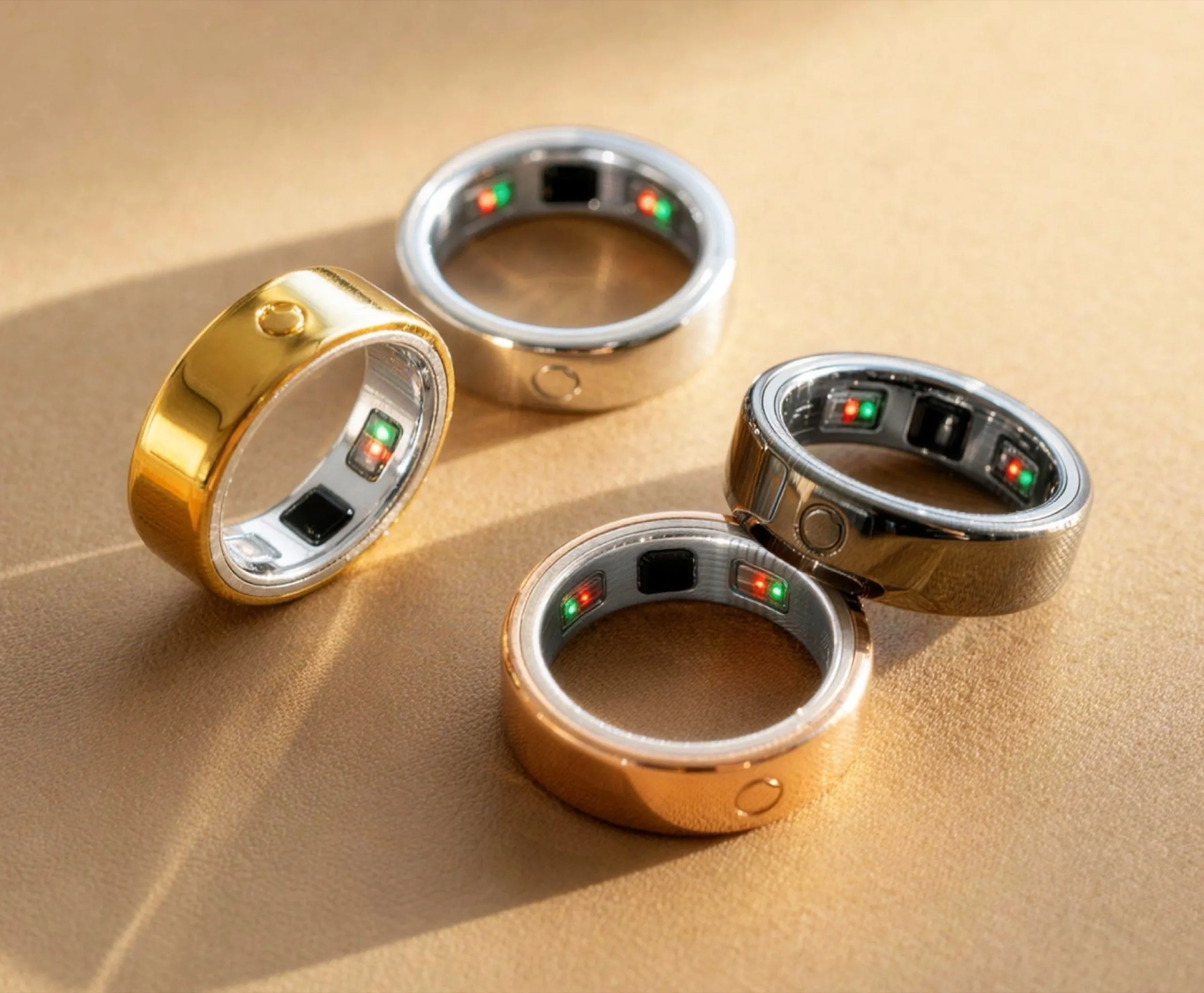
Smart rings started primarily as discreet fitness and sleep trackers, but manufacturers are steadily trying to expand what these tiny wearables can do.
Circular’s Ring 3 Pro pushes further in that direction, combining conventional activity and recovery tracking with additional health-focused capabilities. It also incorporates features such as contactless payments and vibration notifications, bringing some functionality normally associated with smartwatches onto the finger.
That’s an interesting proposition for people who want wearable technology without another screen competing for their attention.
Health-related features do need to be interpreted carefully. A consumer wearable can provide useful information and trends, but sophisticated sensors don’t automatically turn a ring into a replacement for professional medical assessment.
Even with that caveat, the amount of technology manufacturers are managing to package into increasingly small devices is remarkable. If the trend continues, the distinction between a fitness tracker, payment device and general-purpose wearable may become increasingly difficult to define.
10. Ugreen HomeAgent — a smarter home with more local processing
Status: Upcoming platform
One of the most interesting smart-home announcements at IFA isn’t another camera, light bulb or connected appliance. It’s a system designed to coordinate them.
Ugreen’s HomeAgent combines smart-home management, security-camera storage and AI processing with an emphasis on performing more of that work locally rather than relying entirely on cloud servers.
That approach could have several advantages. Local processing can potentially improve responsiveness, reduce reliance on an internet connection and give users greater control over where some of their information is handled.
The platform is designed to support Matter alongside other common smart-home connectivity technologies, which could help it work across products from different manufacturers. Some features, particularly remote access and notifications when you’re away from home, will naturally still depend on internet connectivity.
The bigger idea is what makes HomeAgent interesting. As artificial intelligence becomes increasingly integrated into our homes, consumers may start asking not only what their smart home knows, but where that information goes.
Privacy could become a major selling point rather than something buried inside the settings menu.
What IFA 2026 tells us about where technology is heading
Looking across this year’s announcements, there isn’t one device that defines the future of consumer technology. Instead, several trends appear to be developing at the same time.
Displays are becoming more flexible, while manufacturers continue experimenting with new computer form factors. Wearables are getting smaller but more capable, home robots are becoming better at dealing with unpredictable environments, and smart-home systems are beginning to place greater emphasis on local processing.
AI is obviously present throughout the show, but the more encouraging development is how it’s being used. The most interesting implementations aren’t necessarily devices with a chatbot attached to them; they’re products where AI quietly makes navigation better, automates repetitive work or helps a device understand its environment.
That’s a much more useful direction than adding “AI” to a product simply because the term is popular.
The Tech Boom’s take
Our favourite technology isn’t necessarily the product with the longest specification sheet or the most futuristic demonstration. The ideas that tend to matter are the ones that eventually solve a real problem. For Australian readers, our buying checklist is straightforward: distinguish prototypes from products on sale, confirm local availability and Australian warranty support, and wait for independent testing of battery life, reliability and privacy claims before spending money. We have not hands-on tested every device in this roundup; these are editorial selections based on the announcements and available product information.
That’s why some of IFA 2026’s relatively simple concepts are among the most compelling. A laptop that gives you more workspace without requiring you to carry a larger computer makes intuitive sense. So does a laptop designed to be repaired, or a smart-home system that processes more information locally.
Some of the concepts shown in Berlin may never become commercial products, while others will undoubtedly change considerably before reaching consumers. That’s part of what makes technology shows like IFA worth watching.
They don’t only show us what companies want us to buy today.
They show us what the technology industry thinks we might want tomorrow.
And IFA 2026 offers plenty of clues.